I've spent this week at the Fairmont in Austin for WebexOne 2026, and the clearest message from Cisco was openness. In the space of one announcement, it confirmed that Anthropic's Claude is coming into Webex, that OpenAI's dots will connect to it through MCP, and that Cisco room devices will run Google Meet natively alongside Microsoft Teams, Zoom and Webex.
Between keynotes I sat down with Amit Barave, who runs the Webex Suite and AI, Espen Løberg, who runs Collaboration Devices, and Metrigy's Irwin Lazar to work out what all of that means for the people who actually have to buy, deploy and govern it. Their answers make up most of this week's roundup. Away from Austin, I also spoke to Brandeis University about why it moved its campus phones off Cisco and onto Zoom, which makes an interesting counterpoint to everything Cisco said on stage.
Editor's Pick: The New Webex Brings AI Agents Into the Team
The biggest announcement of the week was the new Webex itself, rebuilt around people and AI agents working together. Collaborative agents can be invited into spaces, meetings and calls to carry out multi-step work across Webex and third-party apps. Cisco's own example is a user @mentioning an analytics agent to pull usage figures, then asking a presentation agent to update a PowerPoint deck with them. Alongside its own agents, Cisco says Claude, built on Claude Managed Agents, will be able to join the same spaces and pick up shared team context. Cisco hasn't given dates, and most of what was announced in Austin is planned for early 2027.
Cisco also isn't betting on a single model. The same release adds a Model Context Protocol integration with OpenAI's dots, which will bring Webex context into dots and later run inside Webex as an always-on personal agent. That puts two rival model providers inside one collaboration suite, and leaves the choice of which agent does which job with the customer.
When I sat down with Amit Barave, VP and GM of Webex Suite and AI at Cisco, he said the shift for buyers is from features to workflow.
It's about how you accomplish the flow of work with agents in the loop, humans in the lead, models in the loop.
The harder question is control. Barave says agents don't behave deterministically, so IT can't treat them like traditional software, and he had a short line for what changes.
You don't manage them, you govern them.
Cisco is backing that with AI Agent 360, deepfake detection from Pindrop for Webex Meetings and Calling, and the Webex Compliance Hub with Theta Lake. How tightly IT can scope Claude once it arrives, and what it costs on top of a Webex Suite licence, are two things we'll be looking at before launch.
Google Meet on Cisco Devices Completes the Four-Platform Meeting Room
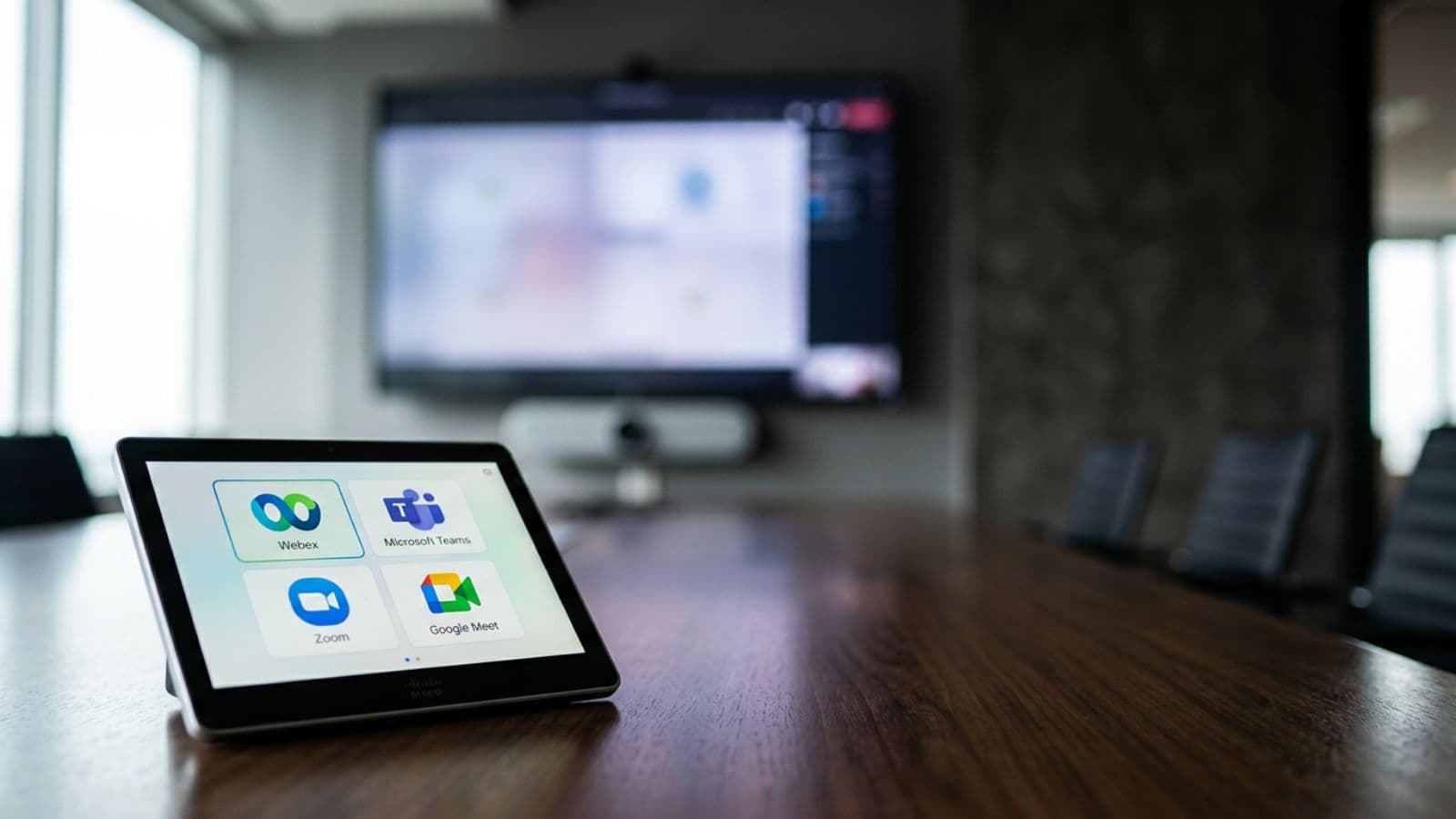
The device news matters as much for IT estates as the agent news. RoomOS 27, due in November, adds native Google Meet support to Cisco hardware, so one device fleet can now boot into Webex, Microsoft Teams, Zoom or Google Meet. It also brings a Cisco AI Assistant that understands natural language in 32 languages, and the new Ceiling Speaker Pro, which runs over a single Ethernet cable alongside Cisco's ceiling microphones and cameras.
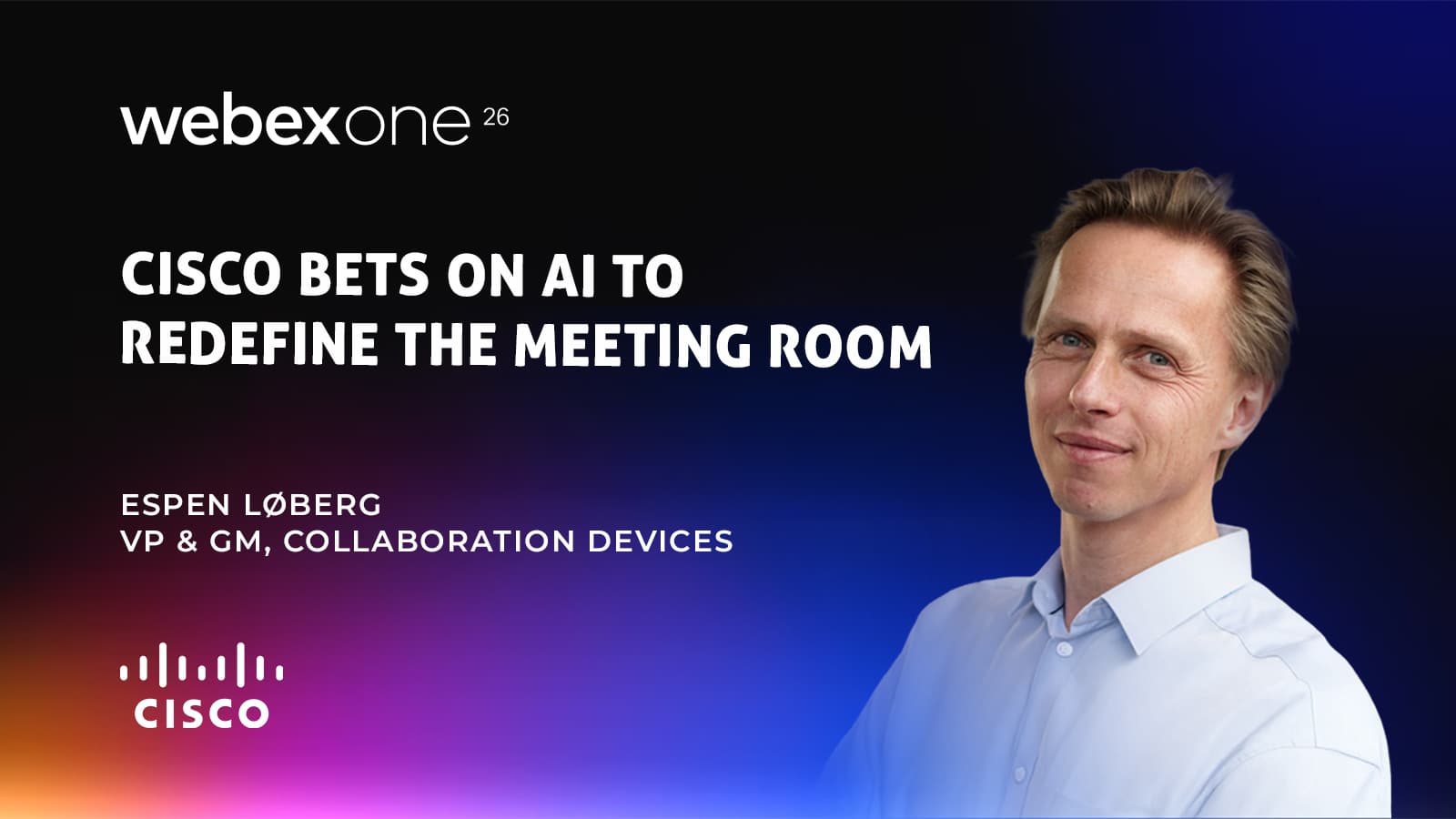
Espen Løberg, VP and GM of Collaboration Devices at Cisco, told me in Austin that platform choice has to be settled before Cisco's wider workplace pitch can work.
When it comes to our ambition of being the operating system for the agentic workplace, the meeting service cannot be a barrier to adoption.
Timing is what IT teams should take from this. Løberg says native Zoom Rooms on Cisco hardware reaches general availability this month, having been targeted for September when we spoke at InfoComm in June. For anyone running a mixed estate, October and November are when the four-platform promise becomes something they can actually deploy.
How Brandeis University Moved Its Campus Comms to Zoom
Away from Austin, my interview with Eli Jacobson, Senior Associate Director of Network Communications and Digital Media at Brandeis University, is a reminder of what Cisco is defending. Brandeis began replacing its desktop Cisco phones with Zoom Phone in April 2025, and now runs its meetings, phones and IT contact centre on Zoom, with Zoom Virtual Agent on the help desk and Zoom Video Management in pilot. Jacobson says the decision came down to more than price.