powering productive workplaces
Front pagesponsored · QSC
Workspace Tech38m · 13:31 BST · 3 min read

From the Meeting Room to Your High-Performance Workplace

A complete Microsoft Teams estate covers every room, workspace and workplace signal on one connected platform, not just the boardroom. QSC's Geno Zaharie explains why that's the new standard IT leaders should bring to their next Teams Rooms and AV strategy review

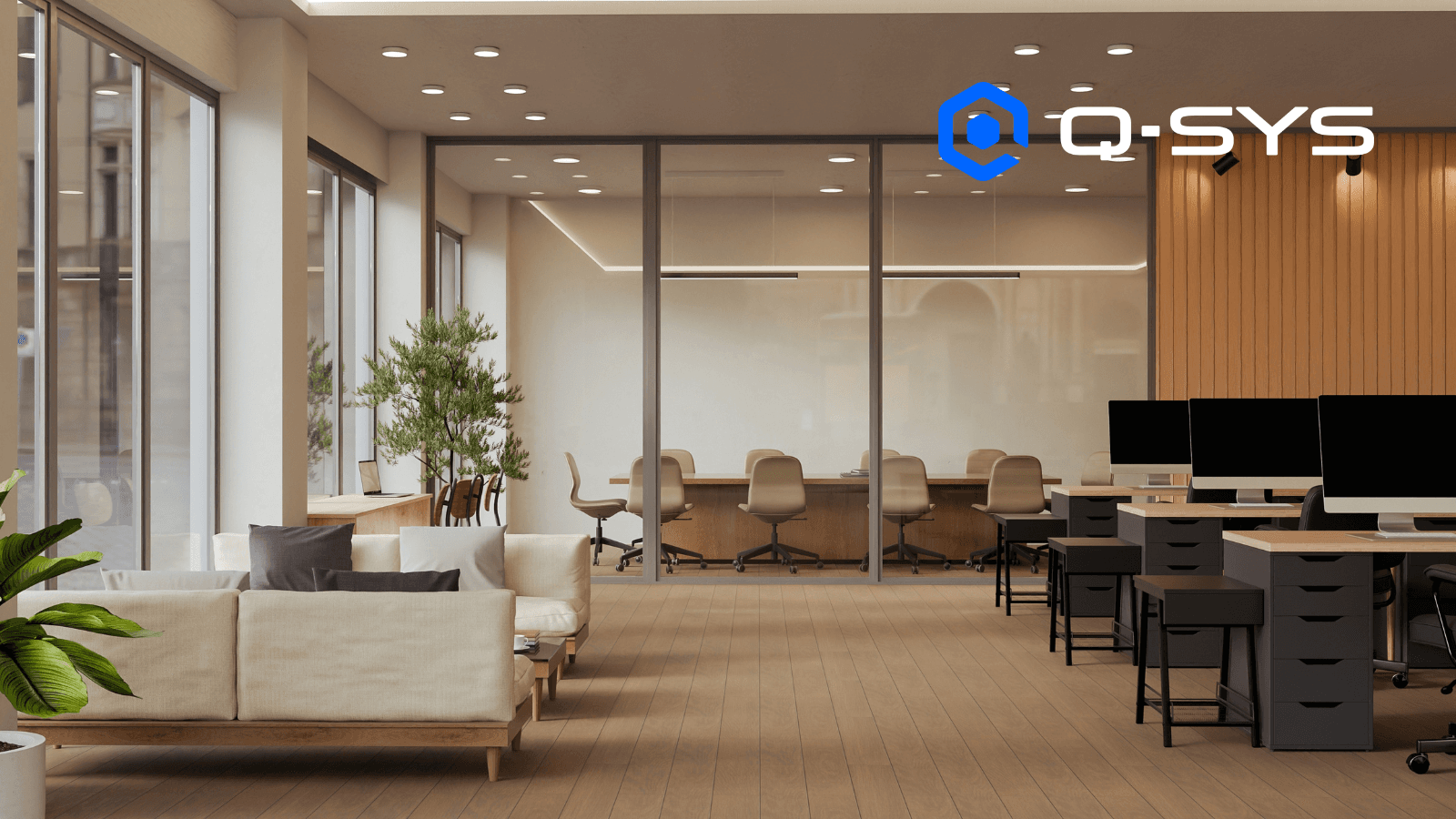
Modern open-plan office with a lounge sofa area, a glass-walled meeting room and rows of desks with monitors, with the Q-SYS logo in the top right corner.

Ask an IT leader whether their Microsoft Teams Rooms deployment is finished, and the honest answer usually depends which rooms you mean. The high-usage conference rooms might be done, but the rest of the estate is still very much in progress. 

Geno Zaharie, Senior Director of Alliances and Ecosystem at QSC, has a straightforward answer for what "finished" actually looks like, and it isn't measured room by room: 

“A complete Microsoft Teams estate is measured by whether every workspace, every room, and every workplace signal is connected to a common operational and AI-ready platform.” 

That's a higher standard than many deployments were originally built for. It treats every corner of the estate, not just the certified conference rooms, as part of one system worth managing consistently. 

Assess the Estate, Not the Room 

Room-by-room deployments create the reverse of that, Zaharie says: 

“Treating each room as a standalone deployment often leads to different management tools, disconnected data sources, and inconsistent support processes.” 

Looking at the estate as a whole does the opposite. It pushes IT toward standardisation and integration, and builds the high-performance workplace this campaign keeps coming back to: one where people can move between spaces and collaborate from anywhere, not just where the room in front of them happens to work. It also gives IT room to optimise for the wider business case behind the rollout, not just one room at a time. 

For the people actually signing off these deployments, that distinction tends to show up at renewal and budget time rather than day to day. A platform-level view makes it possible to justify further investment with real utilisation data behind it, instead of a room-by-room guess. 

The Practical Case for One Platform 

Managing large rooms, smaller collaboration spaces and shared areas on one platform pays off in fairly unglamorous ways, according to Zaharie. IT can optimise uptime, simplify day-to-day operations, and turn device-level data into insight, rather than running dozens of rooms as separate mini-projects. 

Centralised monitoring extends the same advantage across geography. IT can remotely support every space and hold a consistent experience across buildings, regions and room types, the same high-performance workplace standard, wherever people are working from, without the complexity that normally comes with doing that room by room.  

What EC1 Shows About Scaling It 

Microsoft's own Experience Center One (EC1) deployment in Redmond, Washington, is Zaharie's reference point for what this looks like at real scale. More than 1,200 endpoints run across the site, covering everything from standard meeting rooms to demo spaces and executive areas, all on one platform. 

“The key lesson from Microsoft EC1 is that a connected workplace is built on a software-defined platform that delivers consistent experiences, centralized monitoring, operational agility, and AI readiness across every type of space.” 

That's what lets organisations scale workplace innovation globally, Zaharie adds, without the complexity that would normally come with it. 

What to Bring into the Next AV Review 

Zaharie ends on the point most relevant to whoever's about to sit down for their next Teams Rooms and AV strategy review: 

“The next review shouldn't just focus on optimizing today's meeting experience. IT leaders should be looking at how hardware and software can work together across the workplace to create a connected, manageable, flexible and adaptable foundation that's ready for the next generation of AI-driven collaboration and workplace intelligence.” 

It's a bigger brief than most Teams Rooms reviews have covered so far, and one more IT teams are likely to be asked to answer this year. 

The discussion0 takes · attributed & checked

Does this reflect your experience?

opening the room…
Read nextordered by techtelligence · every pick explained
picked for this story

The Untapped Spaces Your Teams Rooms Rollout Hasn't Reached

24 Sept 2026
picked for this storyBeyond the Meeting Room: Spaces that Maximize Teams30 Sept 2026more from QSC · sponsoredInfoComm 2026: Q-SYS Exposes the Biggest Meeting Room Trap29 Jun 2026