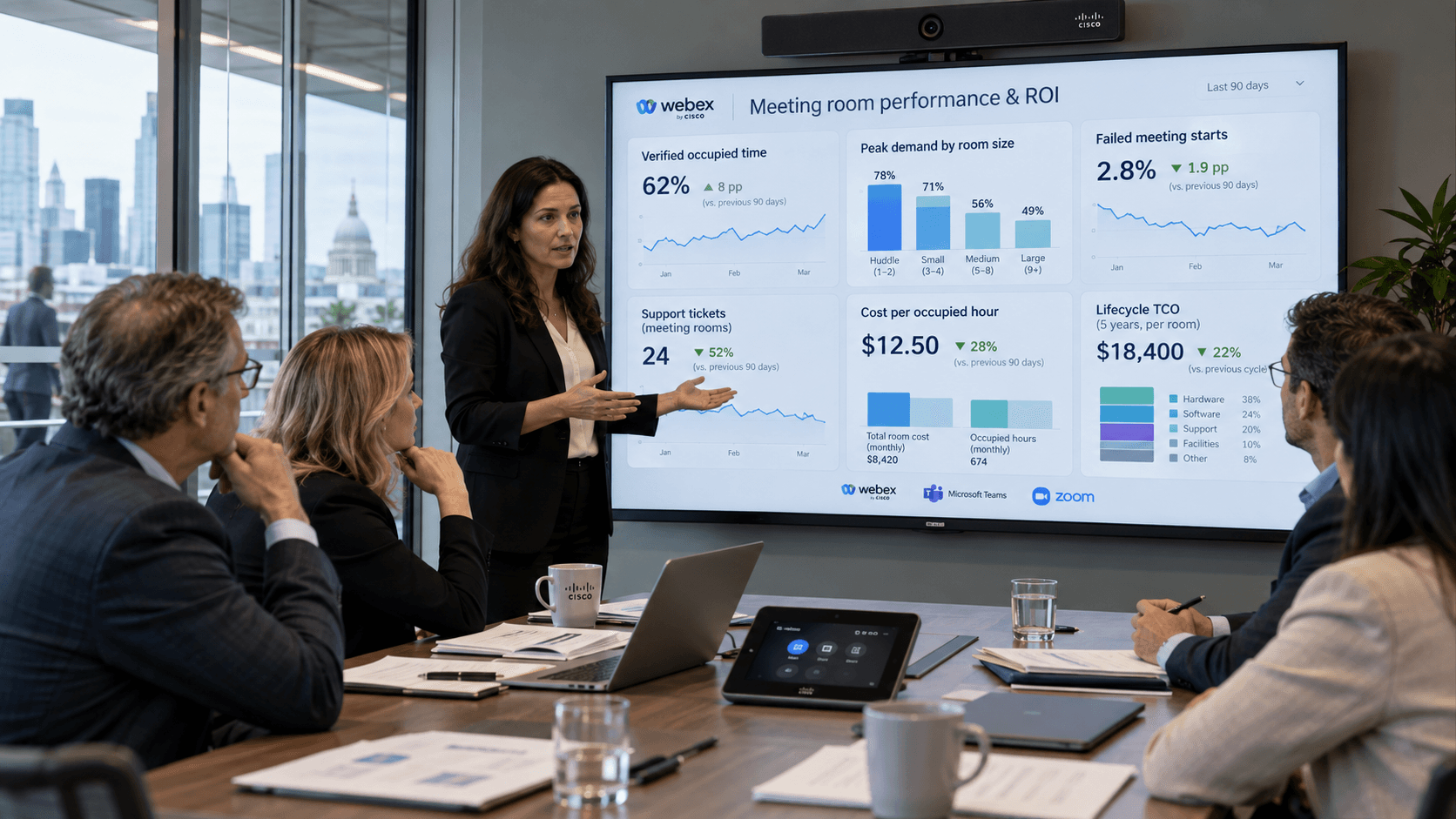
Most enterprises now have dashboards. They track utilization. Monitor occupancy. And measure collaboration density. On paper, they have strong enterprise workplace insights and clearly defined workplace performance metrics.
Yet inefficiency persists.
The problem is not visibility. It is accountability. In many organizations, workplace analytics decision making has quietly turned into observation without intervention. Leaders review reports. Teams discuss trends. Utilization heatmaps circulate in slide decks. But underlying behaviors rarely change.
Without a deliberate office utilization data strategy and clear workplace data accountability, analytics systems risk becoming diagnostic tools that document inefficiency rather than eliminate it.
Read More
- Why Workplace Analytics Is Becoming a Strategic Priority
- How Workplace Analytics Platforms Prove ROI at Scale
- How To Choose the Right Workplace Management Platform – And Avoid Regret
Why Do Workplace Analytics Fail to Drive Decisions?
Most workplace analytics initiatives fail because they were designed to inform, not to force action.
Dashboards highlight peak-day congestion. Reports expose underused floors. Collaboration metrics reveal uneven meeting equity. These are useful workplace performance metrics, but they often stop at awareness.
Executives rarely dispute the data. The friction lies in ownership. Who is responsible for resolving underutilized space? Which leader realigns staffing coverage? Who upgrades unreliable meeting rooms?
When workplace analytics decision making is not tied to defined accountability, data becomes background commentary rather than a catalyst for change.
As workplace analytics evolves into strategic infrastructure, the expectation should shift from reporting insight to enforcing operational discipline.
What Prevents Utilization Data from Triggering Action?
The most common barrier is structural hesitation.
An organization may clearly see that Tuesday attendance exceeds room capacity while Wednesday floors remain half empty. The office utilization data strategy highlights the imbalance. Yet hybrid policies remain unchanged because altering attendance guidance feels politically sensitive.
Similarly, occupancy reports may show that one department uses only a fraction of its allocated space. The enterprise workplace insights are clear. But reallocating that space requires cross-functional negotiation and executive sponsorship.
In these moments, workplace analytics decision making becomes a leadership test. Visibility alone does not compel intervention.
Without escalation paths and ownership frameworks, utilization dashboards remain observational tools.
How Do Organizations Ignore Inefficiency Despite Visibility?
Organizations normalize inefficiency when it becomes predictable.
If a meeting room frequently fails on peak days, teams build in buffer time. Delays become routine. The reliability gap appears in workplace performance metrics, but the organization adapts instead of correcting the root cause.
If hybrid congestion creates recurring friction, managers informally compensate rather than redesign attendance models.
This is the accountability gap.
When workplace data accountability is undefined, inefficiency becomes institutionalized. Dashboards improve transparency, but transparency without intervention simply makes underperformance easier to observe.
The illusion of control emerges because the data looks sophisticated. In reality, the system remains unchanged.
Where Do Workplace Insights Lose Impact After Reporting?
Workplace insights typically lose momentum during the handoff from analytics to operations.
A facilities team may surface congestion trends through detailed enterprise workplace insights dashboards. IT may identify recurring AV failures. HR may detect divergence between planned and actual attendance.
But if those findings are not embedded into capital planning, workforce scheduling, or executive performance reviews, they fade into routine reporting.
Effective workplace analytics decision making requires that metrics influence real decisions: