powering productive workplaces
Front page
NewsWorkforce Analytics2h · 15:01 BST · 7 min read

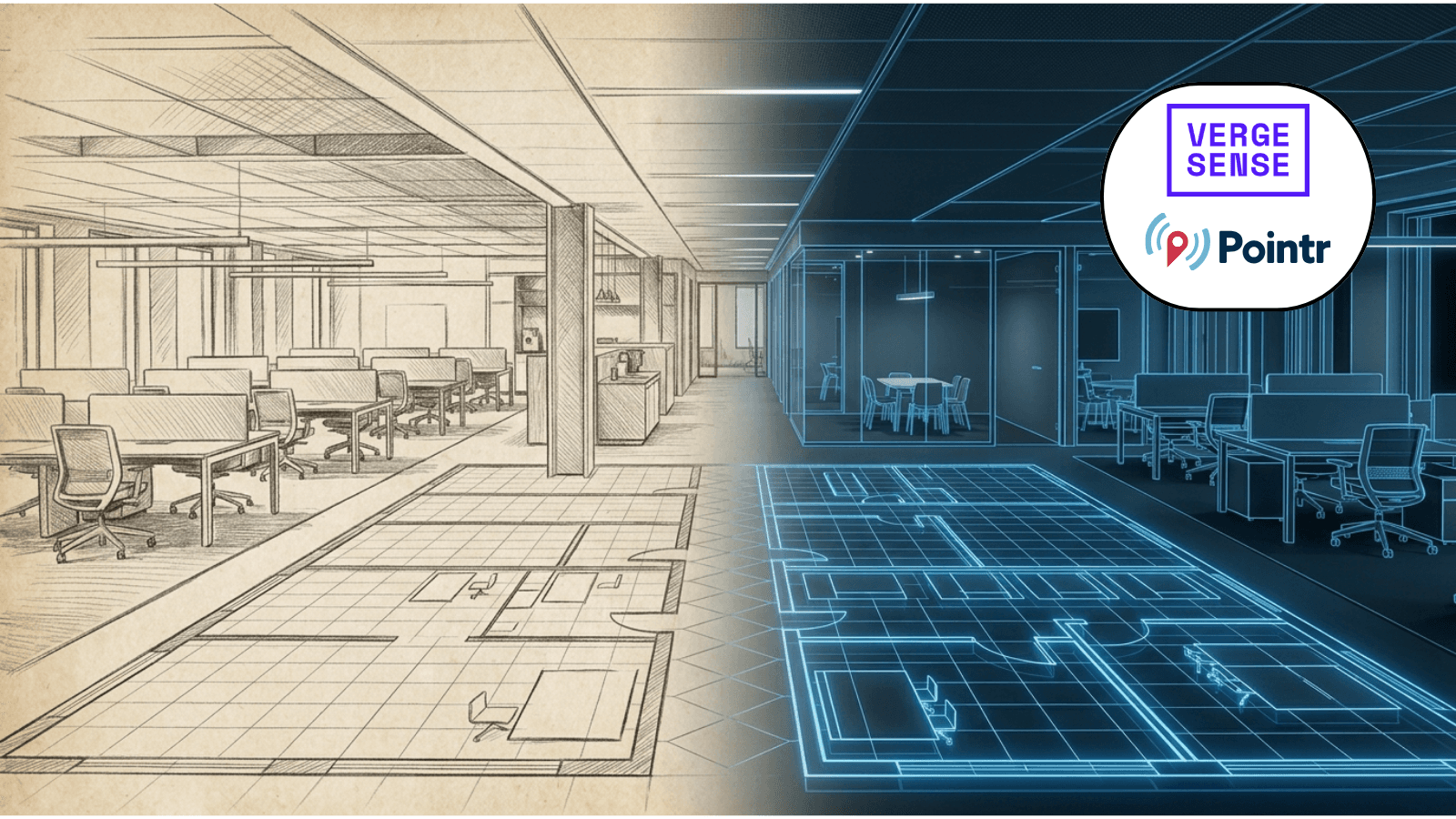
Why VergeSense and Pointr Partnered on Office Planning

VergeSense and Pointr have partnered to turn static floor plans into live, predictive models that give workplace teams a real-time view of how space performs, and hybrid employees are losing nearly two full work weeks a year to the problem this actually solves.

VergeSense and Pointr partnership brings predictive space planning to hybrid workplace intelligence

VergeSense and Pointr have announced a partnership to solve one of the most persistent problems in hybrid work: organizations still lack a reliable, real-time picture of how their office space is actually used.

The collaboration combines Pointr's AI mapping technology, which automatically digitizes and geo-references floor plans, with VergeSense's predictive planning capabilities.

Together, they're aiming to layer real occupancy behavior onto spatial data.

The result is a connected model that can forecast demand, flag capacity constraints, and test layout changes before a single wall gets moved.

TL;DR

  • VergeSense and Pointr have partnered to combine AI-powered floor plan digitization with predictive space planning, giving workplace teams a live model instead of a static one.

  • Hybrid employees spend an average of 25 minutes finding a desk and getting set up, costing nearly 78 hours a year in lost productivity, according to Logitech research.

  • Booking data alone doesn't reflect how spaces are actually used, room and desk analytics increasingly show a gap between what's booked and what's occupied.

What Does the VergeSense and Pointr Partnership Look Like in Practice?

Solving workspace friction takes more than adding desks or expanding square footage. 70% of HR leaders say some areas of their office are already underutilized, meaning the issue is distribution and design, not just capacity. This is exactly where VergeSense and Pointr's combined model is designed to help.

In Practice

Consider a workplace manager who fields complaints every Tuesday, even though overall utilization sits at just 65%. Instead of guessing, a live spatial model can show exactly which rooms & spaces are creating the bottleneck. The same modeling can also show a team that feels like it has outgrown its office that it hasn't, potentially avoiding a costly and unnecessary expansion.

That shift, from reactive fixes to modeled, tested decisions, is the throughline connecting both the desk-booking research and the meeting-room analytics conversation. Whether the friction point is a desk, a conference room, or an entire floor, the underlying issue is the same: organizations are working from outdated or incomplete pictures of their own space.

Why Does This Matter? What the Data Says About Hybrid Work Right Now

On average, it takes hybrid workers 25 minutes just to find a desk and get settled once they arrive at the office, according to Logitech's Desk Dread research.

For someone going into the office three times a week, that adds up to nearly 1.5 hours weekly, or roughly 78 hours, almost two full work weeks, over the course of a year.

That friction isn't a minor inconvenience.

Half of hybrid employees say they're frustrated by the process, and more than a quarter dread it outright. A negative setup experience doesn't stay contained to the first ten minutes of the day either. Around a quarter of workers say a bad start affects their productivity for the rest of the day, and nearly the same number say it makes them less willing to go above and beyond.

Most hybrid offices rely on flexible or shared desking, where employees don't have a fixed spot. That flexibility comes at a cost: workers arrive without knowing which desks are free, whether the equipment there works, or whether they'll end up on the wrong side of the building from their team.

Yet only 32% of companies currently use desk booking software, meaning most organizations are still relying on sign-up sheets or informal team arrangements to manage a resource that's clearly under pressure.

What Is Desk Booking Technology?

Software that lets employees reserve a desk or workspace in advance, often filtering by equipment, location, or team proximity, rather than arriving and searching for an available spot on the day.

Why Doesn't Booking Data Tell the Whole Story?

Even when companies do track workspace usage, the data they're looking at often reflects intent, not reality. Bill Dellara, Chief Product Officer at VOSS, made this distinction clear in a recent UC Today interview on meeting room analytics: booking reports show whether a room was reserved, not whether anyone actually used it.

"It's pretty easy to see, were rooms booked, how many were booked, when they were booked. But what that's really showing you is user intent, as opposed to what actually happened in the environment." — Bill Dellara, Chief Product Officer, VOSS

Dellara pointed to what his team calls phantom space, rooms and desks that appear busy on a calendar but sit empty in practice, often because a booking was never canceled once it was no longer needed. Industry data cited in the interview suggests 30% to 40% of meeting rooms go unutilized this way at any given time.
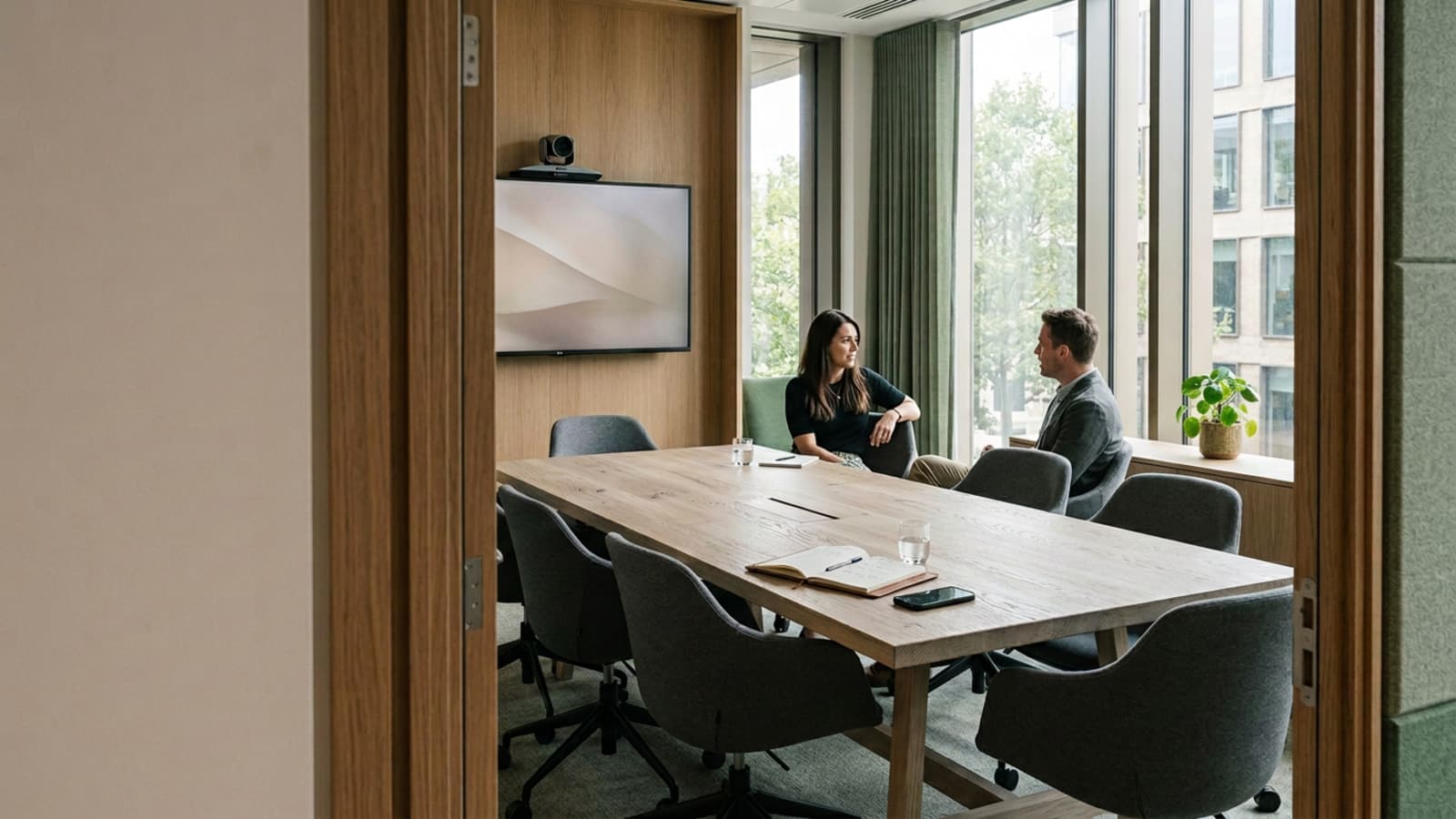
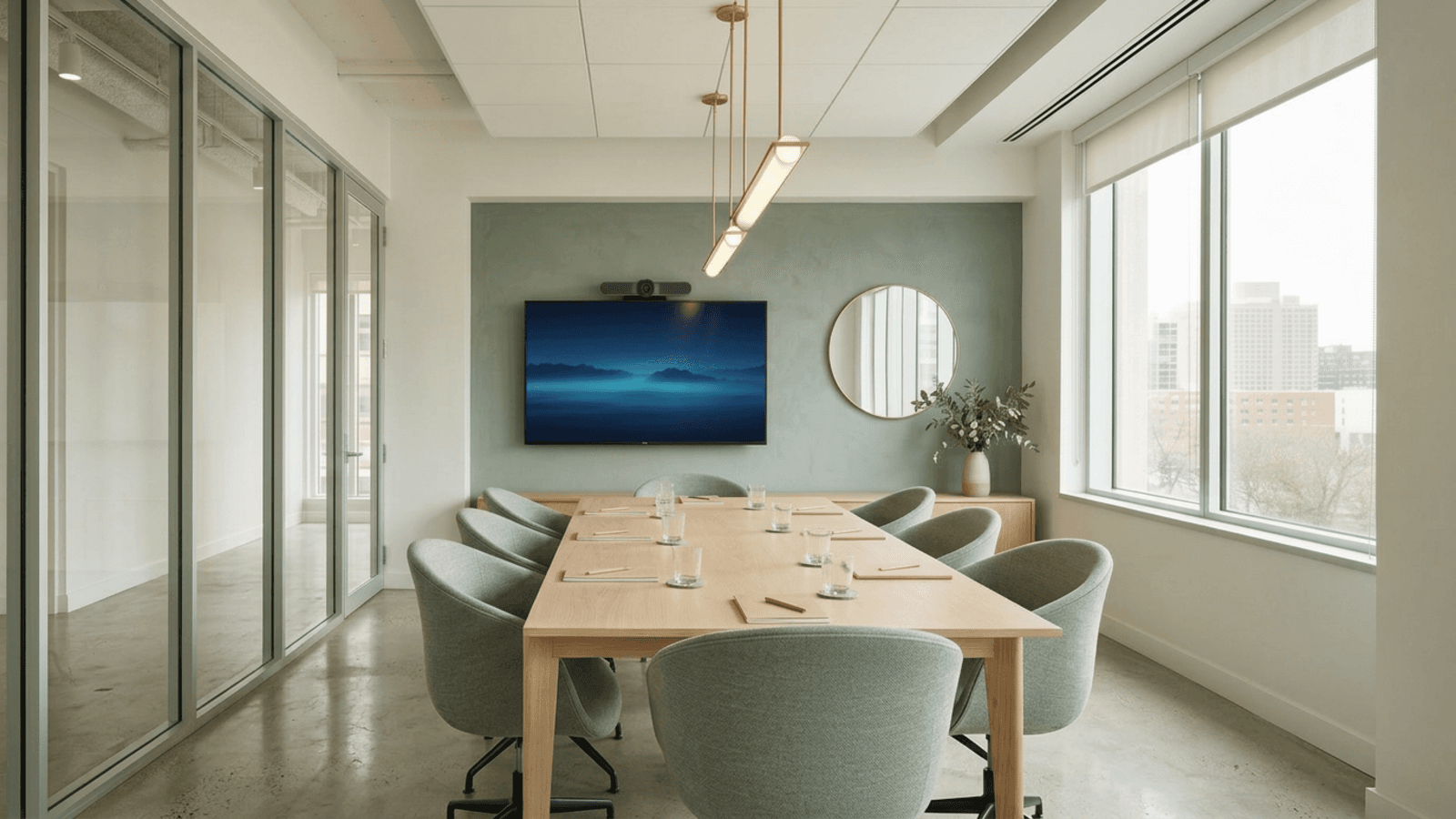
On the flip side, certain rooms become what Dellara calls 'hero rooms', spaces that get booked constantly simply because they're familiar or convenient, while equally usable rooms nearby sit ignored, often because employees don't know they exist.

Key Takeaways

  • Usage and utilization are different things. A room being booked doesn't mean it was actually used, or used well.

  • Phantom space, bookings left unused or uncanceled, can account for 30% to 40% of meeting room capacity at any given time.

  • Hero rooms develop not because they're objectively better, but often due to familiarity, proximity, or simple lack of awareness of alternatives.

The disconnect isn't a minor miscalculation, it's a sign that most organizations are making space decisions without the data to back them up.

What Should Workplace Leaders Actually Do?

Desk booking software offers one of the clearest starting points. Companies already using it report being able to optimize space, cut costs, and give leaders better data for space decisions. Just as importantly, it replaces manual sign-in sheets and Wi-Fi login tracking, methods still used by well over half of HR leaders, with something that actually shows where people are sitting and how spaces are used.

Buyer Checklist: Evaluating Workplace Intelligence Platforms

  • Ask whether the platform tracks actual occupancy and behavior, not just bookings or reservations.

  • Confirm whether floor plans and spatial data update automatically, or require manual redigitization every time a layout changes.

  • Check whether the tool can model future scenarios, such as headcount growth or layout changes, before any physical work happens.

  • Ask for evidence of measurable before-and-after results, not just projected savings, from an existing customer deployment.

None of this requires a full technology overhaul on day one. Even incremental steps, like piloting desk booking in one building or digitizing floor plans for a single high-traffic floor, can surface enough data to make the next investment decision an informed one rather than a guess.

What's the Bigger Shift Underway Here?

Workplace teams have spent years working from static floor plans and manual booking sheets, tools that were never built to explain why a space feels crowded on Tuesdays but empty on Fridays.

What's changing now is the availability of platforms, like the one VergeSense and Pointr have partnered to create, that treat a floor plan as a living model rather than a fixed document, one that updates with real usage data and can be tested against future scenarios.

Organizations that get ahead of this shift aren't necessarily the ones with the most square footage or the newest building. They're the ones building the visibility to know, with actual data, what's working, what isn't, and what to fix first.

Frequently Asked Questions

What does the VergeSense and Pointr partnership actually do?

The partnership combines Pointr's AI-powered floor plan digitization with VergeSense's predictive planning capabilities, allowing organizations to model future space scenarios, identify capacity constraints, and test layout changes before making physical modifications.

Why do hybrid employees struggle to set up their workspace?

Hybrid employees often use shared or flexible desks rather than fixed ones, meaning they must locate an available desk, connect to Wi-Fi, and set up unfamiliar equipment each time they come in. This process takes an average of 25 minutes, according to Logitech's Desk Dread research.

What is the difference between room usage and room utilization?

Usage refers to whether a room or desk was booked, reflecting user intent. Utilization refers to whether the space was actually occupied and used as intended. Booking data alone often overstates how much a space is genuinely being used.

What is phantom space in workplace analytics?

Phantom space refers to rooms or desks that appear booked or reserved but sit unused in practice, often because a reservation was never canceled. Industry data suggests this can account for 30% to 40% of meeting room capacity at any given time.

Why don't more companies use desk booking software?

Only around 32% of companies currently use desk booking software, according to Logitech's research, with many still relying on manual sign-in sheets or informal team coordination to manage shared workspaces.

rate this story
helps rank stories across uc today
The discussion0 takes · attributed & checked

Does this reflect your experience?

opening the room…
Read nextordered by techtelligence · every pick explained
picked for this story

How Do You Measure Collaboration, Not Just Attendance? Mapiq Has an Answer

10 Aug 2026
picked for this storyThe Pendulum Swings Back: Companies Are Correcting Their Office Downsizing "Overshoot"29 May 2026picked for this storyWhat is a Facilities Management Analyst? Turning Workplace Data into C-Suite Insight15 Jul 2026