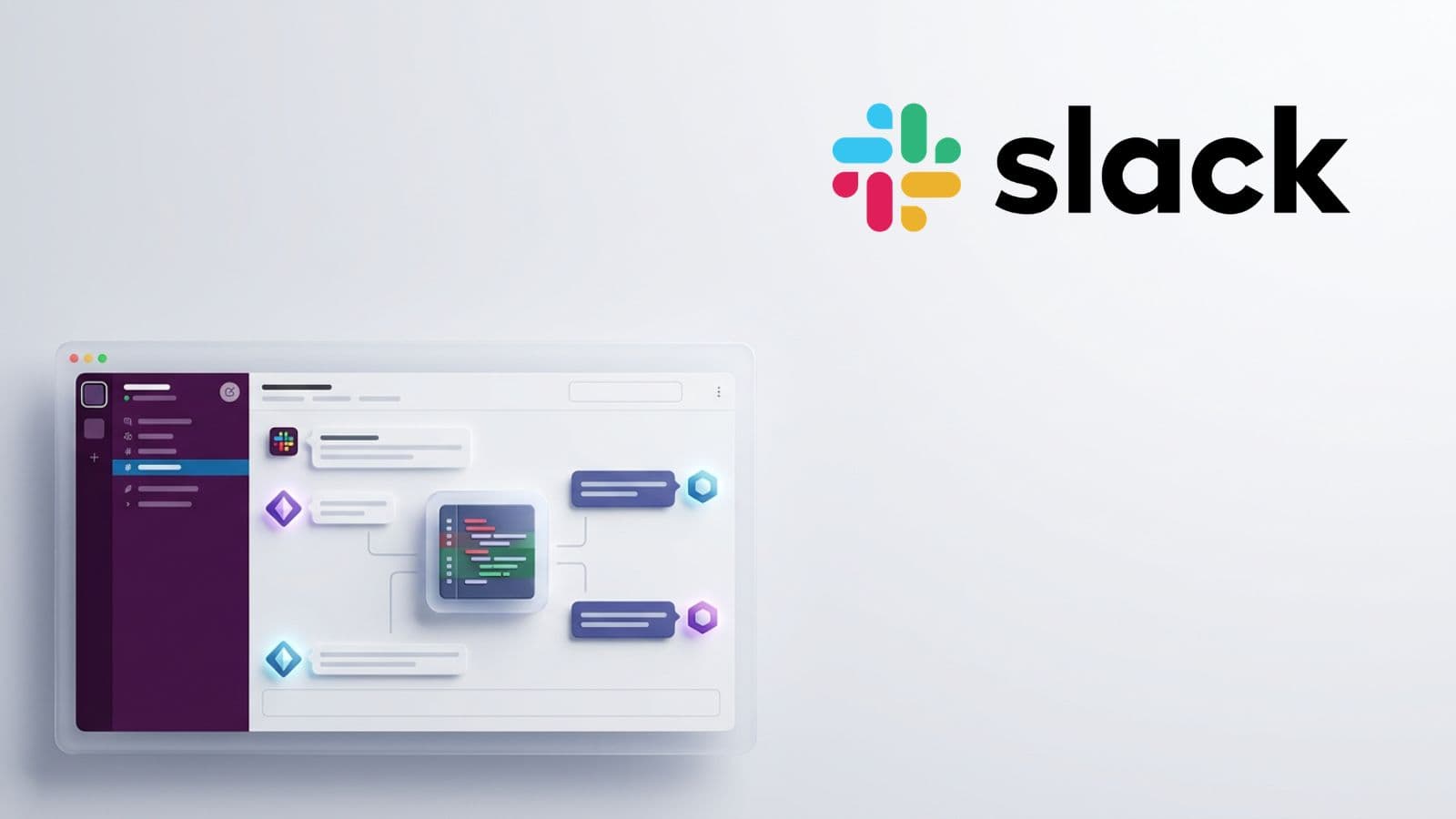
Slack has opened up the coding agent's workspace to the rest of the team. Slack Code, announced on 20 August, lets anyone mention a coding agent inside a project channel and spin up a dedicated "code channel" for that task, with diffs, live previews and planning documents visible to the whole team as the work happens, not just the person who typed the prompt.
How Code Channels Work
Until now, working with a coding agent has usually meant opening a separate tab, prompting it alone, and only showing colleagues the result once a pull request landed. Slack Code puts that process back in the channel. A teammate can flag a wrong assumption or catch a bug while the agent is still working rather than after the fact, and the channel archives itself automatically once the task is done, though it stays searchable as a record of how the work got built.
Slack says the format is already delivering results internally: more than 70% of the code channels its own engineers have opened go from idea to merged pull request within a single day. Permissions inherit from existing Slack admin settings, and high-stakes changes can be routed to a named approver inside the channel itself.
Four Launch Partners, Four Different Agents
Slack Code is live now for teams using Claude, Devin from Cognition, GitHub Copilot and Vercel, with a ChatGPT integration from OpenAI due to follow. The four partners haven't built identical agents. Devin stays quiet until tagged, then works a flagged bug toward a same-day fix rather than letting it sit in a backlog. Vercel posts a live preview link the moment a change ships, so the team can see the result before it reaches users. GitHub's integration is aimed less at engineers and more at widening who can start the work at all, letting a non-technical colleague describe a problem in plain language and pull in an engineer once Copilot has already drafted a fix.
GitHub's chief product officer, Mario Rodriguez, ties the integration to a broader shift in how his company sees the developer's job changing.