Every organisation's IT and audiovisual departments had their own unique challenges in adapting to the COVID-19 pandemic.
The video conferencing explosion in 2020 covered many bases in addressing UC and collaboration needs, but there were inevitably unforeseen quirks that demanded invention for everyday work processes to continue as best they could.
The story of the Royal Academy, a 250-year-old arts institution in London, is especially peculiar and especially delightful.
"It's run by artists who are voted in as Royal Academicians, and we had this challenge with general assembly meetings being held quarterly, where they vote in new Academicians, and interestingly, there is a law around how you vote in Academicians," Benji Fox, Head of Audiovisual at the Royal Academy, outlined to UC Today.
The challenge came when the sign-off of some decisions required people to be 'present' in person at a time when travel was virtually impossible.
There was one law that to be able to vote in, the Academician had to be present. We changed the meaning of that law to say that online can count as being present, which was signed by the Queen. That was the level of sign-off we had!"
Talk about a workplace hierarchy.
"It meant we could deploy a usable hybrid system for being able to vote in Academicians," Fox said. "So we brought in a voting system, and we used SHURE MXCW and multiple PTZ cameras to emphasise the equal seat at the table. That's really important. We take that ethos with hybrid meetings where every member of the meeting, whether they're online or at the table, has the same seat, so to speak."
Meeting equity, ratified by the Queen.
Fox and his "very small" audiovisual team have an expansive remit at the Royal Academy, with their audiovisual installation work encompassing specialised exhibition lighting and network control in individual galleries. Fox and his team also run the events programme, such as overseeing the renowned Benjamin West Lecture Theatre, which was updated post-COVID with new equipment, including an Epson projector.
Fox and the Royal Academy also recently invested in their hybrid meeting and hybrid event technology for it to be broadcast-grade. It's been a significant installation. "In some ways, a steep learning curve, and it's been a full team effort," Fox said. "So we have almost three full modular systems for PTZ deployment for events, multiple camera angles and mixing and recording, which is really good."
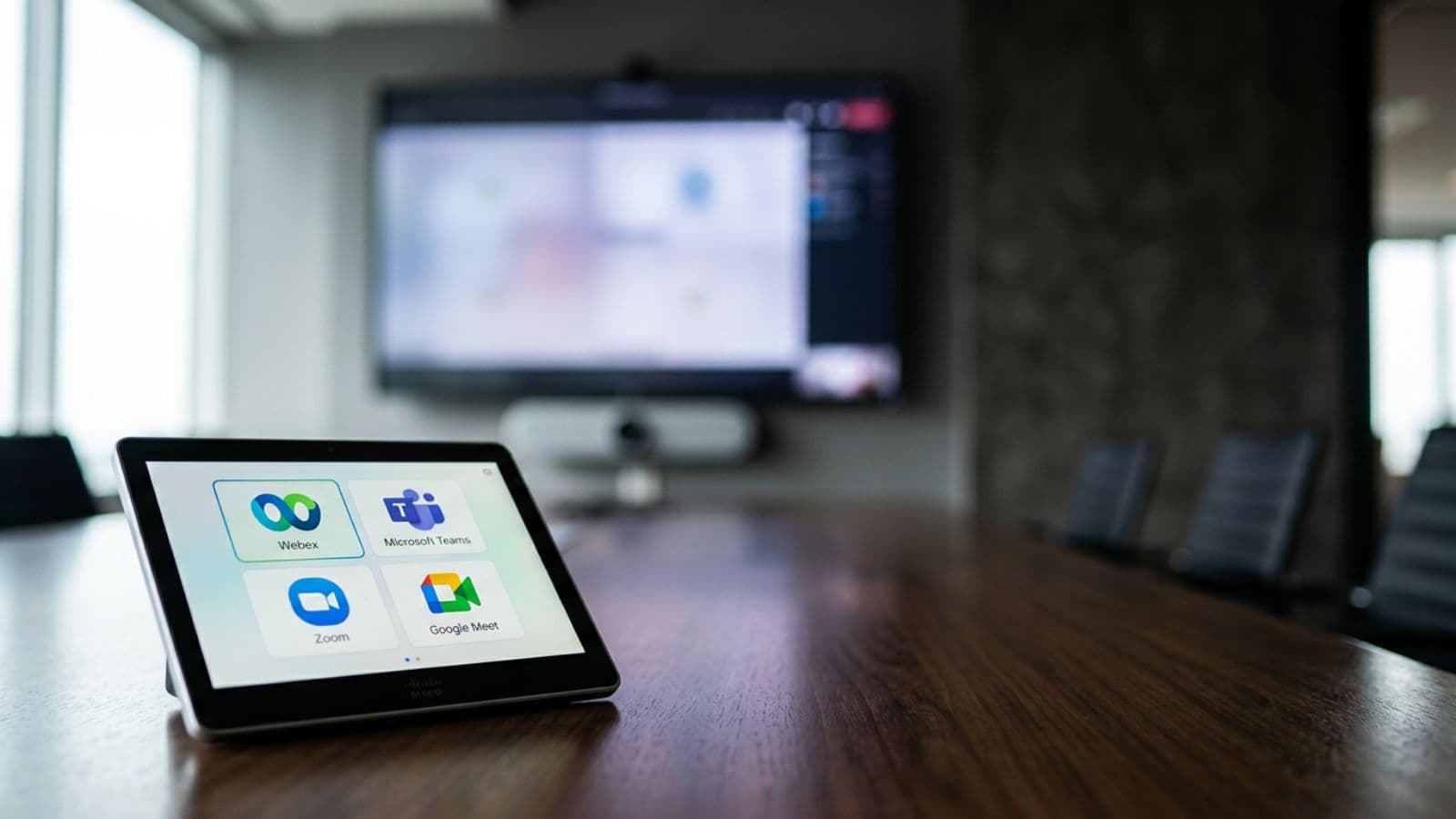
The Royal Academy leverage multiple systems and platforms for its work. Zoom is mostly for video conferencing, with Slack and Teams for messaging.
Another specific quirk for Fox's management of the Royal Academy's tech stack is that the Academy itself is a Grade 2-listed building, which means they don't have "integrated rack rooms and any hybrid meeting space has to be modular and deployed quickly," Fox explained.
"Obviously, they can't just be usable but have to involve the best possible user interaction," with Fox and his team carefully considering the audience for online and hybrid events when managing these technologies. Each audience member should have the "same seat", echoing Fox's ethos on hybrid meetings.
As AV technicians specialising in cameras and sound, four years ago, Fox didn't particularly have a refined ethos on hybrid meetings, but then "all of a sudden a need for hybrid meeting spaces" appeared from nowhere, "but we didn't have the capacity or knowledge to deliver it".
"We went through a bit of a test period where we were trying out different microphones," Fox elaborated. "Some of our meeting rooms can be very big, and you can have up to 20 people attending a table, to very small, so modular and expandable. I'll say the word modular quite a lot! You have to find alternatives in our situation."
The budget was a consideration, as always. There is a more modern part of the building, staff accommodation with a meeting room which does have a Zoom room, but for modular stuff, we use SHURE MXCW system with Ava PTZ. So we tried using tracked PTZ in meeting room scenarios initially with everybody having a gooseneck microphone, and it meant that everybody online could hear individuals perfectly."
The number of UC and collaboration use cases specific to the Royal Academy is remarkable and testifies to the inventiveness of Fox and his staff and the versatility and scalability of the technology they used.