
Everyone's chasing AI. Nobody's watching the pipes that hold it all up.
I'm writing this on Sunday morning as I leave home for Microsoft Ignite in San Francisco. Honestly, I'm more worried about those pipes than I've been in years.
Microsoft Took the Mailbox Down With It
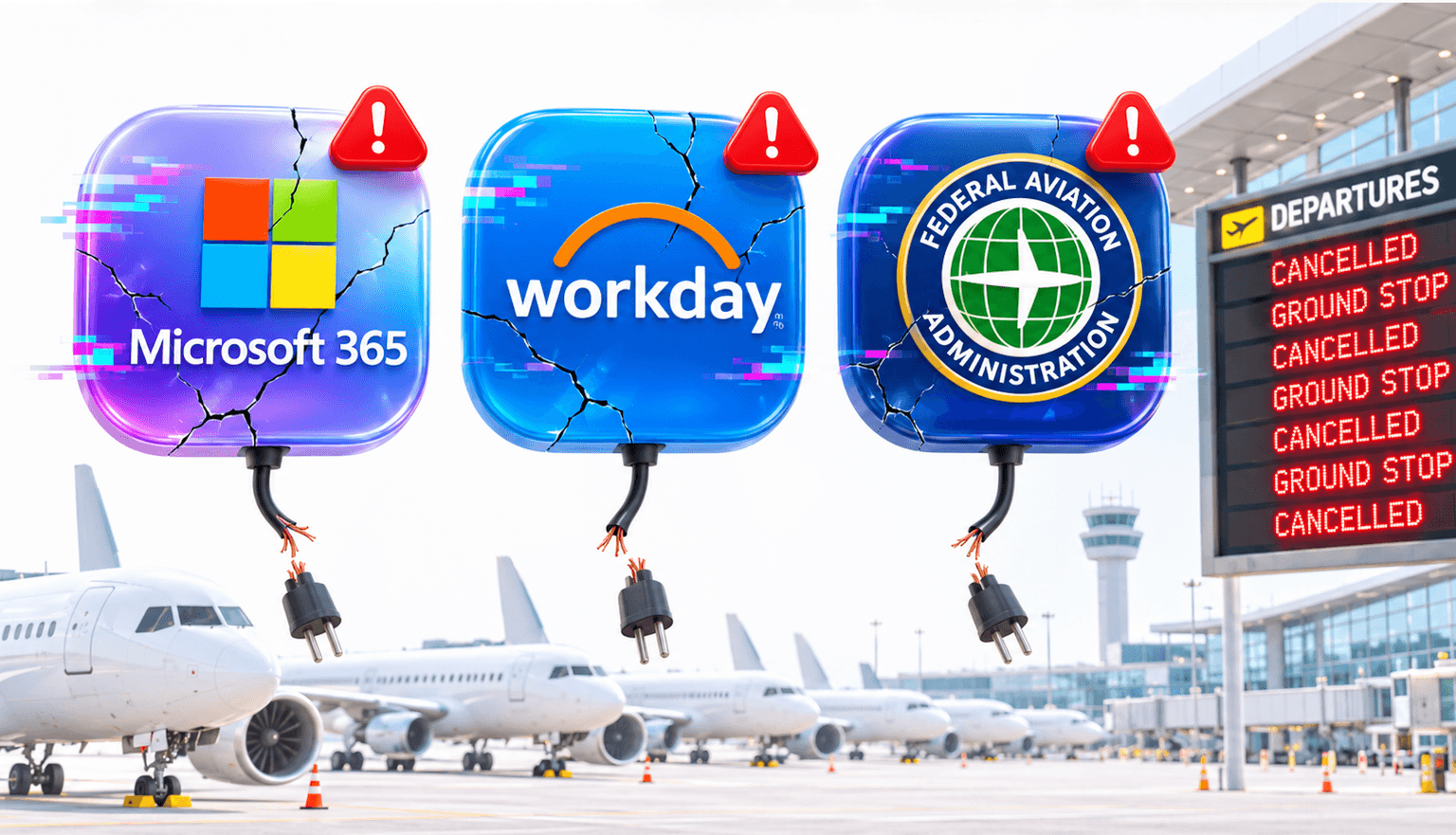
On Thursday afternoon, Exchange Online fell over. Outlook failed for people in more than 70 countries. Teams calls and meetings mostly held, but calendars, invites and everything else hanging off the mailbox broke, as we reported on UC Today. Dynamics 365 Contact Center also went down that evening, CX Today reported, leaving agents unable to take calls.
On Friday evening, while still restoring service, Microsoft said it was "deeply sorry for the disruption," blaming "a technical issue not related to cyber or AI / agents" from "an earlier network capacity upgrade." Not until 06:09 GMT on Saturday did it say it had "restored service to the remaining impacted customers and regions."
A post-incident report is promised. We may never know more than Microsoft chooses to tell us.
Then Workday, Then the FAA
Then Workday went down late Friday. Its status notice said disaster-recovery services "unexpectedly connected to Production databases," leaving data inconsistent. The test meant to prove you can survive a failure helped cause one. Staff couldn't clock in, check pay or finish benefits enrollment. By Saturday afternoon, a Workday spokesperson told ABC10 service was back by 11 a.m. EST, adding, "We recognize the critical services we provide to our customers and their workforces, and we sincerely apologize for this outage." No Microsoft or Workday executive has said a word by name since recovery. Now show us the post-incident report.
Then the FAA issued a nationwide ground stop on Friday. Transportation Secretary Sean Duffy said a contractor was switching old copper lines to fiber at a remote site when a router "started flooding other routers" in the air traffic control network. Reuters called it the longest shutdown since 9/11. Even Duffy conceded, "Maybe the FAA is the last one to be doing this work because the investments haven't been made." L3Harris, which owns that network, said it's supporting the FAA's investigation.
Copper to fiber. In 2026. And one botched swap at one remote site can halt departures across an entire country.
Jeepers. What on earth is going on?
We've Seen This Movie Before
In February 2024, a botched AT&T network change blocked more than 92 million calls, including over 25,000 to 911, the FCC found. In July 2024, a faulty CrowdStrike update crashed about 8.5 million Windows devices. Last year, Google Cloud's API layer crashed globally in June and an AWS DNS fault took thousands of services down in October. Azure Front Door failed nine days later.
Then Cloudflare went down on November 18, 2025, when a bad configuration file spread across its network. It failed again on December 5, and again this February. Different vendors, same pattern. Routine changes, pushed fast, with nothing to catch them.
What's different this week is who blinked. This one rocked the big guy. Organizations migrated to Microsoft 365 for year-round email resilience, and we're still beholden to Outlook. For a day, it wasn't there.
Did Your Disaster Recovery Plan Actually Work?
My message to CIOs and business leaders? The cloud isn't infallible. It can be taken down. This week was a real test of disaster recovery plans. If yours worked, good. If you just assumed the cloud would always be there, you had a massively disrupted day.
We've spent more than a decade migrating to the cloud. We're now so dependent on SaaS always being there that one day out of 365 is devastating for productivity. Of course we recovered. Of course we will again. But the cost of outages needs to go back to the top of the CIO priority list, especially as AI brings more security threats, fraud and attacks with it. I think we'll see this again.
Hybrid setups, local backup and geo-redundancy never went away, and Microsoft itself still sells Exchange Server Subscription Edition.