It’s easy to make a grand statement to boost reputation – far harder to prove you live by its terms.
In the commercial world, messaging and mission statements are a staple: bigging up your brand to bring in new business.
But, although it’s right that those high-level impressions count, it’s often deep-rooted values which really cut through.
Take saving the planet.
Surely no grander a cause with which to align. Surely no bigger a winner in the PR stakes.
True, of course, but real validation demands sustained commitment; even after the initial flurry of attention has abated.
Organisations standing firmly - and permanently - behind their sustainability ambitions are those for whom helping deliver a greener future really matters.
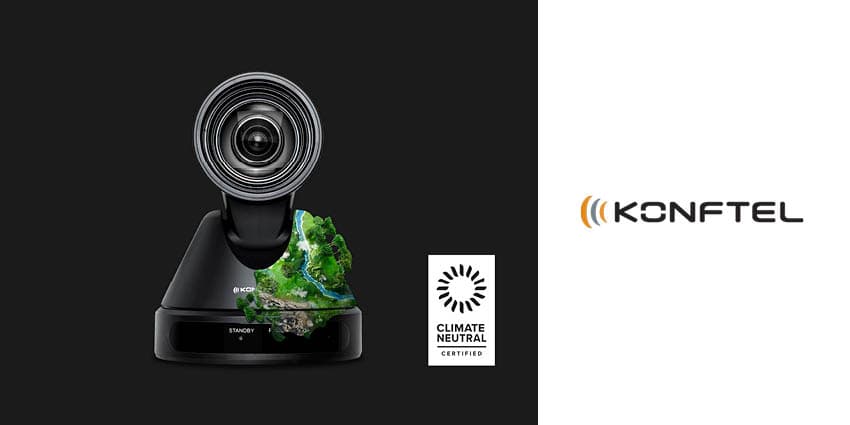
“Our planet is extremely precious and yet is under threat from greenhouse gas emissions that are avoidable if we all try hard enough,” says Stefan Eriksson, Chief Marketing Officer at global collaboration endpoints giant Konftel, which has just secured Climate Neutral status for the third year in a row.
“In an era of agile working with huge demand for conferencing and collaboration hardware, protecting the planet is just as important as connecting those who inhabit it."
“For us, it has become a set of day-to-day behaviours that are now embedded in our ethos and in our processes. We feel good to be making such a positive contribution to the world and, to us, it feels like part of who we are.”
The inventor of the conference phone almost 35 years ago, and now with a growing global footprint, Konftel was the first organisation in the unified communications sector to become Climate Neutral certified, where all greenhouse gas emissions have been offset by credits to support various projects around the world.
As part of this year’s commitments, it will cut the use of plastic bags in its popular Konftel Cam20 and Konftel Cam50 conferencing camera products by 50%, shift from polythene bags to biodegradable equivalents where possible for cables and other small parts, look to increase renewable energy at main manufacturing facilities, and also reduce staff car commuting by 40%.
So far, it has invested in worldwide carbon off-set projects including forest conservation in Zimbabwe, water filtration in Cambodia, renewable energy in India, clean electricity in Indonesia, reducing landfill gas in the US and providing clean cookstoves in Mali.
New this year are forest management in the US, solar and wind energy in China, biomass in India and reforestation in Costa Rica.
But, in addition to the strategy’s altruistic aspect, it also makes commercial sense.
Shifts in consumer attitudes towards global warming are driving increased awareness of the issues and a growing demand for greener, more sustainable products.