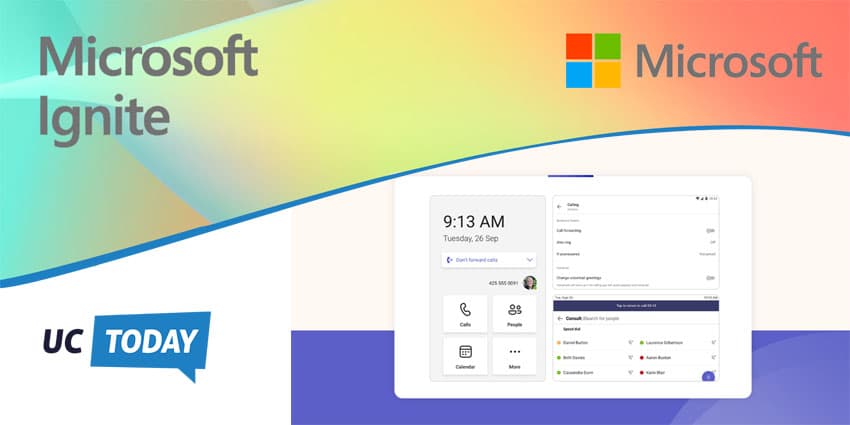
Microsoft announced several new updates to Teams Phone at this week's Ignite, including compelling AI-powered Copilot features.
Copilot in Teams Phone leverages AI to improve users' productivity in the service, including automating less critical tasks and identifying key discussion points and next steps. Teams Phone supports VoIP and PSTN dynamics and is now generally available included in the Copilot for Microsoft 365 license.
Microsoft's Casandra Marrero wrote in an accompanying blog:
Teams Phone equips you with intelligent capabilities that connect your business, increase productivity, and save employees' time, enabling you to work smarter, not harder. Copilot in Teams Phone uses the power of AI to empower you to work more flexibly and intelligently, automating important administrative tasks of a call, such as capturing key points, task owners, and next steps, so you can stay focused on the discussion."
When users wish to refer to previous conversations, including searching for extra details or information they may have missed during the call, post-call support will become available later this November for users to go back to past calls and ask Copilot. Post-call support will become available later this month.
What Other Features Have Been Added to Teams Phone?
Among the myriad other new features being added to Teams Phone is voice isolation, notably different from noise suppression. Noise suppression removes background noises, but voice isolation allows Teams to identify a user's specific voice from other people's voices in their area. Teams will ask a user to engage in an enrollment process and will subsequently be able to recognise a user's voice and suppress other voices.
The Teams Shared Device license now also supports Android mobile devices, allowing frontline workers to make and receive calls through these shared Android mobile devices. Innovative calling features, such as call queues and auto attendants, call park and retrieve, and group call pick-up, are supported when mobile devices are established as common area phones.