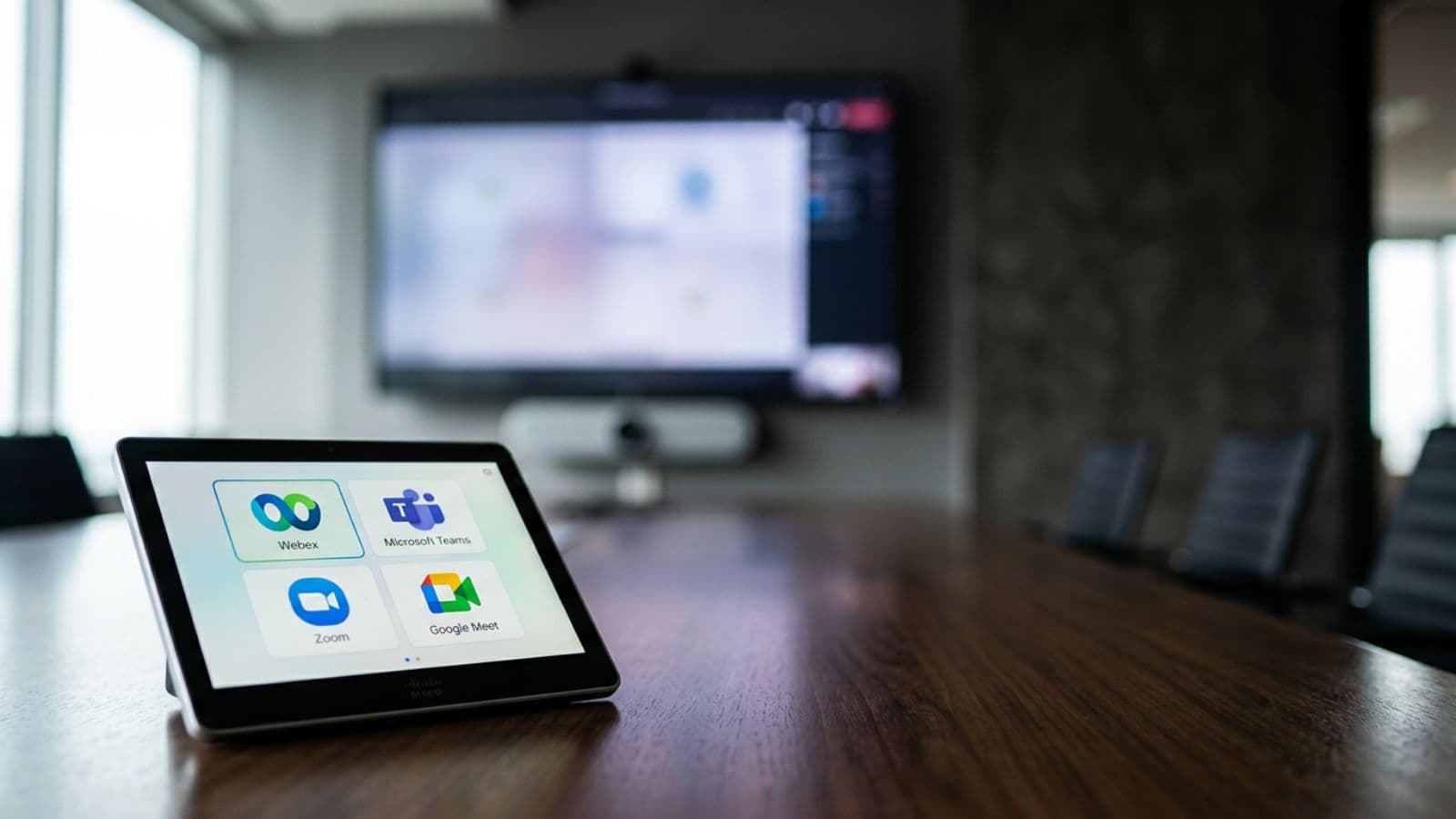
As return to work strategies start to drive workers back to the office for greater percentages of their time, traditional office spaces need to rethink the new blend of on-site, remote and home-working personnel they serve. A key goal is to achieve meeting equality whereby each participant has access to the same features and is given the same level of influence and participation as those in the room. The days of passively parking remote colleagues on a single screen at one end of a meeting room table now look out of date and no longer fit the needs or expectations of workers.
“Videoconferencing has gone through a series of cycles over the last three decades, and in some ways, it’s back where it began with the room being perhaps more important than the technology it contains,” explains Andy Porter, a strategic account director in the international videoconferencing unit of New Era Technology. “We’ve seen the cost-prohibitive dedicated conferencing suites and the poor quality cathode ray tube on trolley experiences and, most recently, videoconferencing becoming a commodity.”
Return to Office
“It’s only now people are returning to the office that the conference room itself has been recognized as still being important,” he adds. “It’s clear that the experience will be better for those in the meeting room so the drive over the last 12 months has been to provide equity of experience.”
Porter points out that the imbalance isn’t all one-way. Physical meeting attendees lack features such as chat that remote colleagues can use to collaborate during a meeting. Therefore, systems that enable richer experiences that enable greater and more natural integration between all meeting participants across multiple channels are needed.
“The importance of meeting design is now increasingly well understood,” says Porter. “Microsoft now offers its Signature Teams Room experience, which sets out the angle of the table, the size of the display, and how the room’s cameras work.”
Room Design goes Beyond Technology
Design isn’t only about the technology now. Porter says rooms increasingly are designed to consider acoustics and camera angles. “Designers now treat acoustic performance with equal importance to the video devices alongside lighting and furniture choices that help to optimise the experience. You won’t see so many glass tables and glass walls for this reason,” he explains.
“The hardware has certainly become more intelligent with videoconferencing cameras now adopting artificial intelligence to detect the faces of participants and zoom to show people who are talking.”
This functionality has previously been available but has been slightly too slow to provide a natural, immersive experience. Now though, the technology has caught up with users’ requirements, and multiple larger screens, improved microphone performance and optimised room layouts augment the advances in camera technology.