For over 160 years, Brinks, Inc. has built a global empire by moving high-value assets with zero margin for error.
While its physical infrastructure is famously impenetrable, the company's legacy communications recently faced a distinctly modern challenge. Brinks urgently needed to migrate over 220 North American branches to the cloud, and they had to execute this without dropping a single mission-critical call.
Maintaining an on-premises Cisco Unified Communications Manager (UCM) had become a burden. Managing this system for over 4,000 users was increasingly complex and resource-intensive. At the same time, Brinks processed roughly 150,000 to 190,000 calls monthly across the Americas. Because of this massive volume, the business required a communication network as resilient as its fleet of armored trucks.
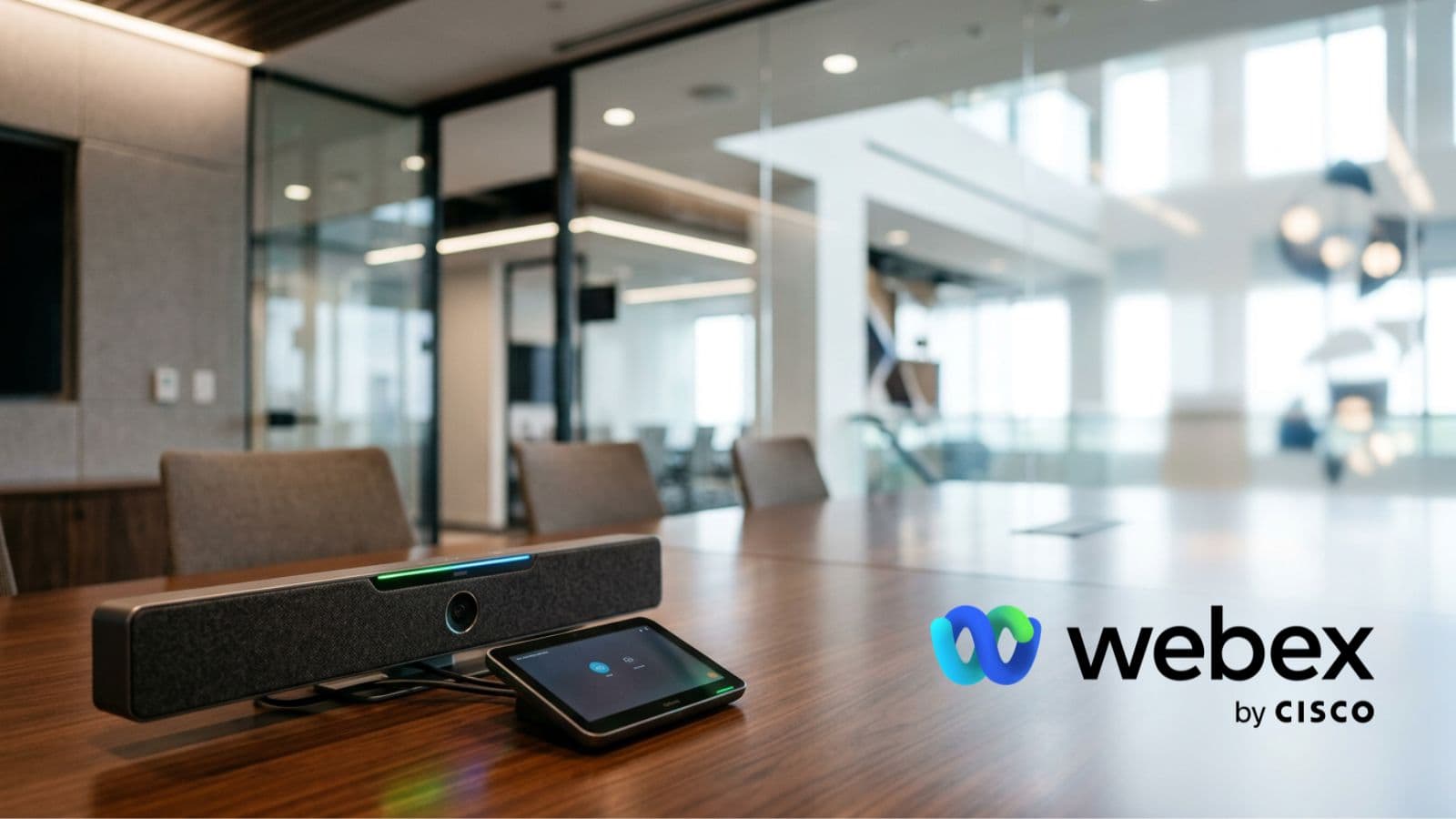
The solution was a rapid, full-scale migration to Cisco Webex Calling, which the team rolled out across the Americas in under 60 days.
The Heavy Lift: Migrating Legacy UCM to the Cloud
Moving large enterprise estates from legacy on-premises platforms into the cloud is a notorious hurdle for global organizations. For Brinks, the old infrastructure demanded substantial hardware deployments at every single site. Manual configuration also consumed valuable IT resources and slowed response times.
"Moving from on-prem call manager into the Webex environment was a huge challenge for us at Brinks because we had to figure out a way to migrate all 220 branches from an on-prem solution into the cloud," recalled Paul Brookshire, Sr. VoIP Engineer at Brinks.
"Our main concern was how do we migrate over 220 branches without affecting the customer and our end users?"
To ensure absolute continuity, the IT team established a SIP trunk to connect its legacy systems directly with the cloud. This strategic move provided a single port for over 10,000 Direct Inward Dialing (DID) numbers, enabling a highly controlled, branch-by-branch migration schedule. By taking this phased approach, Brinks successfully bypassed the growing pains of a massive cloud transition.
A Single Pane of Glass for a Single Engineer
The true ROI of this migration is perhaps best illustrated by the administrative efficiency it unlocked for the Brinks IT department. Today, the company manages its vast network of users and endpoints through Cisco’s Webex Control Hub.
For Brookshire, the platform's centralized management capabilities have been transformative:
"The tangible result was Brinks being able to manage all of our branches from a single pane of glass."
"I’m the only voice engineer at Brinks, so being able to utilize that single pane of glass for all of the branches across the Americas is significant for us."
This newfound agility also allowed Brinks to drastically reduce its hardware footprint. After rolling out the Webex softphone application to corporate and global office employees, the company eliminated the need for physical desk phones in those locations. Instead, they reserved dedicated hardware solely for mission-critical branch environments.
Embracing a Multi-UC Environment
As we frequently cover here at UC Today, the modern enterprise rarely operates within a single vendor ecosystem. Brinks is no exception to this trend. Recognizing that its distributed workforce needed to collaborate seamlessly, the company prioritized interoperability to support a true multi-UC environment.
To bridge the platform gap, Brinks leveraged Cisco Boards alongside integration licenses, enabling native, frictionless meetings between Microsoft Teams and Cisco hardware.
"The integration Cisco and Microsoft Teams has partnered with has allowed for a much smoother experience during conferences," Brookshire noted.
Looking Ahead: AI Receptionists and Global Scale
With the foundational migration complete, Brinks is already looking toward the future of customer experience and operational efficiency. Currently, every inbound call routes through an auto-attendant system, which has yielded highly positive feedback. The company plans to elevate this experience by deploying AI-powered receptionists in the near future.
"The customer feedback has been very positive, and we’re looking to implement AI receptionists to help enhance the customer experience," Brookshire shared, adding that he remains open to implementing new AI use cases and analytics tools as they emerge.
Looking at the bigger picture, the scalability of Webex Calling is a massive operational advantage. As Brinks continues to grow by acquiring or merging new branches, the communications rollout process is practically plug-and-play.
For an organization built entirely on reliability and trust, this modernization proves that security and agility can go hand-in-hand.
As Brookshire summarized: "Using Webex Calling and Control Hub has been a game changer for Brinks. It has allowed us to easily deploy and install new locations by using a single pane of glass, which has virtually allowed us to manage all of our endpoints and users much easier."