COVID has definitely made some changes to the work environment that are here to stay, and the term "hybrid workforce" doesn't seem to be going anywhere. As the business definition of a normal work environment is changing, so do the communication means required to maintaining it.
I sat down for a fascinating chat with Marcus-Michael Müller, Yamaha's Head of Sales & Marketing Unified Communications Europe, to discuss the future of communication and collaboration in light of the not-so-new reality.
"If we look into the future, I think some people will get used to working from home and like it, and others will hate it and want to go back to the office," says Müller.
"Once this division becomes a permanent reality, the main challenge is going to be combining employees working from home with those working from the office."
"Another challenge will have to do with the changes to the office environment itself," Müller explains.
"I think for the next two years, people are still going to be afraid of being packed together in a small room. We will probably see more and more open spaces, and less people-per-room."
So, what do we need in order to better equip ourselves for a hybrid, socially-distanced future?
Different Technologies for Different Use Cases
In order to properly adapt to the new work environment, companies and workers will probably be required to use various types of communications solutions, depending on the use case.
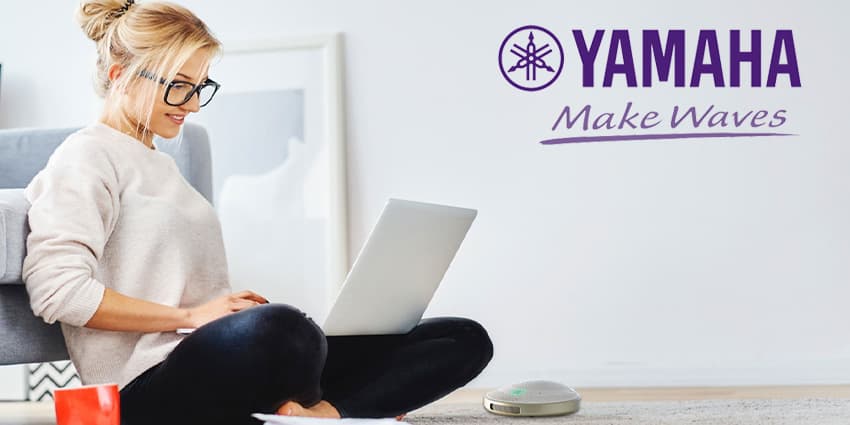
When it comes to the individual-user level, for example, Müller believes people are likely to move from personal headsets to personal portable speakerphones.
"When you wear a headset for hours on end – it makes you feel capsulated, as if you're in a bubble with yourself. Many people find this uncomfortable. Using a portable speakerphone, like Yamaha's YVC-200, allows one to speak freely wherever they are – whether it's on the road, at home or in the office. This takes care of that inconvenience while providing great sound quality."
Another change that Müller believes will expand further is the transition from working in small offices to working in open spaces, in order to help maintain social distancing.
Open spaces equal more people in the same room, which entails more noise in the background when conducting calls.
"I believe people will lean more and more towards solutions that have excellent noise cancelling capabilities. I can already see Yamaha's YVC-330 speakerphone gaining more popularity, since it's based on SoundCap technology. SoundCap creates a type of 'bubble' around the users it in order to keep irrelevant noise from being transferred to the far end, which means participants are heard much more clearly."
According to Müller's vision, future open spaces will be used for more than just individuals working side-by-side, but rather for workshop-type group work. And as some people will have to take part in that work remotely – things must change in terms of equipment in order to allow better collaboration.
"This will probably require a solution allowing everyone to walk around the room freely, enabling this type of group work while maintaining social distancing. Yamaha's CS-700 soundbar, for example, allows a wearable microphone extension which could be perfect for that purpose."
"Another possibility would be using a ceiling mic, like Yamaha’s ADECIA Ceiling Solution. And then you might want to add cameras or use smart boards – so that when someone writes something on the board, everyone can see it no matter where they are. This creates a complete collaboration, experience incorporating both verbal and nonverbal communication"
Quality Sound Wherever You Are
Ultimately, we will have to come up with creative ways to be able to communicate and collaborate in this new hybrid environment – in such a manner that would truly make us feel as if we're all in the same room together, even when we're not.
According to Müller, this might result in a true BYOD reality, in which each person has their own smart device – "a type of mobile microphone and speaker" – that can be paired with other devices as necessary. But unlike our current mobile devices – our smartphones – this futuristic version would provide top-notch sound quality.
Something else that is extremely relevant in this context is endpoints' ability to work with different platforms.
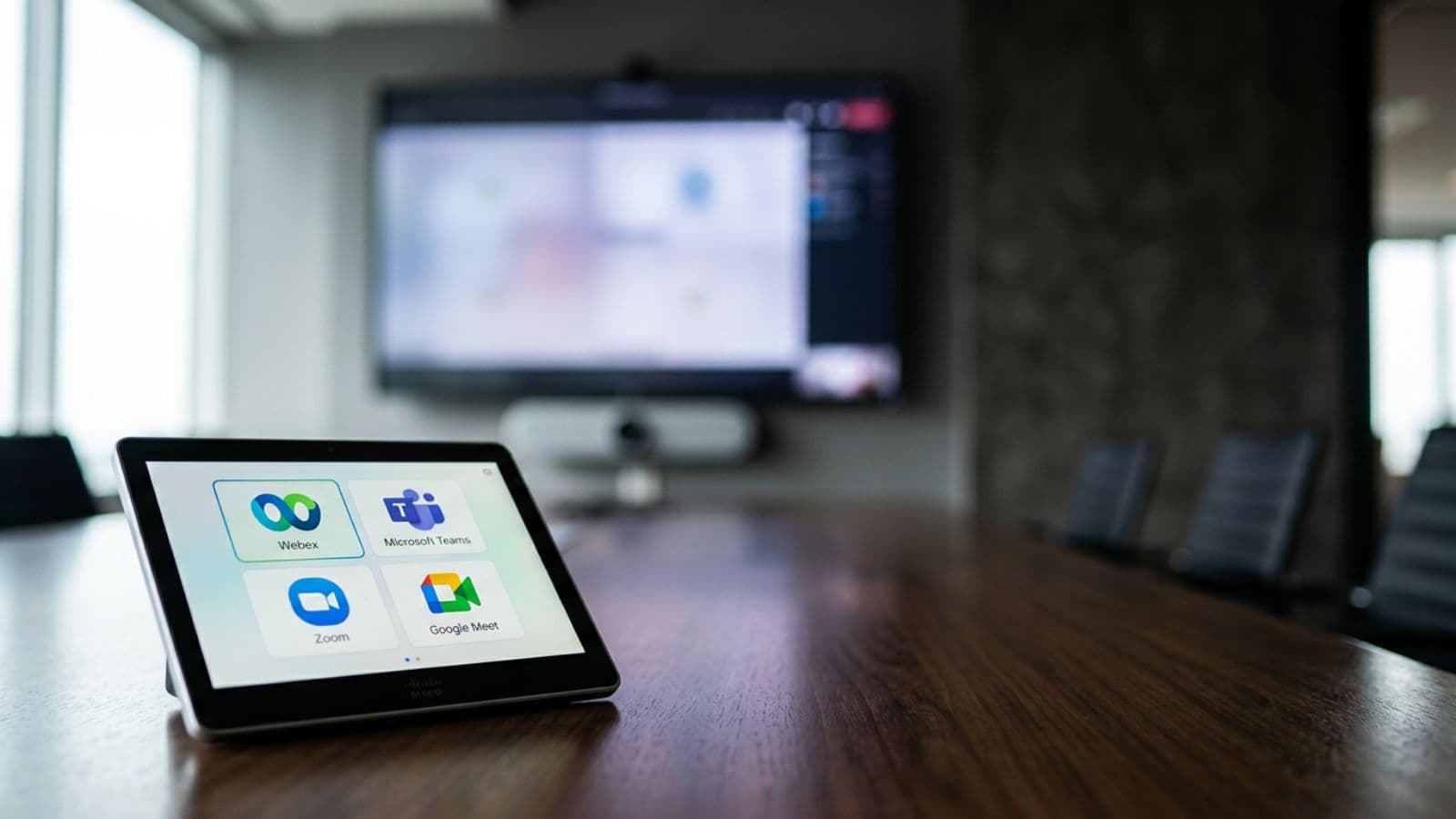
"At the moment, there are a few main popular UC platforms – Microsoft Teams, Zoom – that people got used to working with" Müller explains. "But in the future the variety of platforms is likely to increase further – not only for communications, but for collaboration as well. This is why we make sure to include software-agnostic products in our product range."
"At the end of the day, sound is nearly always the most critical element for proper communication," Müller concludes.
"So it's critical to take the best sound with you wherever you go."