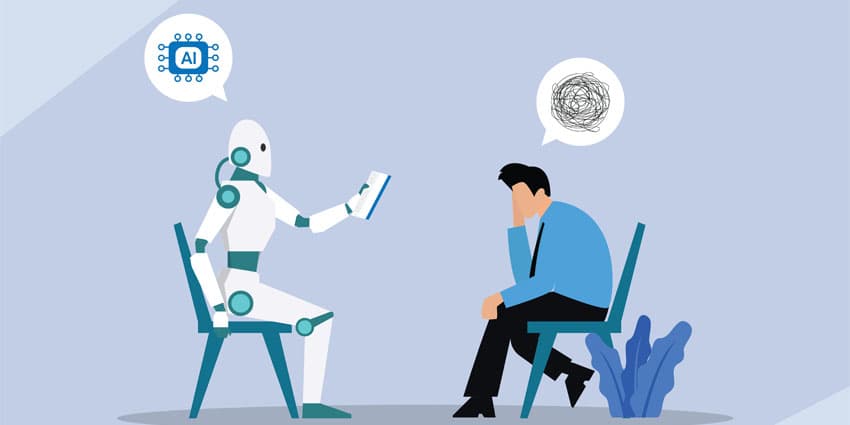
AI is no longer pitched as just another tool, yet another vehicle for boosting productivity and refining workflows in a long line of systems and platforms. It's now being packaged and presented as a genuine assistant, or even more significantly, an authentic digital colleague.
That level of import, and the colossal investments that thousands of businesses around the globe have made into the technology, has quickly transformed AI into a performance baseline, a compliance metric, and in some cases, a proxy for competency.
At the language learning app Duolingo, executives recently informed their workforce that AI proficiency will now factor into performance reviews, and teams must justify new hires by demonstrating that the work can’t be automated. Meanwhile, a Howdy survey of US professionals found that one in six workers admit to pretending to use AI to avoid being judged incompetent, even when their actual workload doesn’t require it.
These two cases are arguably symptom signals, and behind every mandate to “use AI or fall behind” are human minds under pressure; minds that crave mastery, connection, and acknowledgement. When algorithms or checkboxes displace these needs, workers may react in ways both overt (such as burnout and disengagement) and latent (including identity erosion and dissociation).
The mandate to adopt AI is reshaping not only workflows but also workers’ sense of self, socially, mentally, and emotionally. It's time to ask whether this is a benign evolution of what work becomes, or if it's creating a new dissociative frontier. Are we liberating humans from drudgery, or stripping away the very impulses that make work meaningful?
Christina Muller, Workplace Mental Health Expert & Consultant at R3 Continuum, framed the tension succinctly to UC Today, “AI is a partner in the workplace, not a replacement for talent — if we choose to see it that way.”
However, she warned that the danger lies in overreach:
The issue comes when people use AI to replace their creativity, the work they already do so well. Sure, some tasks can be automated, but the intellectual capital and nuance humans bring can’t be fully replicated."
Fulfilment vs Mechanisation, and Losing Meaning Under Efficiency
The transition from hands-on work to managing AI can feel like graduating from craftsperson to curator. Dr Daniel Glazer, a Clinical Psychologist with a special interest in trauma, described to UC Today how “when someone’s role becomes primarily about managing AI-led processes or curating content generated by a model, they can lose the sense of craftsmanship that used to ground their professional identity.”
Over time, the gratification loop, such as solving a problem or producing something, becomes more procedural and less emotionally resonant. This shift can feed depersonalisation: “a sense of observing yourself working rather than doing the work,” Glazer warned.
Muller saw the flip side, too. “Research supports that real fulfilment isn’t rooted in efficiency but in feeling that the work you do matters, that it makes a difference.” To her, the real risk is that reliance on technology can hollow out that sense of mission. “If we lean on technology to replace too much of that human element, people can lose the sense of meaning that actually drives performance and, ultimately, satisfaction.”
This paradox is evident in empirical surveys. A longitudinal German panel study suggested that AI adoption is negatively associated with workers’ well-being when mediated by economic fears and health stressors. Another study in Nature found that AI’s effect on well-being is indirect: it depends on how tasks are restructured, optimised, or stripped of human judgment.
Additionally, according to a study from PubMed Central, in service sectors, “AI job anxiety” is significantly and negatively correlated with life satisfaction, mediated by negative emotion. This underscores that psychological stress is not just speculative but detectable, indicating that even the most significant gains in productivity may carry hidden costs for workers' meaning and morale.
Disconnection and the Social Cost of AI Middle Management
Isolation, not automation, may become the signature injury of AI-driven work. Muller put it plainly:
I see the real risk being isolation, not automation. People instinctively need to feel connected to what they're doing to feel fulfilled; otherwise, they can become disengaged and even experience burnout. The trickling impact on identity and even accountability can become more apparent with more reliance on AI."
AI adoption can horizontally erode interpersonal spaces. With asynchronous, algorithmically mediated workflows, fewer in-person checkpoints, and communication filtered through tools, the sense of shared struggle or team identity may fade. In such an environment, emotional intelligence and relational capacity risk becoming collateral damage.
Fundamentally, if creativity and empathy are undervalued, we may measure worth in terms of efficiency rather than contribution. In turn, AI has the potential to dull the emotional intelligence that keeps workplaces connected and morale high.
Much has been made of the AI literacy of younger generations entering the workforce, as they have grown up more organically with the technology. Putting aside the separate, equally daunting concern about AI displacing junior roles, there is also a worry that while younger workers may be more technically fluent, they are also more amenable to metric conditioning.
"They were born fully into a digital world, meaning they are fluent in the landscape and adaptable, but also vulnerable to conditioning through instant gratification — likes, metrics, and automated responses," Muller said. "This may seem more efficient, but it can create distance between the human touch and a sense of purpose."
"AI also doesn’t carry the same ethical responsibility that humans do, and that’s consequential in safety-sensitive industries or in roles where the stakes are high, like healthcare, aviation, and finance.”