Zoom has arrived in Las Vegas for Enterprise Connect this week with a clear message: AI that summarises isn't enough.
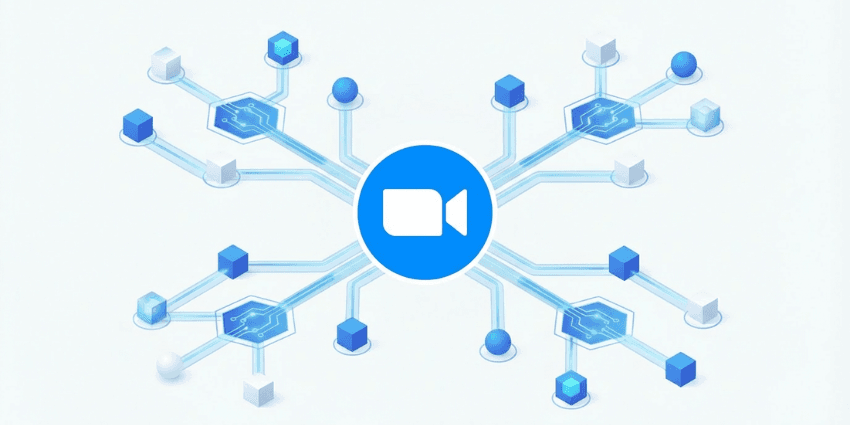
The company has spent the past year building what it calls a "system of action": a platform where meetings, calls, and customer interactions don't just generate notes, but trigger real workflow automation across enterprise systems. Today's announcements are the fullest expression of that vision yet, building on agentic capabilities first introduced at Enterprise Connect 2025 and accelerated through Zoomtopia last October.
Read More: Heading to the show floor? Check out Your Ultimate Guide to Enterprise Connect 2026: Navigate Vegas Like a Pro for the sessions, speakers, and trends you can't miss.
Zoom AI Companion 3.0: From Assistant to Agent
At the centre of the announcement is the expanded rollout of AI Companion 3.0, now available across the full Zoom Workplace app, Zoom Business Services, and Workvivo. Previously limited to the browser, the upgrade leverages Zoom's federated AI platform to connect conversations, enterprise data, and third-party applications. Monthly active users more than tripled year-over-year in Q4 — a sign that adoption is accelerating, not just available.
The more capable tier sits in the Custom AI Companion add-on. Organisations can build and deploy custom AI agents — without any coding — that act across systems including Salesforce, ServiceNow, Slack, Box, Google Drive, and OneDrive. Prebuilt agents for Sales, IT, and Marketing are ready out of the box. A personalisation and memory layer means the assistant adapts over time, learning from a user's role, preferences, and working patterns to surface more relevant guidance.
Rounding out the Workplace update are new AI canvases — Zoom AI Docs, AI Sheets, and AI Slides. Teams can convert meeting conversations directly into structured documents, data models, and presentations without leaving the platform. Zoom is also launching Zoom AI Services, a suite of enterprise-grade APIs that opens its proprietary transcription, translation, summarisation, reasoning, and image-processing technologies to developers. It's a signal that Zoom sees itself not just as an application vendor, but as an AI infrastructure layer — and it opens a new route to market through developer and partner ecosystems.
Zoom Phone and Workplace: AI in the Flow of Work
Zoom Phone, which now supports more than 10 million seats globally, gets a mobile-first overhaul. Its full AI feature set — previously web-only — is now available natively in the mobile dialler, keeping AI calling capabilities intact wherever work happens. Agentic workflows automate post-call tasks such as drafting emails and sending summaries, while expanded analytics in the Customer Engagement Pack help customer-facing teams prioritise high-value calls and track performance across calls and SMS.
The AI Receptionist (formerly AI Concierge) also gains SMS capability. It can now manage customer engagements by text — answering questions, collecting information, handling scheduling, and escalating to a human when needed — around the clock.