Apple's September keynote was always going to be a big one. It was the first major product launch under new CEO John Ternus, who took over from Tim Cook eight days earlier, and the headline act was Apple's first foldable phone, the iPhone Duo. Opened, it has a 7.6-inch inner display, the largest ever fitted to an iPhone. Closed, a 5.4-inch outer screen handles everything else.
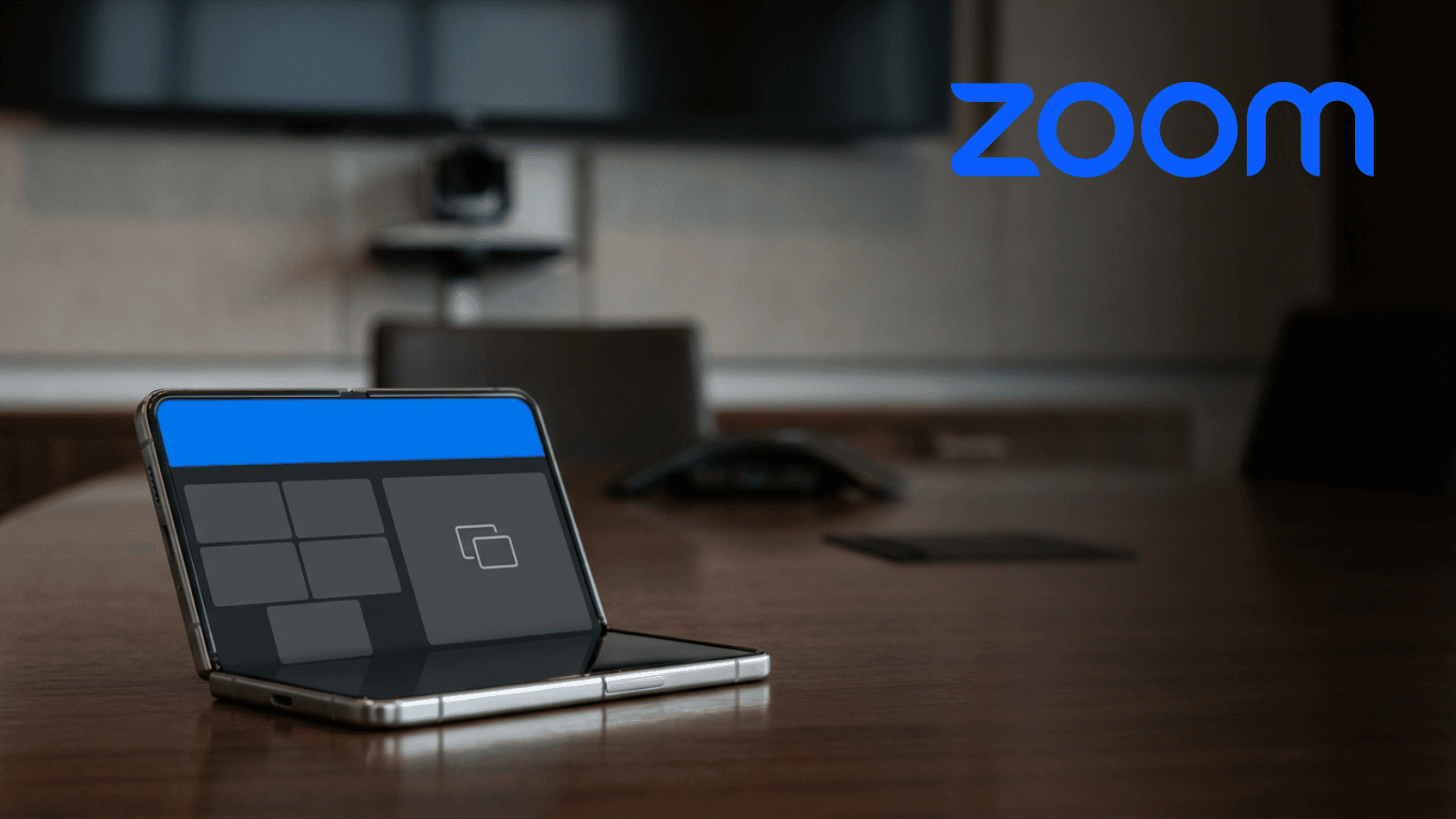
Apple's own announcement named the third-party apps built specifically for the new display, and Zoom made the list alongside Slack and Netflix. The Zoom app turns the inner display into a video conference layout: shared content on one side, participant video on the other, using the full width of the unfolded screen. For a company that's spent the past couple of years being talked about as the platform everyone already has rather than the one anyone's excited about, a name-check at an Apple keynote is a genuinely good week.
Zoom's Head of Design, Angela Guzman, said in a LinkedIn post after the keynote:
Excited by today's Apple announcement of iPhone Duo and the shout-out to Zoom. Congrats to those on my team and cross-functional partners who contributed, as well as everyone at Apple for all the innovation and collaboration.
Guzman joined Apple's iPhone design team as an intern in 2008, working on the original set of Apple emoji, then returned to Apple for five years on projects including FaceTime, before design roles at Google, Airbnb and Pinterest and, eventually, Zoom.
The Layout Isn't New, the Hardware Around It Is
Microsoft built the same split for Teams on Samsung's Galaxy Z Fold 3 in 2021: unfold the phone during a meeting and a shared document fills one half of the screen while video tiles fill the other. Samsung has extended that multitasking approach through every generation since, and this year's One UI 9 update added a three-app split to the Galaxy Z Fold 8, putting a call, a document and a chat window side by side.
What's different with the Duo is when the feature arrived, not what it does. Apple gave developers API and SDK access to the new display ahead of launch, so Zoom, Slack and Netflix could ship support on day one rather than adding it as an update once the phone was already out. Samsung's version came as a software refinement to an existing phone line, years after the category launched. Apple built the same idea into the very first device, on hardware that drops a telephoto lens and Face ID to make room for the hinge and the screen. Whatever else you make of that trade-off, it's a confident one to make on a first-generation product.
Personal Devices vs Room Hardware: A Trend Already Underway
UC Today has been tracking this shift since April: personal collaboration hardware, headsets, desk cameras, compact screens, is growing fast enough that IT teams are weighing how much they still spend on dedicated rooms against equipping individuals well. A foldable that can run a genuine two-pane meeting layout on its own screen is a stronger version of the same argument, because it doesn't need any extra hardware to do it.
Speaking to UC Today about the shift from BYOD to native Microsoft Teams Rooms, Ryan Herbst, VP and Chief Strategist at Unified Communications, said a lot of BYOD decisions come down to priorities rather than cost.