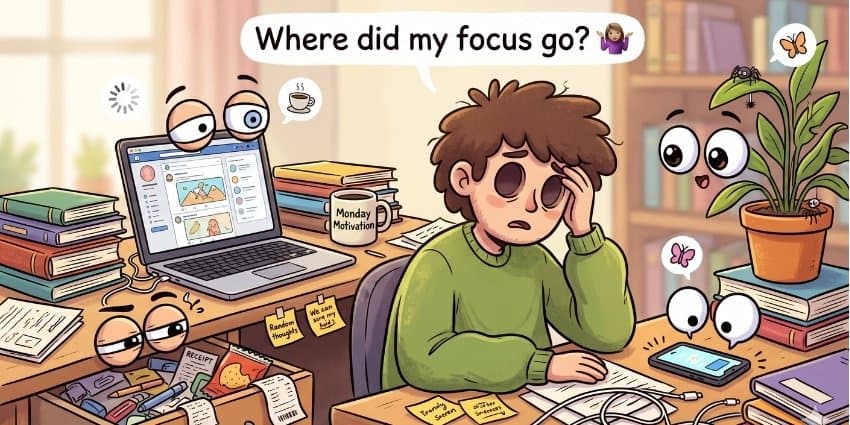
I met Amber at HR Tech Europe in Amsterdam. She was twenty-something, four months into her first proper job after university, and she was trying to explain what her company does."The problem," she said, with the calm confidence of someone who had given this answer before, "is that attention is very difficult to hold on to."
She paused.
"Two seconds and they are gone."
I found myself nodding, in the way you do when someone says something obvious that you've somehow never quite articulated. Two seconds. Less time than it takes to read this sentence. Less time than it takes to decide you don't want to read this sentence. We are, apparently, operating at the very edge of what the human brain is willing to tolerate before it finds something else to do.
This is not, when you think about it, a particularly flattering portrait of our species. But it is probably an accurate one.
Why More Communication Is Making Things Worse
There is a standard corporate response to the attention problem, and it goes roughly like this: send more. If the newsletter isn't being read, send it more often. If the email isn't landing, write a longer one. If the all-hands presentation isn't engaging anyone, add more slides. The logic is understandable. It is also, more or less completely, wrong.
What organisations tend to do is treat workplace communication as a volume problem when it is actually a relevance problem. Or, more precisely, a humanity problem.
Humans have always paid attention to the same things. Stories. Faces. Conflict. Surprise. A sense that something real is being shared between one person and another. We paid attention to these things around fires, in amphitheatres, in pubs, in cinemas. We never really stopped wanting them. We just built forty years of corporate infrastructure that quietly filtered them out.
The memo replaced the conversation. The intranet replaced the noticeboard. The Zoom replaced the meeting, which had already replaced the walk down the corridor. Each step felt like progress. Each step removed something small and human. And now we find ourselves sending communications that nobody reads, to people who are technically paying attention to their screens but are, in any meaningful sense, somewhere else entirely.
Interactive Visual Storytelling as Applied Psychology
What Amber's company, Intractive, is doing is not, at its core, a technology story. It is a psychology story. The platform is interactive and visual, yes. It works on any device, embeds anywhere, tracks engagement, and surfaces data. All of that is real and useful. But the underlying premise is older than any of it.
If you want someone to pay attention, you have to give them something worth paying attention to.
The ASML campus tour Amber showed me, built to attract engineers, was vivid and specific. The Dutch police pre-selection tool, designed to filter recruits before they waste anyone's time, was honest enough to tell people early when they weren't a good fit. These are not polished corporate productions hiding behind clever software. They are organisations that have decided to be, in some small way, real.