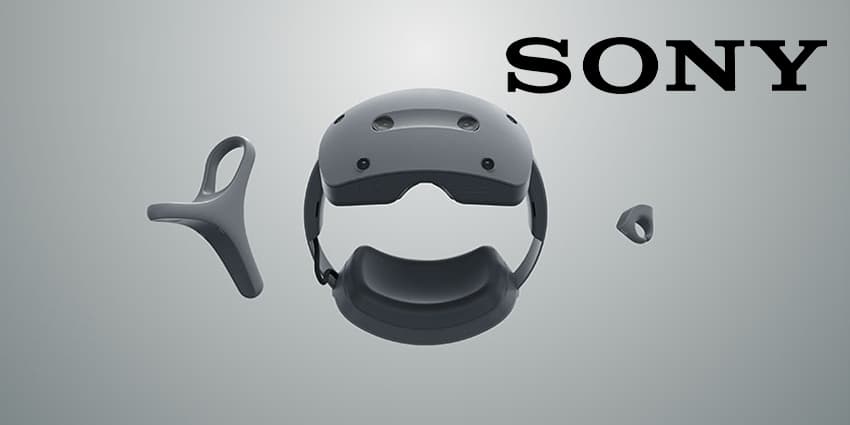
A Sony XR headset is coming – and it’ll be unlike anything you’ve seen from the tech company before. Sony is advertising this new device as a “spatial content creation system” intended to help organizations and developers create intuitive extended reality experiences.
Rumors about the potential features and capabilities have been circulating since the beginning of this year when Sony first announced it would be working on a new XR solution. However, for a while now, things have been pretty quiet. It wasn’t until leaked information from a SIG certification emerged in September that the hype started heating up again.
Now, we have clear confirmation that the device unveiled at CES 2024 is coming to the market (and it may even arrive later this year). So, what can we expect from the Sony XR headset?
The Sony XR Headset: What we Know So Far
Unlike most XR innovators (such as Meta), Sony has been a little more forthcoming with insights into its impending headset. The company actually showed off some prototypes of the device earlier this year at the January CES event.
Even in its early stages of development, Sony’s XR device generated a lot of excitement among enthusiasts, particularly those in the enterprise landscape. Clearly, this premium headset, set to feature high-quality 4K OLED microdisplays, mixed reality passthrough, and a unique set of controllers, targets a specific market.
This isn’t a headset intended for the everyday consumer – but one created to empower 3D content creators, designers, and developers in the business landscape. While Sony hasn’t released an official “specs” list, for the headset, we do know a lot about it based on previous demonstrations and leaks.
For instance, we know the device will feature Qualcomm’s latest Snapdragon XR2+ Gen 2 platform, similar to high-end headsets from PICO and Varjo. We also know it will take advantage of Siemen’s unique “XCelerator engineering software”, thanks to the partnership between Sony and Siemens.
Here’s a quick run-down of the specs we’re aware of so far:
- 4K micro-OLED displays
- Snapdragon XR2+ Gen 2 platform
- Full-color passthrough
- Unique ring and pointer controllers
- Head and hand tracking support
- Lightweight, adjustable design
- Unique 3D content creation applications
The Design: The Look and Feel of the Sony XR Headset
As mentioned above, we already have a good insight into what Sony’s XR headset will look like, thanks to the prototypes demonstrated at CES this year. However, it’s worth noting that the design (and even the features) might change slightly before the device is released.
At a glance, this headset certainly seems a lot “clunkier” and bulkier than some of the other leading headsets we’ve seen lately, like the Apple Vision Pro. However, early reviewers have said the headset is still relatively comfortable, with good weight distribution and highly stable straps.
It’s also large enough to accommodate people wearing glasses, which is handy if you don’t want to invest in custom lenses. The headset is adjustable from front to back, and it has excellent padding around the forehead for extra comfort.
Probably the most exciting design feature, however, is the flip-up display. Unlike other mixed reality headsets, which include buttons and software to help you switch between virtual reality and seeing the world around you, Sony’s facial interface flips up and down. This means all you need to do is lift a visor to jump back into the “real world.”
That might not seem like a huge upgrade from a design perspective, but it’s an excellent way to make sure you can rapidly “unplug” from any immersive experience. You also get extra air circulation support around the face and eyes, which is great if you overheat in XR.
The Display and Visual Quality
From a visual perspective, Sony is definitely taking strides to compete against companies like Apple, Varjo, and PICO, with it’s incredible 4K resolution per-eye display. The company has designed its headset from the ground up with cutting-edge OLED micro displays, which essentially give you a combined display resolution of 8K.
According to early reviewers, who got to test Sony’s headset with a tour of a virtual museum space, the display quality is phenomenal. Text is clearly legible on the screen, and the images feel crisp and realistic. Thanks to the highly powerful processors in the device, you shouldn’t have to worry about feeling nausea or discomfort due to lag either.
The field of view might be a little narrower than what you’d get from other high-end headsets (rumors suggest it will be around 100 degrees). However, you should still get an excellent experience regardless of whether you’re designing or collaborating in XR.
Sony hasn’t revealed any information sharing what the audio will be like on this headset yet. However, we’d expect some form of spatial audio enabled by high-quality speakers, as well as integrated microphones for teamwork. After all, these features will be crucial if Sony wants to capture the attention of the enterprise market.