Workplace technology is no longer confined to the applications people use to message colleagues or join a video call. It increasingly includes the physical environments in which work happens, the displays and devices that shape those environments, the data flowing between systems, and the automation that helps people act on it.
That definition is especially visible in broadcast production. A studio is a workplace in the most literal sense: a place where presenters, designers, producers, camera operators and technical teams have to collaborate in real time. Its technology must support their work without becoming the story or breaking the illusion for audiences.
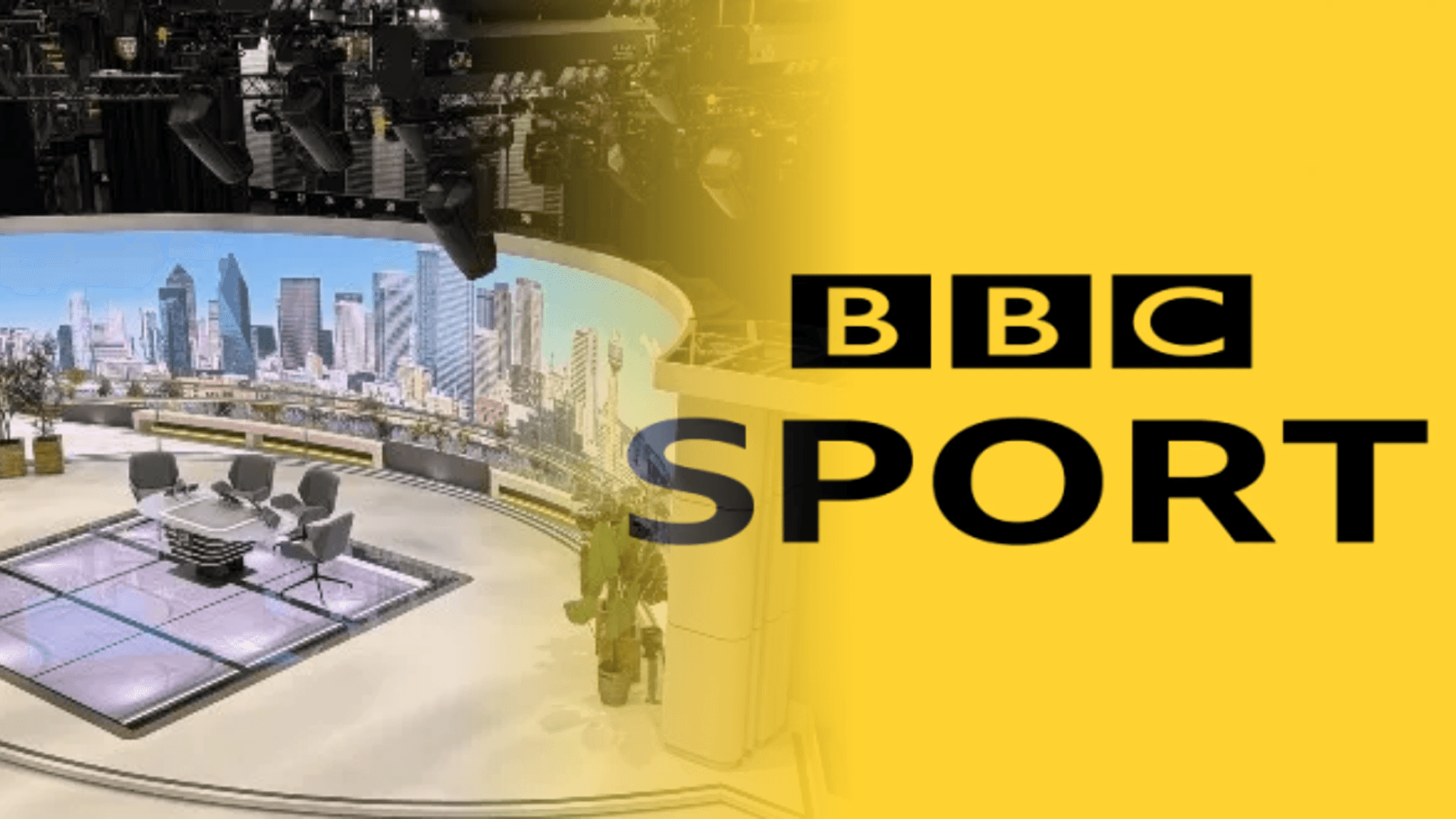
For BBC Sport, that challenge has become more acute as production teams seek visually expansive coverage from tighter physical spaces. The broadcaster’s Salford studio upgrade, centred on an extended reality (XR) environment built with ROE Visual LED technology, offers one example of what an immersive workplace can look like when the room, workflow and creative ambition are designed together.
TL;DR
-
BBC Sport has added ROE Visual Ruby RB1.5 LED walls and Black Marble BM2 LED flooring to its MediaCity studio in Salford.
-
The aim is not simply a more striking set: it is to create a larger-feeling, flexible production environment within a smaller physical footprint.
-
Its effectiveness depends on more than LED hardware, including camera tracking, real-time graphics, metadata exchange, synchronisation and high dynamic range (HDR) image consistency.
Why Are Immersive Environments Becoming a Workplace Technology Issue?
Organisations across sectors are being asked to make more from less space while maintaining a high-quality employee and customer experience. In broadcast, that pressure can involve fitting multiple visual formats, changing editorial demands and live-production requirements into a compact studio, without reducing the sense of scale expected of major sports coverage.
That is where XR becomes a workplace technology rather than a visual embellishment. It brings together physical set design, display infrastructure, real-time rendering, camera data and production processes to change what a team can create in a particular room. In theory, a smaller space can host a wider variety of scenes and editorial formats without a full physical rebuild between broadcasts.
What Is Extended Reality?
Extended reality (XR) is an umbrella term for technologies that blend physical and digital environments. In a broadcast studio, it can combine LED displays, tracked cameras, real-time graphics and virtual set extensions so that presenters appear to operate within a larger digital scene rather than against a conventional static backdrop or green screen.
That promise comes with a stricter technical requirement than a standard display installation. A camera placed close to an LED wall can reveal the screen’s pixel structure; the interaction between a camera sensor and LED grid can also create moiré, the distracting pattern interference that can undermine an otherwise convincing shot. Colour, brightness and reflections must remain consistent across the physical set, LED floor and virtual imagery, particularly in HDR workflows.
The people using the environment also remain central. A studio is only adaptable if presenters can work naturally within it, designers can update it quickly and technical crews can maintain reliable synchronisation across the production stack. In other words, flexibility is an operational outcome, not a specification on a display datasheet.
What Has BBC Sport Changed in Its Salford Studio?
BBC Sport has invested in ROE Visual’s Ruby RB1.5 wall panels and Black Marble BM2 LED flooring at its MediaCity hub studio in Salford, according to AV Magazine’s report on the installation. The 1.5mm pixel pitch of the Ruby RB1.5 is intended to support close camera operation while retaining a smoother, more video-like on-camera result.
The installation follows BBC Sport’s XR work around UEFA Euro 2024 and its full-LED environment for the 2026 FIFA World Cup. A Pixotope case study describes BBC Sport’s World Cup workflow as combining HDR and XR production for remote coverage; as a vendor case study, its account should be read as supplier-provided rather than independent performance verification.
For the permanent Salford installation, BBC Sport Design Director John Murphy said the move into a smaller space required “a more creative approach” to LED. He said a bespoke finish was developed for the glossy BM2 floor panels and that, alongside set extension, high-end graphics and fast metadata exchange, the technology could create “a much larger visual environment from a more compact footprint.”
Why Now?
BBC Sport’s studio investment arrives as the broadcaster is reshaping its output for digital audiences while managing financial and operational pressure. The Guardian’s analysis of the BBC Sport revamp reports a shift towards digital-first video and social formats alongside job reductions and continuing debate around the breadth of the public-service remit. A reusable XR environment cannot resolve those editorial questions, but it could give production teams more options within a limited studio footprint.
The physical floor is significant here. Rather than operating as a passive surface, it contributes to reflections, depth and continuity between the physical and virtual parts of the set. ROE Visual’s Director of Broadcast and Virtual Production, Olaf Sperwer, said the custom configuration was designed to enrich darker visual content and make the LED floor “an active aesthetic element” in the storytelling.
Those are vendor and project-participant claims, not independently measured outcomes. Still, the design logic is clear: if XR is to become a durable part of a workplace, it has to work across the room rather than stop at the rear wall.
What Does an XR-Enabled Production Workplace Need to Work?
The BBC Sport deployment illustrates why an XR environment should be assessed as an integrated workplace system. The LED panels are visible, but the experience depends on the less visible layers that allow people and imagery to occupy the same perceived space.
-
High-resolution display infrastructure — Pixel pitch must suit the intended camera distance and framing, particularly where presenters will stand close to the screen.
-
LED surfaces beyond the backdrop — Floor panels can add visual depth and continuity, but they introduce further demands around durability, reflectivity and colour matching.
-
Camera tracking and synchronisation — The virtual scene must respond to camera movement accurately and with sufficiently low latency to preserve the illusion.
-
Real-time graphics and set extension — Creative teams need a workflow that can adapt the environment without requiring a physical set rebuild for every new format.
-
Metadata exchange — Camera, graphics and production systems need current shared information so that the composite environment remains aligned.
-
HDR consistency — High dynamic range requires controlled handling of brightness, contrast and colour across physical and virtual elements.
Key Takeaway
XR innovation is not defined solely by the scale of an LED wall. Its workplace value comes from whether the full system helps people create, adapt and operate with greater confidence—without imposing extra friction on live production.
Artificial intelligence (AI) adds another layer to this equation, although it should not be overstated. Sperwer said that AI-generated content is raising demands on processing and image quality. That statement describes a technical concern, not confirmation that AI-generated content is already embedded in this specific BBC Sport studio workflow. The distinction matters: introducing AI assets into a live XR environment creates further governance questions around review, rights, accuracy and brand safety.
How Much Human Oversight Does an Immersive Workplace Still Require?
More immersive technology does not remove human judgement. It changes where that judgement sits. Designers decide how a virtual space supports a programme’s editorial identity; production teams determine what can be delivered reliably under live conditions; and operators need clear controls when tracking, rendering or display components fail.
BBC Sport’s approach also underlines the value of collaboration across specialist partners. The supplied project material identifies ROE Visual, graphics specialist AE Live, Megapixel processing and, for the World Cup set-up, support from the FBR rental team and physical set design by Jens Weber. Integration at that level can unlock a more unified result, but it also raises procurement and operational questions around interoperability, ownership of workflow knowledge and long-term support.
For workplace leaders outside broadcasting, the parallel is straightforward. A sophisticated room is only as effective as the people, processes and governance that support it. The devices, data and automation must serve the work people need to do and not require workers to bend their practice around a fragile technical demonstration.
What Should Organisations Learn From BBC Sport’s XR Investment?
BBC Sport’s installation is a specialised production environment, not a blueprint for every office or collaboration space. Yet it offers a useful test of the broader workplace-technology proposition: a physical location can become more valuable when digital systems extend its capability rather than simply decorate it.
The strongest lesson is to start with the operational constraint. In this case, the stated challenge was a smaller studio that still needed to feel expansive on screen. The selected technology (fine-pitch LED walls, LED flooring, set extension and fast metadata exchange) was positioned as a response to that specific constraint. Organisations considering immersive spaces should apply the same discipline rather than starting with a display specification.
Buyer Checklist: Evaluating Immersive Workplace Technology
-
Define the work outcome — Identify the specific limitation the environment must solve, such as adaptable production formats, better collaboration or more effective use of constrained space.
-
Assess the whole workflow — Evaluate tracking, rendering, content, control and data exchange alongside the visible hardware.
-
Test for the real operating conditions — In a camera-facing environment, test close-up shots, moiré, reflections, latency and HDR consistency rather than relying on showroom demonstrations.
-
Plan for human operation — Establish who designs, approves, updates and troubleshoots the environment, including escalation paths for live failures.
-
Separate live capability from roadmap claims — Confirm what is deployed today and what remains planned, especially where AI-generated content or advanced automation is involved.
The bigger question for XR is not whether a virtual environment can look impressive, It is whether an organisation has made its workplace more capable, adaptable and usable for the people who rely on it. BBC Sport’s Salford studio points to one possible answer: treat the room, the workflow and the human experience as one system.
That will be the test for the next wave of workplace technology as well. The most convincing environments will not be those that simply replace physical space with pixels, but those that let people do more meaningful work within the space they have.
Frequently Asked Questions
What is BBC Sport’s new XR studio technology?
BBC Sport has installed ROE Visual Ruby RB1.5 LED wall panels and Black Marble BM2 LED flooring at its MediaCity studio in Salford. The technology supports an XR production environment designed to make a compact studio appear larger and more dynamic on camera.
Why does pixel pitch matter in an XR studio?
Pixel pitch is the distance between pixels on an LED display. A finer pitch, such as 1.5mm, can reduce visible screen structure when cameras and presenters operate close to the LED wall, helping to maintain a smoother on-camera image.
How does XR improve a production workplace?
XR can make a studio more adaptable by combining physical sets with virtual graphics and scenery. It can allow teams to create different visual environments without rebuilding the entire physical set for each programme or format.
Does BBC Sport use AI-generated content in this studio?
The supplied source material does not confirm that AI-generated content is currently used in the Salford studio workflow. ROE Visual has said that AI-generated content is increasing demands on broadcast processing and image quality, but that is a broader industry observation rather than confirmation of a deployed BBC Sport feature.
What should buyers assess before investing in an immersive workplace?
Buyers should assess the operational problem they are solving, end-to-end system integration, real-world performance, content and governance requirements, and the people responsible for operating and maintaining the environment.