AI meeting room technology is finally addressing one of the biggest challenges companies continue to face worldwide: the headache of dealing with unproductive, inefficient, and expensive meetings. We all know meetings are crucial to business growth, but a huge percentage of them end up going nowhere. How often have you walked out of a meeting just to ask, “Okay, so what now?”
Our proprietary report found that AI isn’t just making meetings more productive, it’s making conversations more inclusive and actionable too. But there’s more to creating smart meeting spaces than just buying a new camera that has “AI” on the label.
To really drive the best results, avoid risks, and improve adoption, you need to know how AI meeting room technology works and what it can do for you.
How AI Meeting Room Technology Works: The Basics
Let’s start with a closer look at some of the major components of an AI-powered meeting room. There are two core components to any smart meeting space: the hardware and the software.
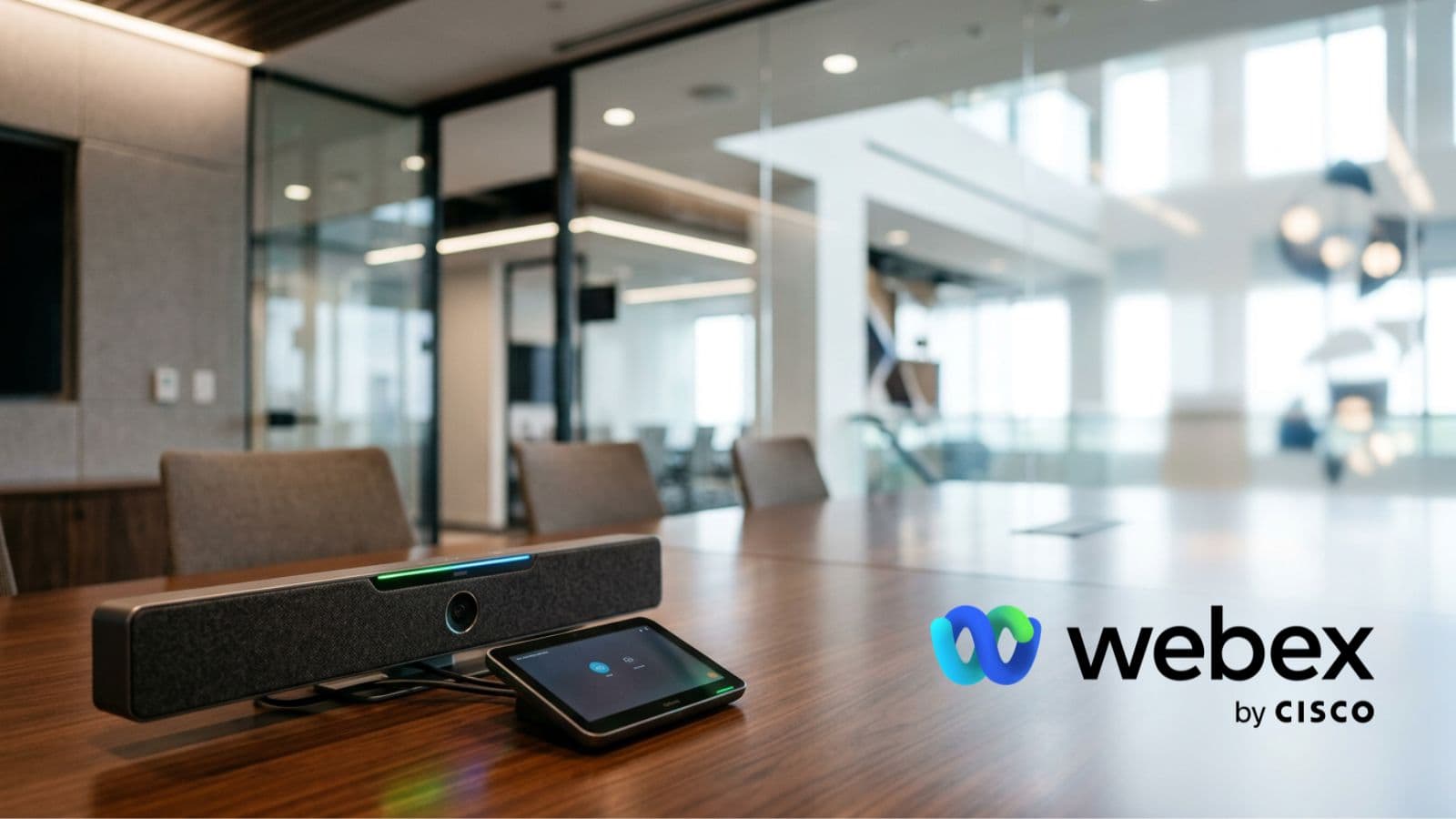
The Hardware: Cameras, Microphones and Sensors
Walk into a modern AI meeting room, and it’s not just the design that feels futuristic; it’s how the room works with you. There’s a hidden network of sensors, software, and machine learning models built into the tools you’re already using, such as:
- Smart Cameras: Cameras with built-in AI algorithms, like Logitech Sight or the Crestron multi-switching camera, can track speakers, zoom in on whoever’s talking automatically, reduce visual and audio noise, and even recognize faces.
- Intelligent Cameras: Companies like Shure and Nureva have rolled out beamforming microphone arrays that pick up voices from across the room, isolate speech from background noise, and even localize the sound to specific speakers. This helps with everything from accurate transcriptions to understanding tone and sentiment.
- Sensors: AI meeting rooms are also wired with sensors that do more than track occupancy. Logitech’s Spot uses millimeter-wave radar to detect people, adjust lighting, and even monitor air quality. The system instantly improves comfort and clarity to enhance focus and performance.
The Software Brain: Powering AI Meeting Room Technology
Behind the scenes, there are various AI algorithms working in tandem to enhance the meeting experience. We’ve got Natural Language Processing solutions that identify employees, track speakers, and even transcribe and summarize meetings in real-time.
Machine-learning solutions identify when to change the position of a camera, adjust the lighting, or filter out excess noise. Speech-to-text engines enhance meeting accessibility with captions and live translation. Sensors even allow AI-powered whiteboards to recognize and auto-organize sticky notes and export brainstorms into structured documents.
Over time, these tools are becoming increasingly effective, tracking more information, collecting more data, and powering growth.
Data Flow and Processing: How it All Works
Think about your last meeting. Did someone forget to take notes? Were there “we’ll circle back on that” moments that never got circled back to? AI is making it so much easier to actually gather and use the data created in every meeting.
Smart microphones capture the audio, AI-powered engines like Zoom AI Companion, Microsoft Copilot, or Otter.AI, then transcribe it in real-time, and tag the most important elements. Some can even detect and identify different speakers.
Speaker detection means that when you end up with a transcript at the end of a meeting, you can actually track exactly who said what, boosting accountability. Some tools, like Zoom Tasks, can even use those insights to decide where to assign action items.
Many AI-powered tools even go beyond just recognizing what people say. They can identify themes, emotional tones, and even engagement levels. Plus, they can suggest follow-up meetings or discussions based on the content of each discussion.
Platform Integrations: Aligning AI Meeting Room Technology
AI isn’t valuable if it’s locked in its own little world, particularly if you’re using it for meetings. The best tools need to be able to work with your existing system. That’s why we don’t have AV vendors rolling out various AI meeting room technology hardware bundles. We have communication and collaboration companies creating systems designed for meeting room improvements.
Microsoft Teams, Zoom, and Cisco Webex (not to mention countless others), all have their own AI assistants that can gather data from meeting room tech and support you throughout meetings. Microsoft Copilot can craft meeting agendas and suggest topics or times to meet based on availability. In Microsoft Places, it can also suggest rooms to book.
AI assistants now integrate with cloud storage tools like Google Drive, Dropbox, and SharePoint, letting them pull in documents on the fly when mentioned in a meeting. For instance, if someone mentions a specific file or slide deck during a Zoom meeting, AI Companion can surface it and share it with attendees in seconds.