With the world turning to unified communications and video conferencing, organisations have become all too familiar with poor quality audio experiences. These issues can be attributed to many things: internet performance, IT errors or issues associated with the apps and platforms used. But they’re also caused by poor equipment, either in collecting the sound initially, or in its playback.
Incorrectly placed, low quality or poorly configured microphones mean interactions are doomed from the start - if a microphone cannot pick up clear speech from source, clearly there is no hope of it improving during transmission and enabling quality audio at the other end. Companies have invested substantially in their UC and conferencing systems but often overlook microphones; instead relying on integrated laptop microphones, easily moved wired table-centred mics or even using what was already hard-wired into a room, despite the furniture and usage of the room having been reconfigured.
“You only find out when it’s really bad because that’s when people say something, but often people don’t want to interrupt their bosses or their customers – so they put up with poor experiences,” said Richard Knott, Market Development Manager at Shure, the market-leading manufacturer of audio technologies and products that deliver high quality meeting experiences.
Knott appreciates that microphones may have historically been a neglected part of UC and wants to highlight the importance of investing in high quality audio equipment. “It’s obvious when it’s bad, but also obvious when it’s good,” he added.
“This year we officially opened the Rose Shure Experience Centre in central London, where we are able to demonstrate our full suite of products in a variety of meeting and conference environments, both remotely and in person. This space has proven vital for us to show customers new and old the importance of high-quality audio for meetings.”
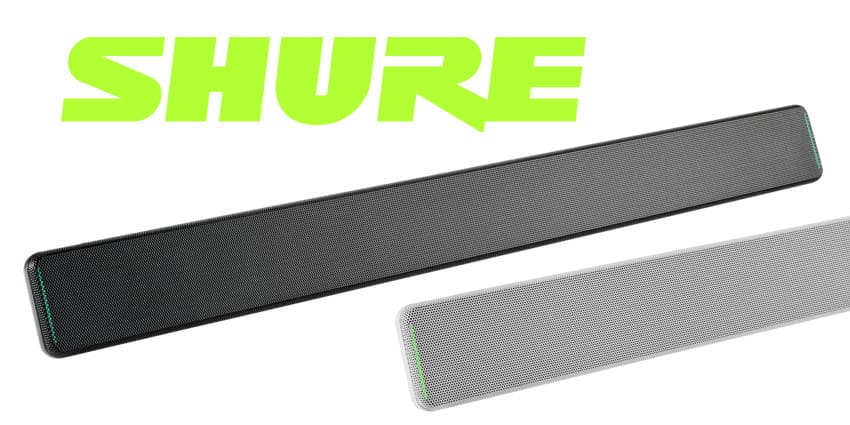
Shure has targeted larger conference rooms with its Microflex® Advance™ MXA910 Ceiling Array microphone which utilises steerable lobes to cover everyone in the room. However, this product is aimed at the larger end of the market, so the company has recently launched the Microflex® Advance™ MXA710 Linear Array. This product is shaped like a soundbar and can be installed practically anywhere in a meeting room, from the ceiling, countersunk into desking or wall-mounted, positioned below a video monitor, for example, with two separate length options, 2ft and 4ft.