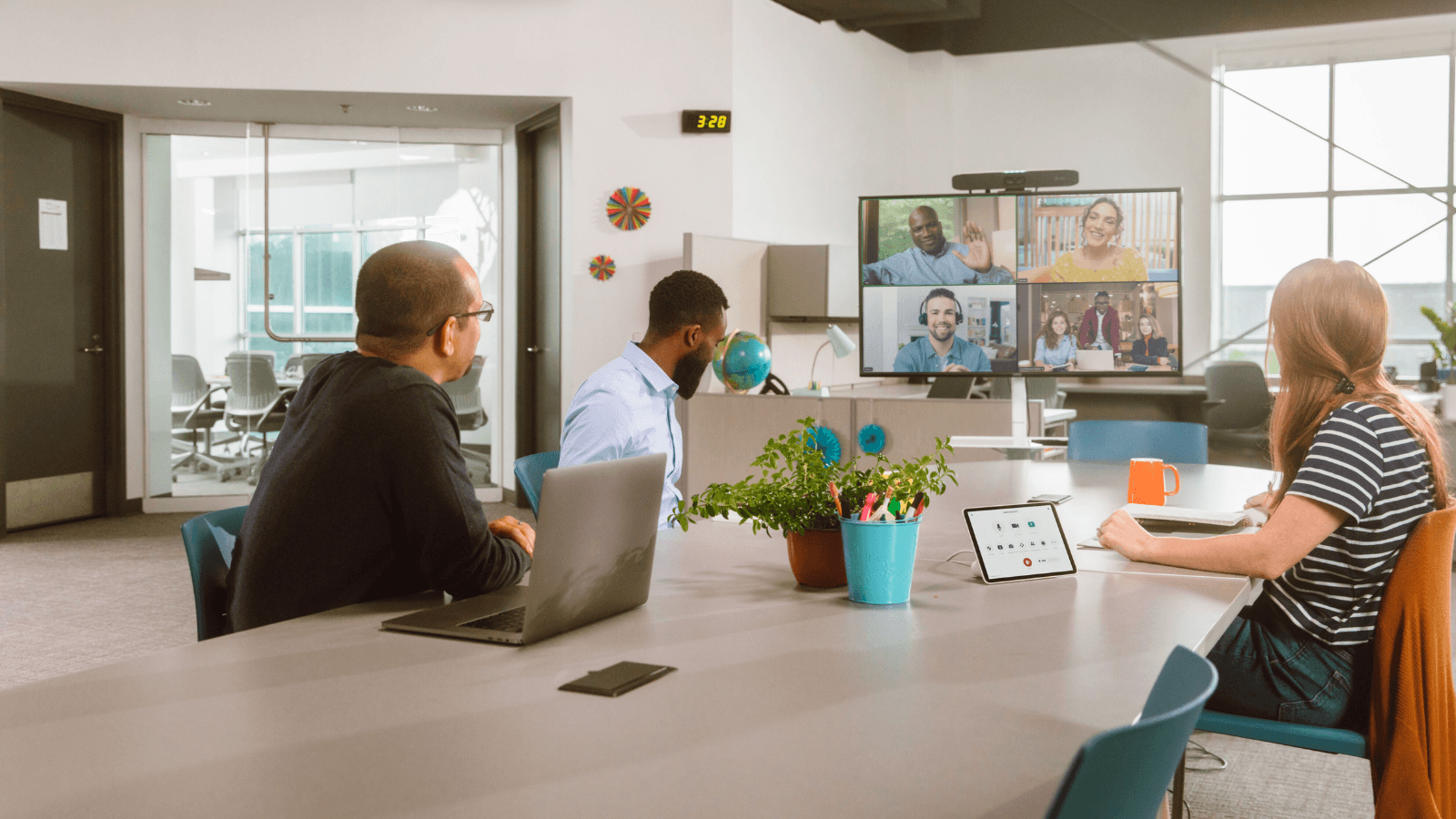
Yes, in many organizations, the shift is happening faster than planned. Employees want frictionless meetings wherever they sit. That demand is boosting personal collaboration devices like webcams, headsets, and compact video units. It is also fueling desk video endpoints, which bring “room-like” quality to an individual desk.
As hybrid work settles into long-term reality, hybrid workspace hardware decisions are changing too. Many IT leaders now weigh enterprise smart displays and peripherals against traditional room refreshes. The rise of individual meeting devices does not mean meeting rooms disappear. It means rooms must justify their cost with better experiences and smarter usage.
Read More (Related Articles)
- Workspace Technology ROI: 5 Use Cases That Prove Value
- Hybrid Work Hardware Refresh: What to Upgrade in 2026
- Hybrid Office Technology Trends to Watch in 2026
What Are Personal Collaboration Devices?
Personal collaboration devices are tools built for one person’s meeting experience. Think:
- High-quality headsets.
- Desk microphones.
- Personal cameras and lighting.
- Compact screens for calls and content.
They aim to remove friction. They also reduce the “bad meeting tax” on productivity.
The broader video conferencing hardware market continues to grow as hybrid work persists.
Why Are Desk-Level Video Endpoints Growing In Popularity?
Desk video endpoints are popular for one simple reason: they scale with how people work.
Instead of fighting for a room, employees can:
- Join fast.
- Look and sound better.
- Share content more smoothly.
Vendors are also improving BYOD experiences, turning flexible spaces into reliable collaboration hubs.
How Do Personal Devices Improve Hybrid Meeting Experiences?
They improve hybrid meetings through consistency.
A personal setup is predictable. A shared room can be unpredictable. Rooms change. Cables go missing. Someone forgets to update firmware. Then the first ten minutes vanish.
Personal devices reduce those points of failure. They also support meeting equity, because remote participants can hear and see clearly when every speaker has a strong setup.
When Should Enterprises Invest In Individual Collaboration Hardware?
Invest when any of these are true:
- Hybrid is normal, not occasional.
- Rooms are overbooked or underused.
- Leaders complain about call quality.
- The support desk is swamped with meeting issues.
A smart move is phased. Start with roles that live in meetings. Sales, support, and managers usually see quick gains.
If you want a practical view of how workplace tech trends are evolving, this explainer is a strong companion read: Hybrid Office Technology Trends to Watch in 2026
How Do Personal Devices Integrate With UC Platforms?
Integration often happens in three layers.