Walk into most organizations and you'll find headset deployments that tell a familiar story.
Either everyone has been issued the same device regardless of how they work, or employees have reached for whatever was already in their bag – a pair of consumer earbuds that work fine for a morning commute but weren't built for a professional call from a noisy café.
Neither approach delivers consistent audio quality. And as voice becomes the primary input for AI tools embedded in daily workflows, that inconsistency is no longer just a meeting quality problem – it's a productivity and AI adoption problem.
"There's a big difference between a call center operative who sits in front of a screen and communicates throughout the day, compared to a knowledge worker who goes from desk to meeting room to car to different campuses," says Peter Hartmann, Head of Personal Audio Innovation and AI Experiences at Jabra.
"The product that works well in these different settings has key differences."
The Three Workstyle Problem
Hartmann's framework for headset segmentation centres on two variables: the noise conditions in which someone works, and the nature of their work task. From those two dimensions, three distinct categories emerge.
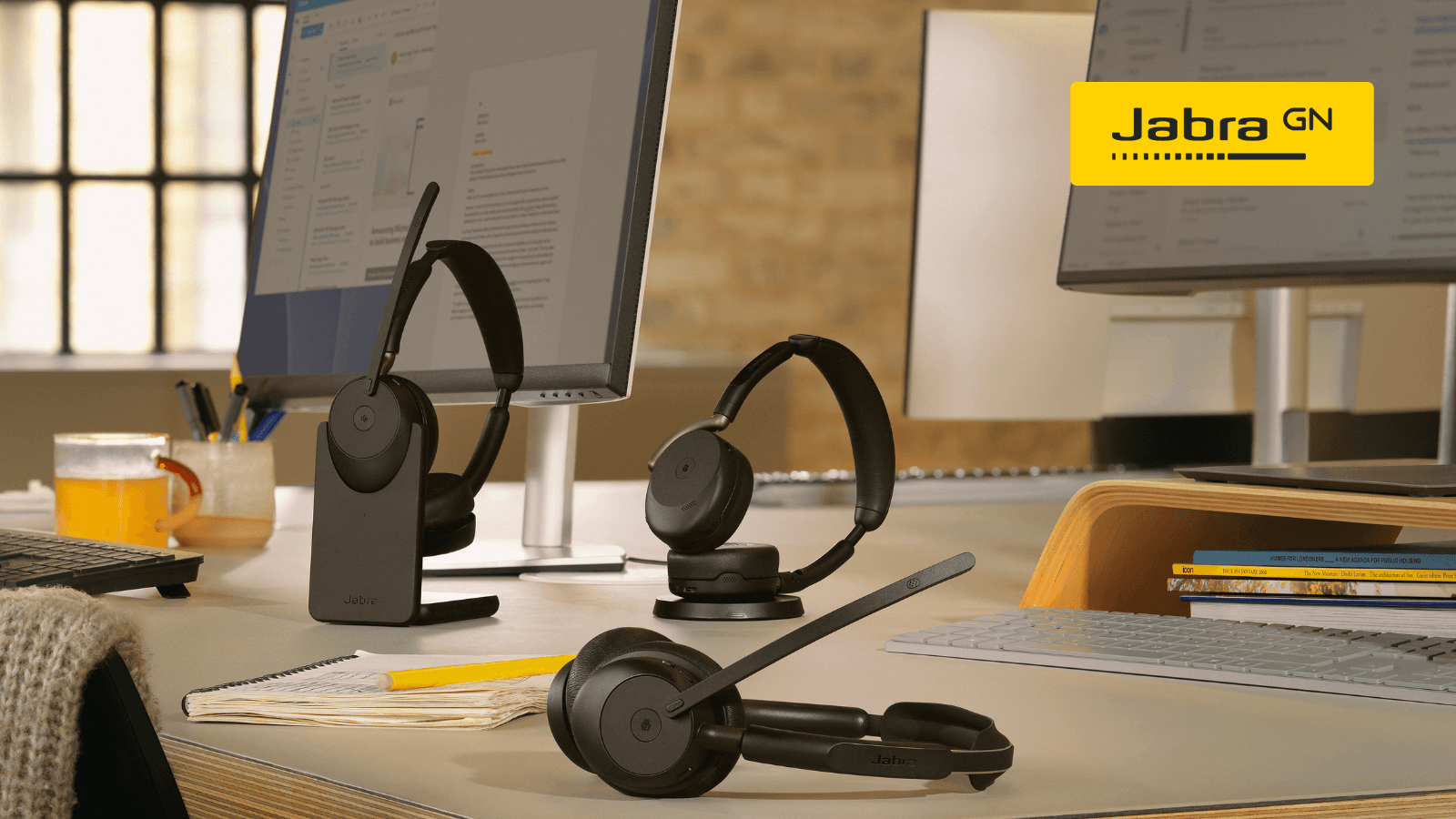
The first is the desk-based or call-centric worker – someone whose working day is anchored to a fixed workstation. For this group, comfort and call clarity over extended periods are the priority. All-day wearability, reliable battery life, and precise voice pickup matter more than portability. These workers are often sat alongside colleagues doing similar work, meaning the broader environment has usually been designed with some acoustic consideration already built in.
The second category is the open-office professional – someone working in shared, high-noise environments where conditions are variable and not always within their control. "Sometimes I don't work at the same desk every day," Hartmann explains. "I can't rely on the same noise conditions – sometimes there's more noise than other days. So noise cancellation becomes important." For this group, more aggressive noise cancellation is essential precisely because the environment cannot be relied upon.
The third is the hybrid or flexible worker – someone moving between locations and working in public spaces. For this group, portability, discretion, and the ability to perform without a boom arm are essential. They are also the most likely to be using their headset outside of work hours, which means the device needs to earn its place beyond the desk as well as on it.
The Boom Arm Question
Removing the boom arm without sacrificing audio quality is one of the harder engineering problems in professional audio.
"Putting microphones in front of the mouth is still the best way of getting the most precise audio pickup," Hartmann acknowledges. "But for those who are more hybrid, taking the boom arm away, being flexible in terms of being able to fold up and look a little less work-like when working in a public setting – that's important."
There is also a behavioural dimension to this. "We see a key trend, even with large organizations, that individuals have a very strong say in what products they choose," Hartmann says.