powering productive workplaces
Front pagesponsored · Jabra
Productivity AI37m · 13:31 GMT · 5 min read

How AI Is Changing Workloads, Not Simply Reducing Them

Jabra’s WorkLife 2026 research has found that AI is reshaping workloads. Employees are spending more time on strategy, creativity and collaboration, yet wellbeing depends on whether organisations redesign how work gets done rather than piling AI onto old ways of working

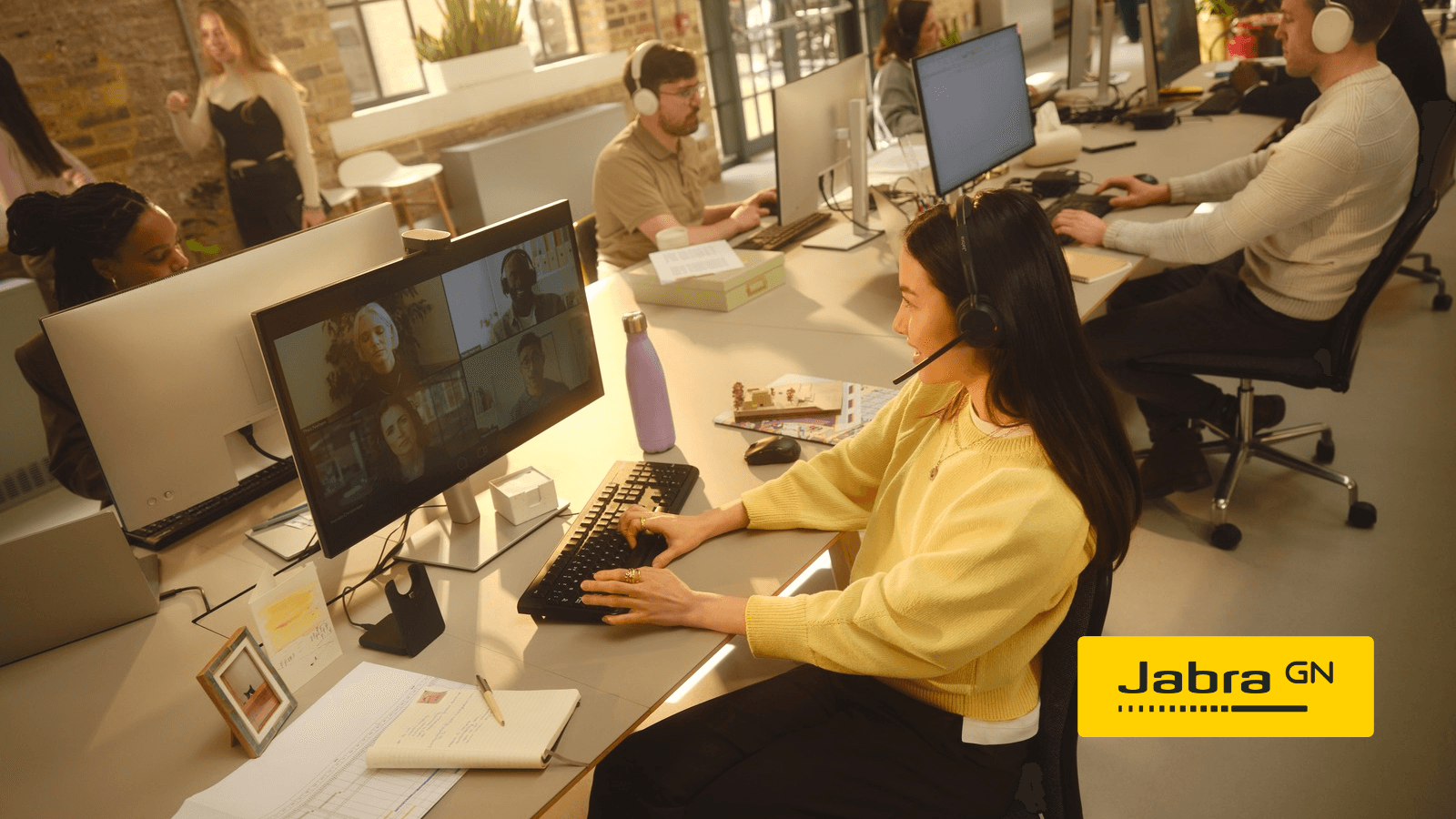
A woman in a yellow jumper wears a Jabra headset and smiles while on a video call with four colleagues in a bright open-plan office, as other employees in headsets work at their desks behind her. A yellow Jabra GN logo sits in the bottom-right corner.

The promise of workplace AI has often been framed in simple terms: automate routine tasks, save time and reduce the burden on employees. But new research from Jabra suggests the reality is more complicated. 

Eighty-five percent of workers say they are doing more work in at least one area than they were a year ago. That could appear to be a warning sign for organisations already concerned about workload and burnout. But Daniella Bell, Future of Work Thought Leadership Manager at Jabra, says the data points to a more nuanced shift. 

“I definitely lean more towards it being an opportunity,” Bell says.  

“We see huge growth in elements like strategy, creative tasks that people do together, and collaboration. Those are the tasks that make people most motivated. They’re the things that deplete energy the least.” 

The question, then, is not simply whether AI is creating more work. It is whether organisations are changing the way work is done as that workload evolves. 

From Production to Judgement 

The research found that heavy AI users were around 60 percent more likely to report increased strategic work compared to non-AI users, more than twice as likely to report doing more creative work, and more than three times as likely to say they collaborate more than they did a year ago. 

That points to a change in the role of the knowledge worker. AI can produce a first draft, summarise research or analyse information quickly. The human contribution is increasingly about deciding what matters, what is worth pursuing and whether the output is good enough to act upon. 

“AI is taking on more of the production,” Bell says. “People are spending much more of their time on judgement-based tasks.” 

That means the skills organisations have traditionally valued are not becoming less important. If anything, they are becoming more critical. Critical thinking, writing, communication and the ability to work constructively with others cannot simply be handed over to an AI tool. 

“The question used to be: can you make this deck or can you make that analysis?” Bell says. “Now it’s: can you tell what’s worth making, what’s worth keeping and, more importantly, what’s worth sharing?” 

For organisations, that has implications for how AI training is designed. Teaching employees how to create prompts, build agents or automate repetitive tasks is necessary, but it is not sufficient. People also need the confidence and capability to assess an AI-generated answer, identify weak reasoning and apply judgement in context. 

More Work Does Not Have to Mean More Stress 

The findings also carry a clear warning. When asked what made their workday harder, employees most often cited workload and an unrealistic pace of work. A quarter associated work with stress. 

However, Bell says the relationship between more work and poorer wellbeing is not straightforward. 

Among employees who reported taking on more work, those whose ways of working had changed substantially reported lower stress and exhaustion, alongside higher motivation and career optimism. That change might involve redesigning workflows, changing the tasks people undertake or developing a more conversational relationship with AI. 

“The risk is really taking on more without changing how you work,” Bell says.  

“The people struggling are the ones who feel like they have additional stuff piled onto old ways of working.” 

An organisation that uses AI to accelerate its existing processes may simply ask employees to complete more of the same work, faster. But an organisation that redesigns those processes can create space for different work that makes greater use of human judgement, relationships and decision-making. 

Why Meetings Matter More Now 

For years, meetings have been treated as the enemy of productive work: a drain on time, an interruption to focus and a default response to problems that could have been handled elsewhere. 

The research suggests that may be changing. Problem-solving and decision-making meetings now take up the largest share of  meeting time, while status updates are becoming less common. 

“If meetings are really where work is actually happening, then they deserve the same investment as any other kind of critical infrastructure,” Bell says. 

That changes the role of meeting technology, too. If a session is where a team reaches a decision, resolves a complex problem or establishes shared context, poor audio, unreliable remote access or inaccurate transcripts are no longer minor inconveniences. They affect the quality of the work itself. 

Bell argues that meeting spaces must support people in the moment – ensuring participants can contribute and collaborate effectively – while also giving AI the clean context it needs to create accurate records, summaries and follow-up actions. 

“Every single meeting needs to be first and foremost set up for great experiences, so that people can actually collaborate well,” she says. “Then AI can take that data, store it as organisational context, and pass it forward to other people in the team who, three weeks or three months down the line, might need to draw on what was discussed.” 

The Case for Conversational AI 

One of the more striking findings in the research concerns how employees interact with AI. Workers who speak to AI rather than type are 24 percent less likely to feel stressed and 37 percent more likely to feel their job has become more secure. 

Bell is cautious about treating voice as a standalone solution. Voice users also tend to have more training, more capable managers, redesigned workflows and better tools. In other words, conversational AI is partly a signal that an organisation has already created the conditions for adoption. 

But even when comparing people with similar levels of training and management support, voice users reported better wellbeing outcomes. 

“Conversation is a process of thinking out loud,” Bell says. “Typing is a much less natural means of expressing thoughts and working through problems. Talking is more like a working session.” 

There is a practical case, too. Speaking is faster than typing for many people and can allow them to express more detailed prompts. But the broader implication is cultural. As AI becomes more embedded in everyday work, organisations need to consider not only who has access to the technology, but whether employees have the tools, permission and working environment to use it naturally. 

Join the conversation

Does this reflect your experience?

opening the room…