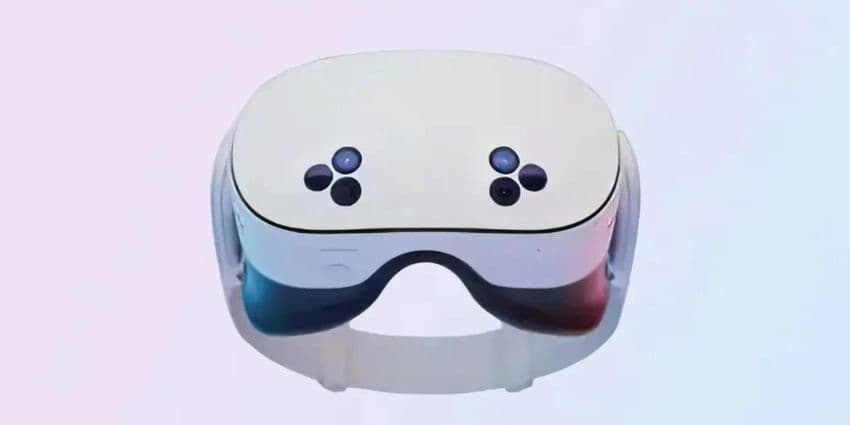
After months of rumors, and speculation, Meta finally announced the Meta Quest 3S price, specs, release date, and features at this year’s Connect event. As expected, this more affordable version of Meta’s leading “Quest 3” headset packs a serious punch.
Available for just $299.99 (compared to around $499.99 for the Meta Quest 3), the 3S offers users a more affordable entry into the realm of mixed reality. Even better – Meta has managed to retain a lot of the functionality of the Quest 3 in this cheaper headset. While you’ll have to swap pancake lenses for Fresnel lenses, and settle for a slightly lower resolution, the 3S is still extremely powerful.
It still has the same Qualcomm Snapdragon processors as the Quest 3 and supports mixed reality with full color passthrough.
Here’s everything we know about the Meta Quest 3S.
What is the Meta Quest 3S? Affordable Mixed Reality
The Meta Quest 3S is the budget-friendly mixed reality headset offered by Meta, based on the design and functionality of the popular Meta Quest 3. For a while, we didn’t know for certain if Meta was working on this headset at all. The company hinted it was working on a more affordable headset throughout 2024. However, we mostly had to rely on leaks and rumors for real details.
In September 2024, a leak revealed a new headset by Meta had already passed a crucial certification step with the FCC, so it’s no surprise that the headset was officially announced at Connect 2024. In fact, Meta went above and beyond expectations with it’s reveals at this year’s Connect, even introducing a new set of AR glasses (though they’re not available to the public yet).
According to Meta, the Quest 3S is intended to be the most affordable product in its Quest lineup. The new headset is available in two storage sizes (128GB and 256GB), similar to the Quest 3. It also delivers most of the same functionality as the Quest 3 despite being cheaper and lighter.
Meta Quest 3S: The Specs
When we initially speculated on the impending release of the Meta Quest 3S, we weren’t sure what to expect from a “specs” perspective. We knew Meta wanted to keep the Meta Quest 3S price as low as possible, which might have meant compromising on a few key capabilities of the Quest 3.
Some analysts even suggested the new headset might come with fewer mixed reality capabilities, or nix the controllers to keep costs low. However, the Meta Quest 3S is almost identical to the Quest 3 in terms of specs.
It has the same Snapdragon processor as its more expensive counterpart and 8GB of RAM. Although the headset's resolution is a little lower (1832 x 1920 pixels per eye, compared to 2064 x 2208), this could actually mean the headset performs better.
Lower resolution could mean more demanding apps perform faster, with less latency – if you don’t mind the drop in visual fidelity. Here’s a quick rundown of the specs:
- Weight: 514g
- Display: One LCD display
- Lens type: Fresnel
- Display resolution: 1832 x 1920 per eye
- FOV: 96 degrees horizontal, 90 degrees vertical
- Refresh rate: 120Hz
- Chipset: Qualcomm Snapdragon XR2 Gen 2
- RAM: 8GB
- Storage: 125GB or 256GB
- Battery life: Up to 2.5 hours
Meta Quest 3S vs Meta Quest 3: The Main Differences
Like the Quest 3, the Quest 3S still delivers a high-resolution virtual and mixed-reality experience, with hand-tracking and controller support (though the controllers are a little different). It also delivers the same processing power, full color passthrough, and multi-tasking capabilities. Plus, it still works with most apps and games available through the Quest marketplace.
The biggest differences between the Quest 3S and the Quest 3 are the display, refresh rates, storage options, and battery life.
First, as mentioned above, the Quest 3S uses Fresnel lenses, similar to the Meta Quest 2. This is a slight downgrade to the pancake lenses in the Quest 3. Those pancake lenses definitely give you more sharpness and clarity when viewing content in XR. Additionally, the Quest 3 leverages more than 4.5 million display pixels for crisp images. The 3S only has 3.5 million pixels to work with.
Overall, the resolution of the Quest 3S isn’t as impressive as what you get with the Quest 3. However, the Quest 3S still performs admirably, offering a much more advanced experience than the Quest 2.
Even with a slightly smaller field of view, the Quest 3S still gives you a highly immersive experience. One downside is that you can’t adjust IPD as efficiently with the Quest 3S. You get a 3-position adjustment option, whereas the Quest 3 gave you a wheel you could use to fine-tune your visual experience. Plus, it’s worth noting that the Quest 3 has adjustable refresh rates, whereas you’re stuck with 120Hz only on the Quest 3S.
Plus, the Quest 3S offers a maximum storage of 256GB (compared to 512GB with the Quest 3). However, it does offer a slightly longer battery life. That’s ideal if you’ve been struggling to make the most of the limited battery offered by the Quest 3.
The Meta Quest 3: Design and Controllers
Based on rumors and design leaks earlier this year, we speculated that the Quest 3S would probably look and feel very similar to the Quest 3. Now that Meta has officially introduced this headset, we can confirm that it looks just like it did in the leaks.
It’s a little chunkier than the Quest 3 (probably because of the pancake lenses). However, it’s also slightly lighter than its predecessor (514g compared to 515g). Overall, the Quest 3S looks almost exactly the same as the Quest 3, with a few differences.