For decades, IT and AV leaders were largely judged by a primary metric: reliability. Systems needed to work. Meetings had to stay online. Uptime was the measure of success. However, as hybrid work has transformed what it means to “show up,” technology now plays a far deeper cultural role, one that touches on inclusion, trust, and the very fabric of organizational life.
The shift has been rapid. A few years ago, IT teams were the silent backbone of business continuity. Today, they’re being asked to solve the most human challenges in the workplace, encompassing connection, engagement, and equity. “Executive leaders are turning to IT and saying, ‘Hey, I need your help solving this problem,’” said Brad Hintze, Executive Vice President of Global Marketing at Crestron. “And that problem is people engagement — keeping people productive and connected.”
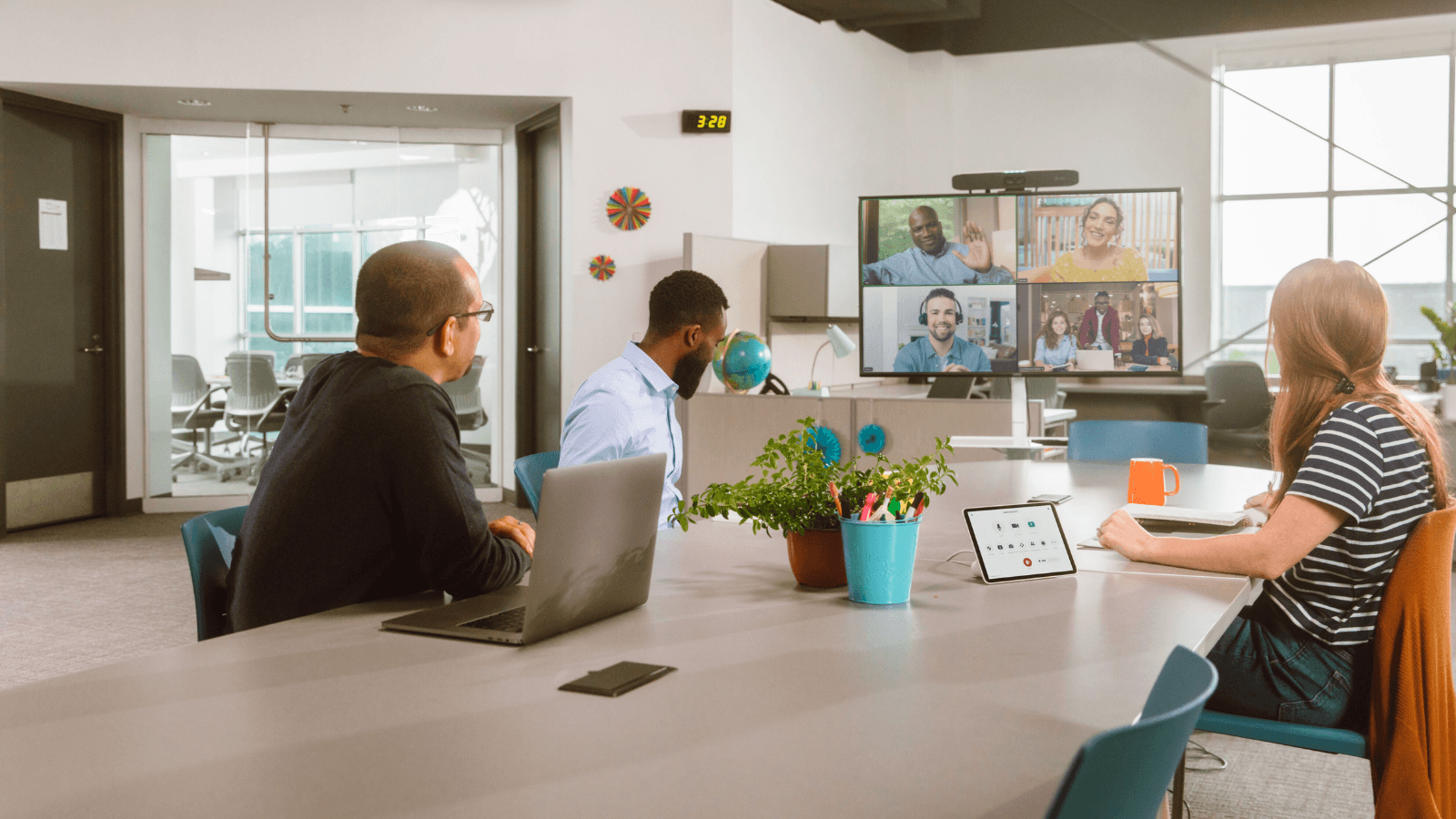
Hybrid collaboration has reframed technology as the primary interface for how people see, hear, and perceive one another. Whether in a global boardroom or a weekly stand-up, the quality of that experience now defines how employees feel about their leaders, their teams, and their company.
When Every Pixel and Sound Wave Shapes Perception
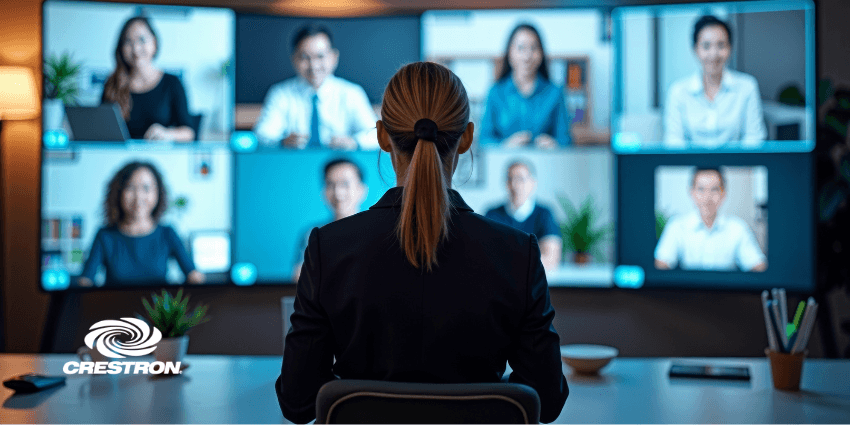
Perception, presence, and participation have become the currencies of the hybrid era. In an ecosystem where colleagues often meet only through a lens, poor audio or grainy video can subtly erode trust and confidence.
Research highlighted in Proceedings of the National Academy of Sciences reinforces this link: people subconsciously associate clear audio and well-framed video with professionalism, attentiveness, and respect. “How people are heard directly impacts how they’re perceived,” explained Hintze. “Audio is the most fundamental layer, and video comes right after. Putting your best foot forward with high-quality AV is incredibly important today.”
This extends beyond aesthetics. Crisp sound and sharp visuals communicate intent; that people and their contributions matter. For leaders addressing teams across continents or employees pitching ideas to executives, the fidelity of AV has become the new body language. Intelligent AV, in this sense, functions as the modern professional’s “virtual power suit," shaping perception before a single word is spoken.
Meeting Equity Isn’t About Fairness — It’s About Flow
“Meeting equity” has become a buzzword, but it's arguably often misunderstood. True equity isn’t about perfect symmetry or identical layouts. It’s about creating frictionless environments where everyone, regardless of their position, can contribute naturally.
“I wouldn’t say organizations get it wrong exactly,” said Joel Mulpeter, Senior Director of Product Marketing at Crestron. “But the focus needs to be on usability. Meeting equity isn’t just about everyone being able to see and hear each other. It’s about making the room operation seamless for whoever’s using it, whatever the use case.”
This human-centric approach begins with understanding how people actually use spaces. A one-to-one huddle demands a different experience than a training session or hybrid workshop. “Instead of focusing purely on equity,” added Hintze, “we focus on what’s most effective for enabling collaboration in each space.”
That means deploying technology that quietly serves the workflow rather than distracting from it. Sometimes, that’s full automation. At other times, it’s providing users with the tactile confidence of a 10-inch touch panel. The ultimate goal is to make every participant feel equally seen, heard, and empowered, not because the system insists on equality, but because it’s designed for effectiveness.
Collaboration as Culture: The IT Leader’s Expanding Circle of Influence
With hybrid work now a constant organizational reality, IT and AV leaders find themselves collaborating with departments they previously rarely interacted with, including HR, facilities, finance, and even marketing. Each has a stake in the employee experience, and each now looks to IT as a partner in shaping it.
“It starts with asking questions,” said Mulpeter. “‘How do you intend to use meeting spaces? How do you plan to collaborate with employees, both in-person and remote?’ Once you understand the workflow, you can carve out an approach.”
But, as he noted, scaling that approach is where complexity grows. Creating a single well-designed hybrid room is one thing; replicating it across 30 global sites, while adapting to local working cultures, is another. “Constant iteration and ongoing dialogue with those departments — your internal ‘customers’ — are crucial,” Mulpeter added.