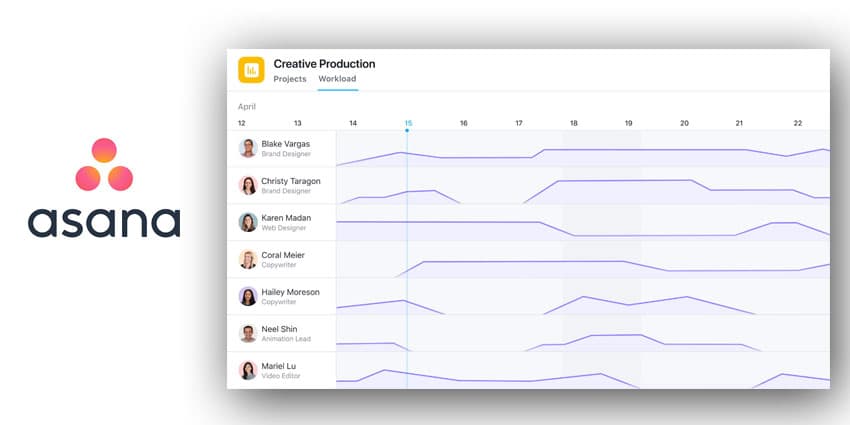
Leading work management platform for modern collaborative teams, Asana, recently announced the introduction of its new Workload feature - an updated take on business resource management.
Workload is designed to provide new levels of efficiency in the team space, by offering greater visibility into the work that's taking place across multiple projects. With a single view design, the Workload offering helps businesses to keep track of productivity and performance. What's more, supervisors can easily reschedule or re-assign tasks according to the needs of their operations.
In today's highly versatile team environment, Workload also allows project participants to measure their contribution to projects based on hours or points so that supervisors can see how much work people have on their plates. Additionally, to ensure that no-one ends up overworked, Workload features capacity limits for team members, along with visual alerts when a project assigned to a team member exceeds their capacity.
The Benefits of Asana Workloads
Asana believes that teams work at their best when everyone is on the same page, focusing on the correct priorities at the right times. Workload combined with Asana Portfolios will allow businesses to access all the features they need for planning and monitoring work across a range of projects. Portfolios deliver a holistic insight into how the work your teams are doing is moving them towards their goals. This ensures that organisations can be as agile as possible when handling things like changing deadlines and new demands.
Workload by Asana aims to support features like Portfolio in giving team members more power to manage their schedules. The feature was designed following a finding from the World Health Organisation that burn-out has become a significant issue among workplaces around the world. Workplace burnout is now seen as an occupational phenomenon.
According to a study of over 6,000 knowledge workers in locations like Australia, the UK, and the US, Asana and 4Media found that up to 80% of employees constantly feel close to burnout and overwhelmed. Additionally, around a quarter said that they experience burnout more than once each month.