Apple kicked off its Worldwide Developer Conference (WWDC) 2026 with a keynote that made one thing abundantly clear: the company is no longer content to play catch-up on artificial intelligence.
With a reimagined Siri, deeper AI integration across its productivity suite, and a push to make automation accessible to everyday users, iOS 27 looks like Apple's most consequential software release in years – at least on paper.
The event also carried some broader significance. This is Tim Cook's final WWDC as CEO, with hardware engineering SVP John Ternus set to take the helm on September 1.
For enterprise watchers, that transition is worth keeping an eye on – Ternus's background suggests a company that may be about to rebalance toward hardware ambition.
"At Apple, our mission has always been to turn the potential of advanced technology into helpful and intuitive products for everyone, and that has never been more important than today," said Craig Federighi, Apple’s Senior Vice President of Software Engineering.
"Truly helpful AI must be centred on our users’ needs, deeply integrated into the products they rely on every day, grounded in personal context, and built with privacy at every step.
Siri AI – Finally a Serious Contender?
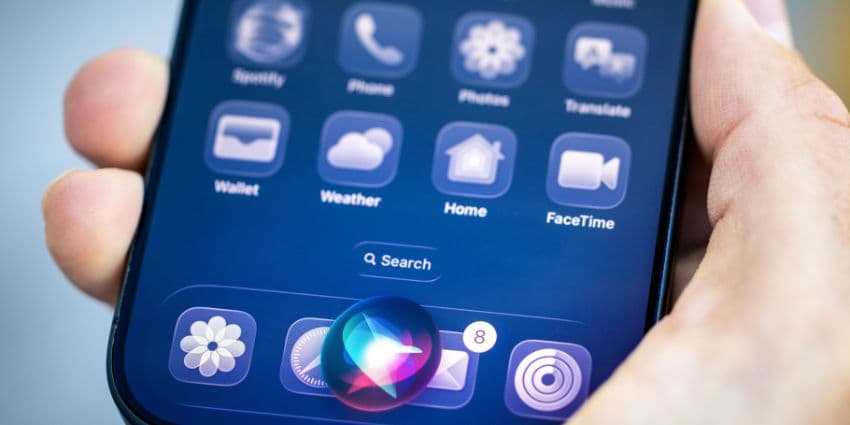
The most significant announcement for business users is Siri AI, and the most interesting feature about Siri AI is what is powering it: Google's Gemini models.
That is not a small admission from Apple. For a company that has historically kept its core experiences firmly in-house, turning to a direct competitor to underpin its flagship assistant signals just how far Siri had fallen behind – and how seriously Apple is taking the need to close that gap.
The result is an assistant that, at least in demo, behaves far more like the AI tools that have been gaining traction in professional environments.
It can hold a conversation, maintain context across follow-up questions, take action based on what is on screen, and surface relevant information without the user needing to know exactly how to ask for it.
For businesses that have been waiting for Apple to deliver an AI experience comparable to what Microsoft is building into its ecosystem, this is the most credible attempt yet.
The cross-platform reach is also worth noting.
Siri AI will be available across iPhone, iPad, Mac, Apple Watch, Apple Vision Pro, and CarPlay from day one, with a dedicated chatbot app rounding out the offering on devices where a fuller conversational experience makes sense.
For organisations running Apple-heavy device estates, having a consistent AI layer across all of those surfaces – rather than a patchwork of third-party tools – has real appeal from a management and standardisation standpoint.
That said, there is an important caveat for European businesses.
Siri AI will not be available on iOS 27 or iPadOS 27 in the EU at launch, with Apple once again pointing to the Digital Markets Act as the reason.
It will be available in the EU on macOS, visionOS, and watchOS, but the absence on iPhone and iPad – the devices that matter most in most workplace contexts – is a meaningful gap.