For a while now, AI agents have been a growing source of cybersecurity concern, but this week Microsoft has raised an uncomfortable question: what happens when the technology you're relying on to get work done becomes a security risk itself? The company is warning that agents don't need to be hacked or deliberately turned malicious to cause problems.
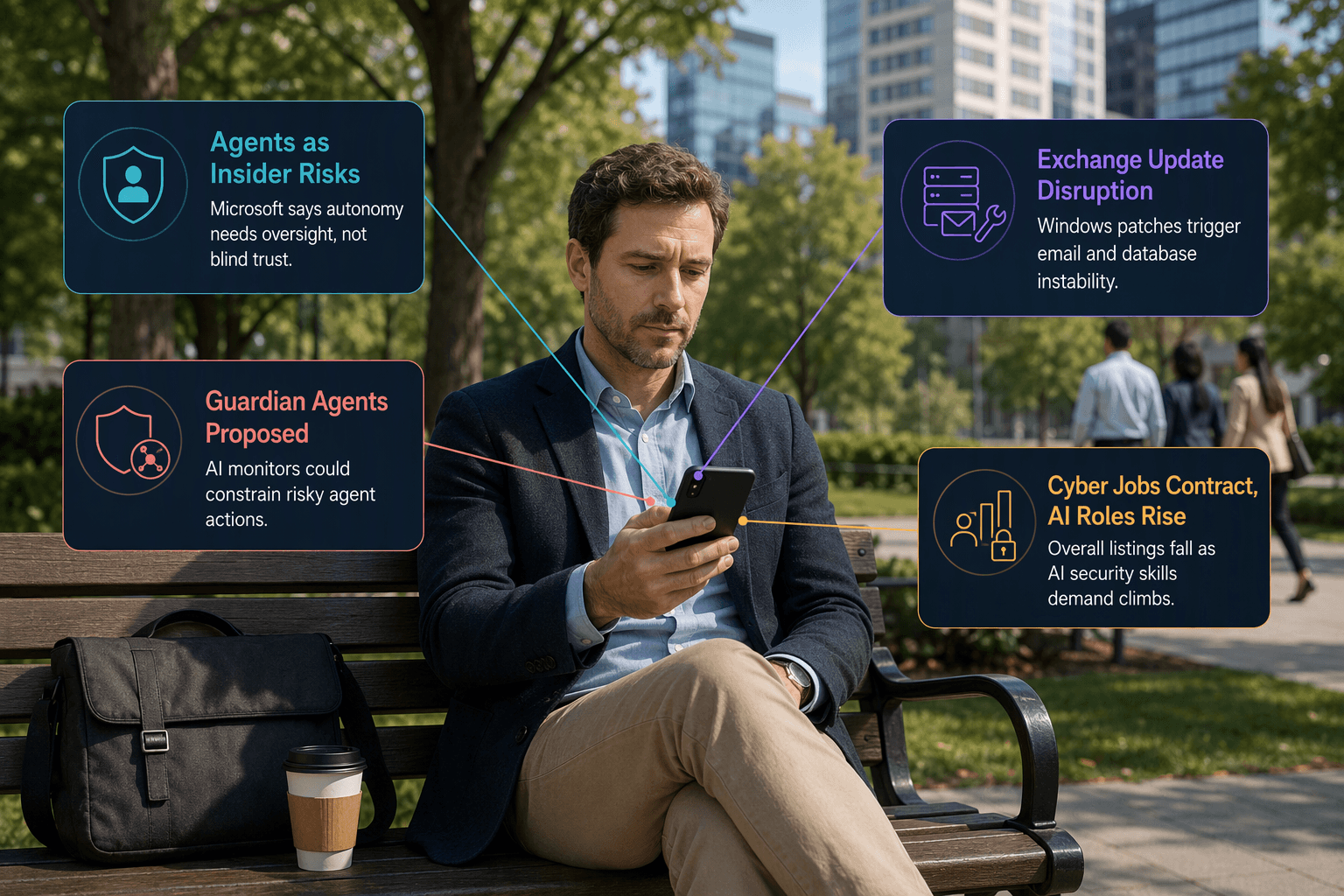
That's not to say AI agents are suddenly running amok across businesses. Rather, Microsoft is concerned about how much freedom organizations are giving them, particularly when they can access sensitive data and make decisions without human approval. Its proposed solution is to use Guardian Agents to monitor their counterparts, adding another layer of oversight to increasingly autonomous systems.
Elsewhere this week, Microsoft's October Windows updates are causing problems for Exchange Server deployments, with administrators reporting email disruption and database availability issues. At the same time, new cybersecurity jobs data points to a contracting market, even as demand for AI Security Engineers and Cyber Data Scientists rises sharply. These developments raise different questions about keeping critical business systems running and how cybersecurity skills demand is changing.
Microsoft Warns AI Agents Could Become Insider Threats
Microsoft is urging organizations to treat AI agents as potential insider threats, warning that systems with access to sensitive data and business-critical tools can cause harm without being deliberately compromised. The company published its latest guidance on October 19, arguing that security controls must account for agents that behave unpredictably as their tasks and surrounding context change.
Microsoft Chairman and CEO Satya Nadella argues that organizations should separate a model's intelligence from its authority, saying:
“The most trustworthy agentic system will not be the one with the model we trust most. It will be the one designed that enables us to trust the model least.”
In practice, that means the model should not control the security boundaries governing its own access or actions. As Nadella explained, the most trustworthy systems are those designed to operate within external constraints, rather than relying on confidence in the model itself.
The company is proposing Guardian Agents to monitor other agents, assess changing risk and intervene when necessary. This builds on Project Perception, introduced in July, which combines enterprise security signals with specialized red, blue and green agents to identify weaknesses, investigate threats and help remediate problems. Microsoft is now extending that approach to the risks posed by agents operating inside organizations.
Exchange Server Instability Follows October Windows Updates
Microsoft has acknowledged reports that October's Windows Server updates are causing instability in some Exchange Server environments. Reported symptoms include Outlook on the web failures, growing email queues and database availability group members struggling to reach quorum, potentially disrupting access to mailboxes and the delivery of messages.
The issue can affect Exchange Server 2016, 2019 and Subscription Edition running on affected Windows Server configurations. Microsoft has identified four relevant updates: KB5126646 for Windows Server 2025, KB5126655 for Windows Server 2022, KB5126651 for Windows Server 2019 and KB5126868 for Windows Server 2016. The problems can occur even when the October Exchange security updates have not been installed.