Facilities leaders have always had to consider space and systems. But now, the job has a sharper edge. As hybrid work settles in and return-to-office policies ramp up, office environments are expected to cultivate more productivity with fewer assumptions and tighter budgets.
Spaces need to work harder, meeting rooms need to work smarter, and tech investments need to prove they’re worth it, fast.
In this new era, facilities managers no longer oversee buildings but sculpt the infrastructure for how work gets done. That means making shrewd, strategic choices about AV and collaboration technologies that support how people actually work today, not how they worked five years ago.
Here are seven practical, forward-thinking strategies that will help you make better use of your AV budget, support more productive ways of working, and deliver tangible value to your business.
Design Around Behaviour, Not Just Hardware
It's easy to get caught up in spec sheets, but if the setup doesn’t match how people actually use a space, the technology won't get used. Or worse, it’ll actively frustrate.
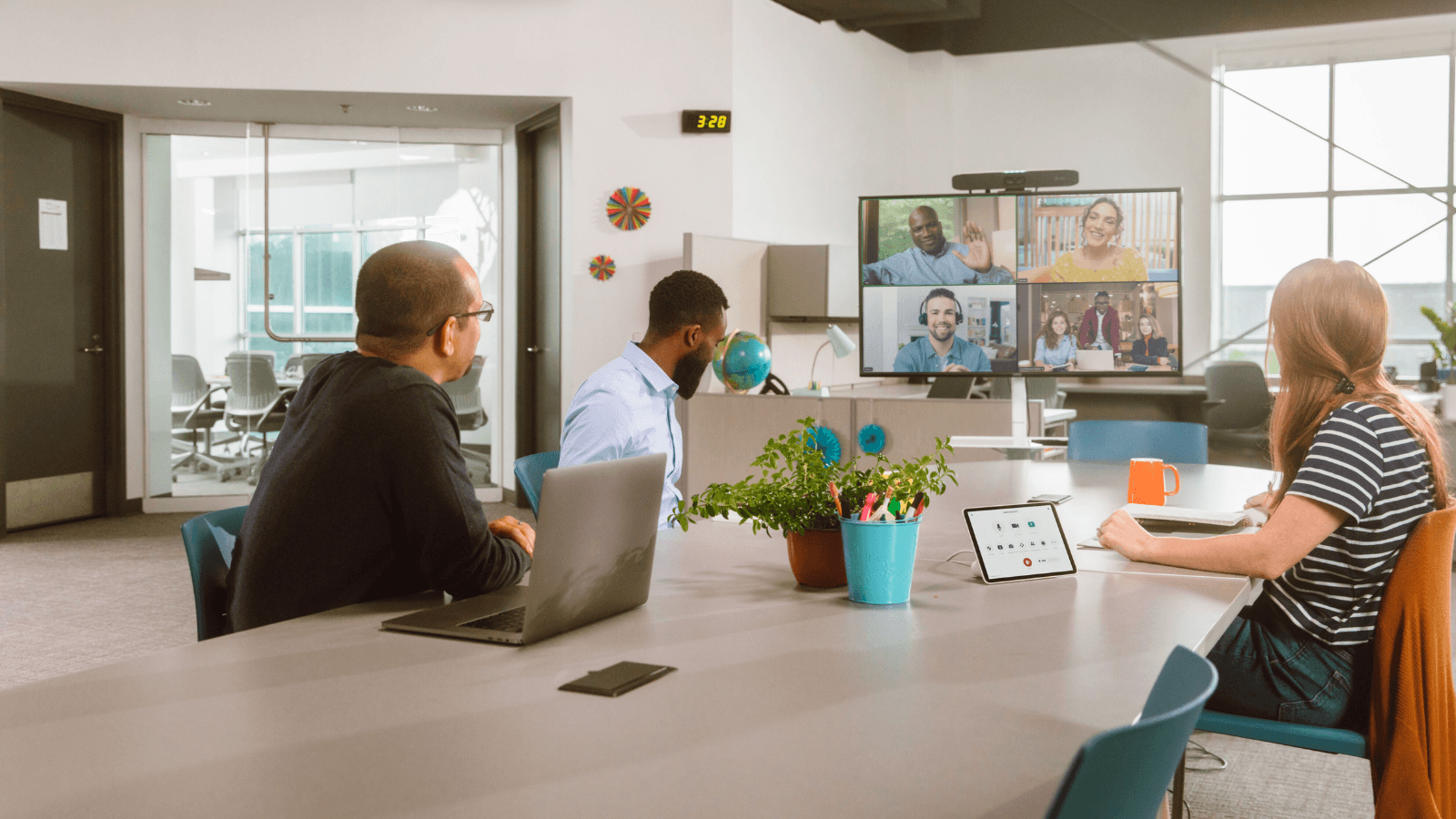
Start with the people. How do different teams practically collaborate? Where do quick conversations actually happen? What kind of meetings are genuinely most common? Once you understand those patterns, you can shape the space and tools around them, whether drop-in booths with video capability, flexible huddle zones, or meeting rooms equipped for hybrid participation without a fuss.
The point isn’t to pack in the most gear. It’s to support the level of work your teams are already doing, and want to do better.
Standardise for Clarity, Not Just Control
When every room works a little differently, people waste time figuring things out. That confusion adds up, and so does the support burden.
Choose a collaboration platform that fits your business and build AV standards around it. That means consistent hardware, interfaces, and signage across spaces, whether you’re managing one office or ten. Not only does this make life easier for employees, but it also makes management, updates, and troubleshooting far more straightforward.
Rather than locking people in, it’s about creating a trusting setup every time they walk into a room.
Get Real Data on How Spaces Are Actually Used
Guesswork won’t cut it anymore. To know whether your meeting rooms and shared spaces are working, you need data. Not booking calendars, but actual usage.
Sensor-based occupancy tools, room booking systems that sync with collaboration platforms, and clear reporting dashboards help you see which rooms are in demand, which are sitting empty, and where you’re getting the most value. That affords you a clearer view of what to change, what to scale, and what to stop spending money on.
Put simply, if you want your space to perform better, you need to measure its current performance.
Treat Acoustics as Core Infrastructure
Sound is often the forgotten part of AV. But ruined calls are just one shortfall of poor audio. It also burns out attention, kills focus, and creates friction that’s hard to pin down.