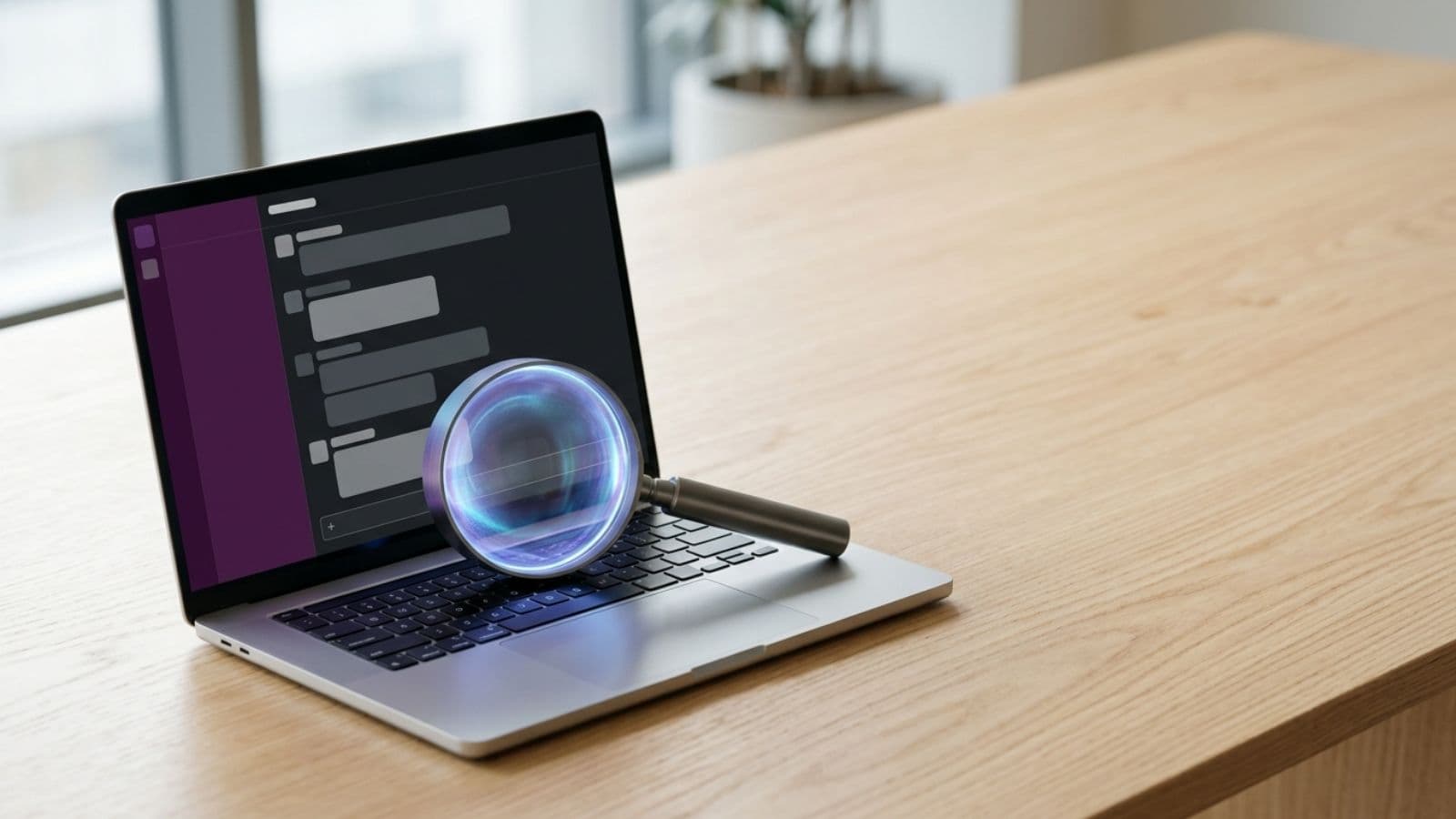
For years, the private DM has been where you asked a colleague an awkward question, flagged a concern about a project, or vented about a bad meeting without the whole team seeing it. That's starting to change, and not because Slack has rolled out a new monitoring feature. It's changing because a number of employers have decided that private conversation is context their AI tools can't get to, and they'd rather it wasn't private at all.
The Wall Street Journal reports that a growing number of companies are pushing staff to default to public channels over DMs, so AI agents can pull in the kind of everyday context that never makes it into a formal document: product updates, strategy discussions, the small decisions that shape how a team actually works. Wade Foster, CEO of Zapier, explained the thinking behind it to the Journal:
A big part of getting these agents to work really, really well is to make sure they have as much context as you can feed it.
Foster has taken this further than most. He tracks how often his leadership team posts publicly versus privately, and has turned it into something of an internal competition. He's currently at 79% public messaging himself, against 98% for Zapier's chief marketing officer, and reckons 80% is a realistic target for most leaders rather than pushing for a perfect 100%. Zapier also records internal meetings and feeds the resulting notes back into Slack, so there's steadily more material for its AI tools to draw on.
Salesforce, which owns Slack, has an obvious stake in this becoming the norm. Joe Inzerillo, its president of enterprise and AI technology, told the Journal that visibility is the whole point:
Having more things in a system of record, having more things accessible, is the fuel that powers the innovation.
That lines up with where Slack's own product has been heading. Slack Code already moved AI coding agents out of private terminals and into shared channels, on the same basic logic: the more an AI system can see, the more useful it becomes.
Where This Starts to Get Uncomfortable
Not everyone thinks it's a clean trade. Mathijs De Vaan, a professor at UC Berkeley who has spoken to employees navigating this shift, doesn't dispute the underlying business case. He told the Journal:
The argument that there's important information exchanged in these DMs is correct.
But he also points to two problems that tend to get skipped over in the rush to feed AI more context. The first is about the data itself: messages made public inside a workspace could end up training AI models, whether or not that was ever the intention. The second is behavioural, and arguably the more interesting one. Once people know a DM could effectively become AI-readable, they may simply stop being candid in chat at all, which rather defeats the purpose of having a private channel in the first place.
The timing makes this harder to treat as just another AI feature story. Christopher Carey reported this week that the UK is consulting on tougher safeguards for workplace monitoring technology, covering everything from keystroke logging to AI-driven decisions, right as the public conversation shifts from whether monitoring boosts productivity to whether it respects privacy. UC Today has also covered how the ICO already requires employers to run impact assessments before introducing intrusive monitoring tools, forcing them to justify what they're collecting and why.
Public-by-default Slack policies sit in an odd gap next to all of that. Nobody is installing a keylogger, and employees are, technically, choosing where to post. But the outcome looks remarkably similar to what those impact assessments exist to catch: a steadily growing share of everyday conversation becoming visible to systems that employees didn't choose and generally have no way to audit.
FAQs
Why do some employers want employees to stop using private Slack messages?
So AI agents can read more of what's happening day to day. Private DMs and channels are largely invisible to most AI tools, so companies like Zapier are encouraging staff to default to public channels instead, giving those systems more to work with.
Not officially. Employees choose where to post, so it doesn't fall under existing monitoring rules. But critics argue the practical effect is similar: more employee communication becoming visible to systems staff never explicitly agreed to and can't really audit.
Does UK regulation cover this kind of behaviour change?
Not clearly, at least not yet. The current UK consultation and the ICO's existing monitoring impact assessments are built around tools that actively collect data, such as keystroke logging or screen capture. A voluntary shift in employee behaviour sits outside that framework for now.