A year ago, Gartner predicted a rapid shift away from specialist telephony platforms. By 2028, it said, 90% of organisations would run enterprise calling through their existing cloud office or collaboration tools instead. Its newly published 2026 Magic Quadrant for Unified Communications as a Service, dated 28 July, tells a more cautious story. That same 2028 figure has been revised down to 70%, a twenty-point retreat on a forecast that was barely a year old.
The vendor landscape, by contrast, looks settled. Cisco, Microsoft, RingCentral and Zoom hold onto their Leader positions, exactly as they did in Gartner's 2025 UCaaS Magic Quadrant. 8x8, Dialpad and GoTo remain Visionaries. Vonage and Wildix stay put as Niche Players, and no vendor qualifies as a Challenger this year. The clearest sign of movement is what's missing. Google and Sangoma, both rated Niche Players twelve months ago, have dropped out entirely. That shrinks the field from eleven providers to nine.
Gartner's 2026 UCaaS Magic Quadrant Keeps the Same Four Leaders in Place
The four Leaders haven't changed. Their own announcements about it, in several cases, haven't changed much either.
Cisco Runs It Back, Almost Word for Word
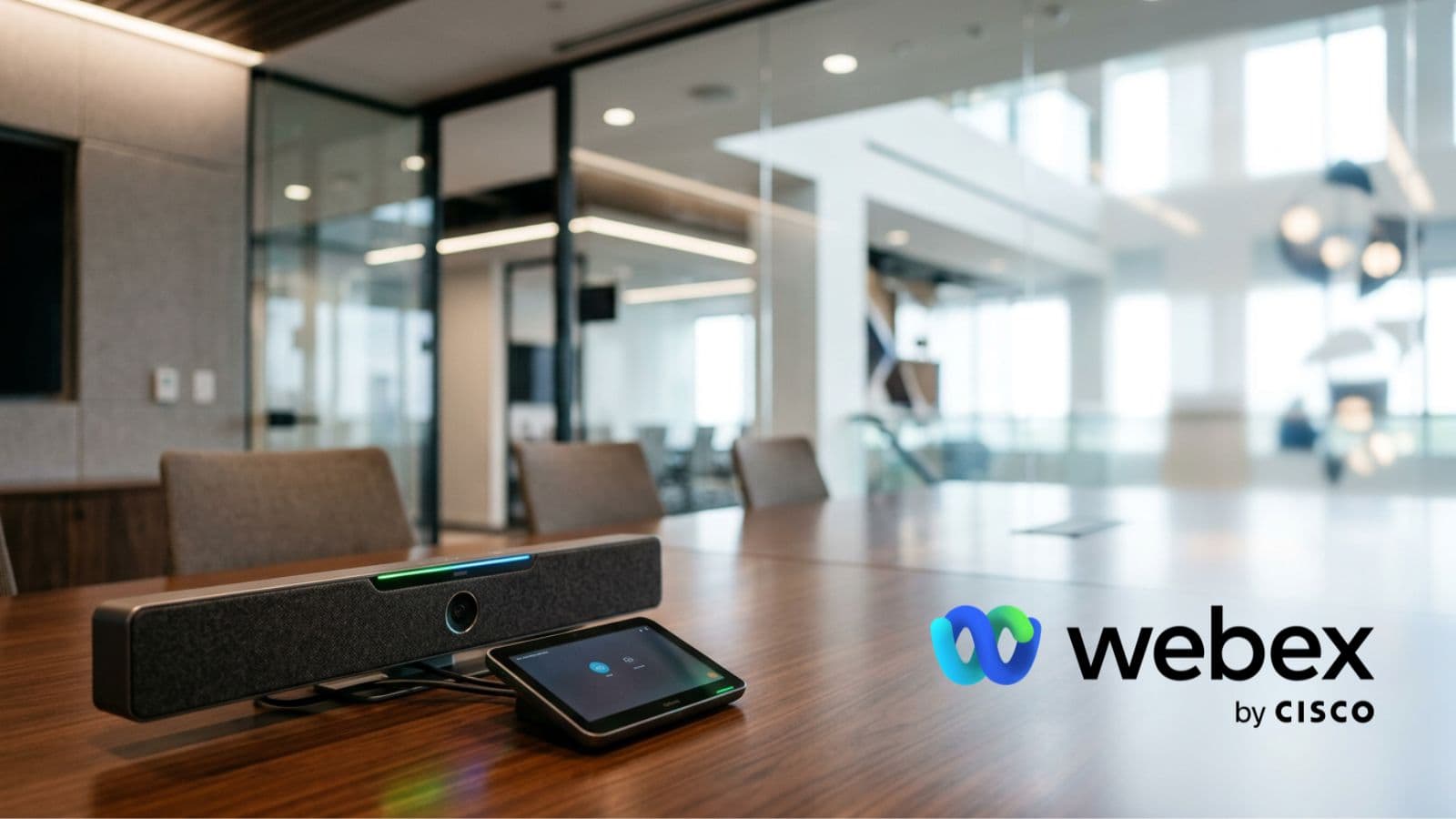
Amit Barave, Cisco's VP and general manager for Webex Suite and AI, credited this year's Leader placement, Cisco's eighth in a row, to "our unwavering vision and proven ability to execute." Cisco used almost the same wording last year, when it announced its seventh consecutive year as a Leader. The framing changes less than almost anything else in this report.
The substance behind it has moved on, at least on paper. Cisco points to AI Assistant adoption in meetings growing ninefold over the past eleven months. It also highlights newly generally available Cisco AI PODs, which run transcription and summarisation fully on-premises or air-gapped.
Gartner's own assessment is less effusive. It still describes Webex as a platform IT administrators favour more than end users do. It also flags that Cisco caps its financial remedies for Webex Calling outages at 5% of the monthly service fee, a threshold it suggests may fall short for large enterprises with strict reliability demands.
Microsoft's Copilot Licensing Remains the Sticking Point
Little separates this year's Microsoft evaluation from last year's. Teams remains the default choice for organisations already embedded in its ecosystem, helped by Direct Routing and Operator Connect availability in more than 60 countries and bring-your-own-carrier options across North America and Europe.
The same friction point recurs, though. Copilot has been extended with unified Copilot Chat and dedicated Facilitator and Interpreter agents, but it still sits outside standard UCaaS licensing and carries its own cost. Gartner calls it a potentially expensive add-on for organisations chasing Microsoft's full AI capability set. A new integration, Teams Phone Unify, connects Teams, Dynamics 365 Contact Center and third-party telephony partners, and is this year's answer to Teams' long-running lack of a native contact centre.
RingCentral Keeps Counting the Years
RingCentral has built an entire announcement genre around counting. Eighth consecutive year in 2022. Ninth in 2023. Tenth in 2024. Eleventh in 2025. A twelfth-year headline this time would be a safe bet.
Behind the ritual, Gartner's assessment has actually sharpened. This year's evaluation puts a number on RingCentral's integration marketplace for the first time: close to 600 prebuilt integrations. It also credits AIR Pro, a new agentic tool for task execution across voice and digital channels. But the pricing caution has sharpened too. Gartner now states plainly that RingCentral's pricing for midlevel knowledge workers sits above the market average, with several advanced features gated behind paid add-ons.
Zoom's Own Announcement Undercuts Gartner's Caution About Zoom
Shawn Rolin, general manager of Zoom Workplace and AI, marked Zoom's seventh consecutive year as a Leader by framing ZoomMate as proof the company has moved beyond a communications tool into what it calls a system of action:
"Real work doesn't happen in isolated apps, it happens through conversations."
Gartner's own evaluation, published in the same cycle, reads rather differently. It warns that customers using Zoom mainly for meetings may find its expanding functionality adds complexity, a concern now specifically framed as an inconsistent AI experience. It also flags a pattern of frequent licensing and bundling changes that has left renewing customers facing higher costs and shifting entitlements. Zoom's direct licence to sell cloud UC products with calling plans in India remains a genuine differentiator, but the gap between the vendor's own framing and Gartner's is wide enough to be worth noting.