Meta is preparing to unlock one of its most closely guarded assets: the WhatsApp messaging network. After years of operating as a tightly controlled, closed environment, the company is now required, under the European Union’s Digital Markets Act (DMA), to allow rival messaging services to exchange messages with WhatsApp users.
The first integrations, BirdyChat and Haiket, will start rolling out “over the coming months,” a step Meta describes as “a significant milestone in [its] compliance with the EU’s Digital Markets Act (DMA) interoperability requirements.” The DMA may have triggered this development, but its significance reaches far beyond regulatory checkboxes. It represents a structural shift in how digital communication may operate in Europe, and potentially the world.
For an industry historically shaped by proprietary ecosystems and vendor lock-in, interoperability represents an authentic turning point.
- When Free Isn’t Free: The Hidden Dangers of WhatsApp in the Workplace
- WhatsApp’s New Ad Rollout: What IT Leaders Need to Know Now
Why The Meta and WhatsApp Interoperability News Matters for Tech Buyers
For over a decade, WhatsApp has ostensibly functioned as a digital fortress; end-to-end encrypted, widely adopted, and firmly closed to external ecosystems. Enterprises built workarounds to accommodate it, often reluctantly, as both employees and customers embraced the platform informally. With interoperability now mandated, business messaging enters an intriguing new phase.
Security remains the most immediate concern. Meta insists that all third-party applications must meet WhatsApp’s own technical standard of end-to-end encryption. As the company states, “Third-party messaging apps must use the same level of E2EE as WhatsApp.”
This requirement helps reassure security and compliance leaders that messages remain unreadable in transit, even to Meta itself. Yet it also highlights the limits of encryption as a security guarantee. Matching the encryption protocol does not mean third-party platforms will mirror WhatsApp’s governance, privacy discipline, or data-handling rigor.
This transition also rewrites the competitive dynamic. The DMA’s core objective is to limit the dominance of “gatekeeper” platforms and create room for challengers. Meta, the European Commission, and regional messaging providers have spent three years negotiating a workable framework that satisfies the regulation without compromising security.
Early partners like BirdyChat and Haiket may be little known beyond specialist circles. Their arrival, however modest, signals a broader move toward diversified messaging ecosystems. For organizations, this could influence vendor strategy, negotiation leverage, and the long-term architecture of comms platforms.
A New Layer of User Choice
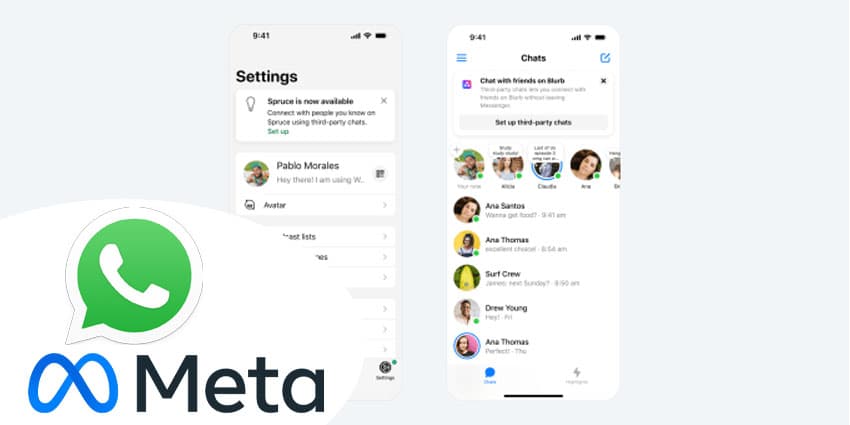
WhatsApp users in Europe will soon receive a notification in Settings prompting them to opt into third-party messaging. Those who choose to participate can direct external messages into either a separate folder or the main WhatsApp inbox. The ability to integrate conversations into a single stream may appeal to those managing high volumes of customer interactions or cross-platform team workflows.
Yet the limitations matter too. Interoperability will launch only on iOS and Android and not on desktop or web, an essential distinction for IT teams supporting hybrid workers who rely heavily on laptops and browser-based tools.
Meta's Governance Warning Label
Meta also cautions that third-party apps “might handle your data differently.” This understated warning carries significant weight for tech buyers. It introduces a new layer of complexity around data sovereignty, GDPR compliance, audit visibility, and retention policies.