Microsoft Operator Connect, first announced at Ignite 2021, has helped Teams users make calls more easily when using services outside of Microsoft and across PSTN networks. This service is designed to make communication faster and more convenient for users, while letting them use their preferred service providers, but what exactly does Microsoft Operator Connect do, and how does it work?
Let’s explore.
Microsoft Operator Connect Summarized
Microsoft Operator Connect allows businesses to directly enable PSTN calling from their current carriers within Teams. Or, to put it more plainly: it lets users make calls on Teams while using their existing phone service, instead of any other online connection.
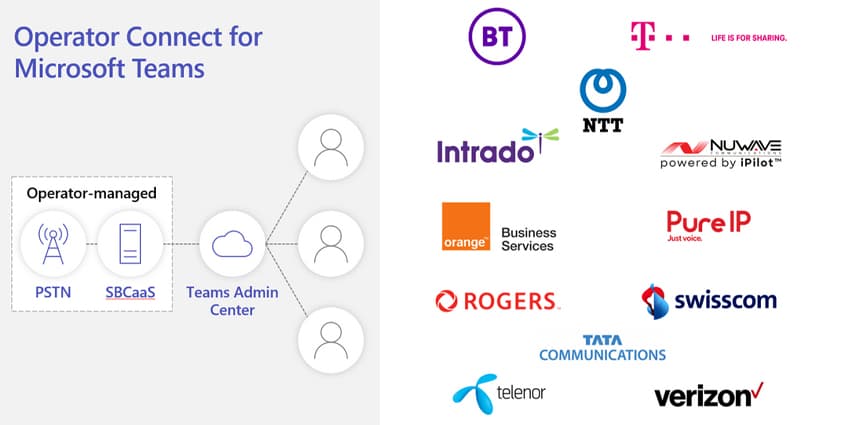
While only a handful of carriers (called “operators” in this context) were included with the initial launch of Operator Connect, the service has expanded since its introduction to include companies like AT&T, Dstny, Verizon Business, and Switch Connect, so there’s a wide selection of providers to choose from. Microsoft has a close partnership with each of its operators, which helps them seamlessly integrate their services, and new partners are being added frequently.
Customers can connect their existing phone numbers to Microsoft Teams or obtain new numbers, manage their calling plans, and configure their call routing right from within Microsoft Teams. This is particularly helpful for IT teams, which can quickly assign numbers without needing to go through external providers, and can manage everything from one place.
According to Microsoft, the benefits of Operator Connect include:
- The ability to use your existing and preferred operator contracts, while still enabling a modern Teams calling experience. Users can also switch between providers on Operator Connect, should they need to use a different network.
- It’s designed for an ease of use that makes it simple to connect to operators and assign phone numbers in minutes, right from the Teams Admin Center. Users don’t need to know how to code, since it’s all handled through those controls.
- The operator-managed infrastructure means that PSTN calling services and Session Border Controllers (SBCs) are all handled by the carriers, so it’s easier for businesses to manage without needing to purchase new hardware. This streamlines management while reducing hardware costs, without sacrificing control.
- Operators provide tech support and shared service level agreements, providing enhanced support and reliability, while Azure powers direct peering to create a 1:1 network connection.
Operator Connect Conferencing
While Microsoft Operator Connect is great for calls, PSTN conferencing requires its own feature. That’s where Operator Connect Conferencing comes in, as it adds the ability to use PSTN numbers for conference calls.
With Operator Connect Conferencing, Users can create and join conferences using their Microsoft Teams account, and the call is routed through the operator’s infrastructure. This allows users to use their preferred operators when making conference calls, just as they would normally through Operator Connect.
While this is only applicable to carriers included in Operator Connect, that list has steadily grown since its introduction. Users can also expand their PSTN infrastructure with additional operators from Operator Connect’s list, rather than use just one.
For businesses with multinational calling needs, Operator Connect Conferencing helps expand their geographic dial-in coverage. And like regular Microsoft Operator Connect, users will still benefit from the technical support and SLAs from their operators.
Users can manage their conference settings through the Microsoft Teams interface, so they can continue to access Teams features like call recording and screen sharing regardless of what service they’re connecting with.
Operator Connect vs Direct Routing
If this sounds similar to Microsoft Teams’ Direct Routing, that’s because the two are alike in many ways. Direct Routing lets users connect their on-premises telephony or third-party PBX to Microsoft Teams, although this requires them to work with a certified Session Border Controller (SBC) vendor and a Microsoft-certified telecommunications provider.