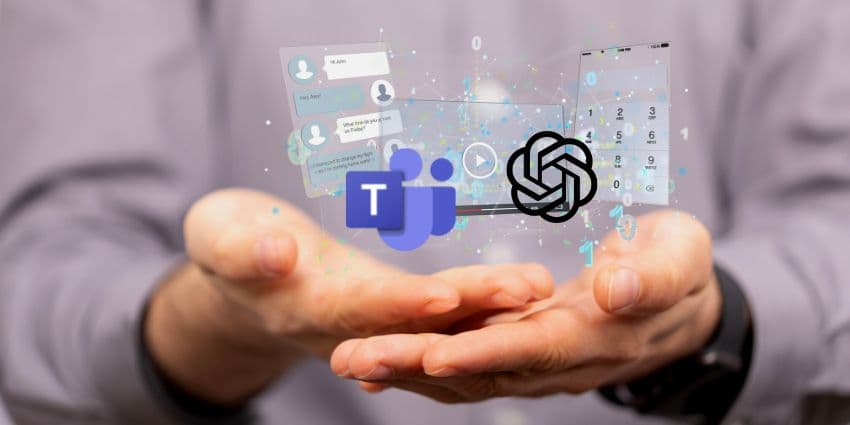
In recent weeks the Internet has exploded with reports about the progress of investment and development plans Microsoft has for the ChatGPT.
This week saw the tech firm confirm it will be the exclusive cloud services provider for the startup OpenAI. UC Today reported the financial doubling down on the AI model's originator.
The DALL-E 2 model has already been integrated into Azure AD enterprise identity service, Microsoft 365 via its Graph framework, Power Platform of API app templating, Syntex for company asset search and the current batch of Surface laptops and device hardware for processing. Plus Microsoft Designer, where much of the public signs of the latest technology will perhaps be more prevalent in 2023, as AI-powered professional quality graphics 'in a flash' start bombarding social posts, boards and image searches.
Essentially Designer can turn anyone into a graphic artist. Instead of business owners dictating what they want over the shoulders of creatives, they can ask the software chatbot to search and assemble a picture.
Timely is the arrival of AI empowerment for Microsoft Chairman and CEO Satya Nadella's so-called 'agents of change', or the business leaders, admins and end-users trying to be cost-effective in the post-pandemic hybrid workplace. It also means employers can retain their control freakery while employees can enjoy their remote workspace.
A Question of AI Powering Microsoft Teams
But what about Microsoft's central hub platform within a platform, Teams?
In its earnings call for FY23 Q2, Microsoft revealed that Teams surpassed 280 million monthly active users and 63 million consumer subscriptions for its host platform Microsoft 365, which means a 12 per cent year-over-year rise. With such a solid user base — including a 40 per cent rise in third-party apps with over 10,000 users, 500,000 active Teams Room devices, and 5 million PSTN seats added to Teams Phone in the last year — would now be the right time to press go to super-boost the platforms?
AI in Microsoft Teams: The Story So Far
Those following the AI narrative will know that some AI and machine learning models are already integrated into Teams.
Microsoft introduced the availability of the following features last summer to solve issues such as: "Disruptive echo effects, poor room acoustics, and choppy video," problems it found were: "common issues that hinder the effectiveness of online calls and meetings."
Nicole Herskowitz, Vice President of Microsoft Teams, stated:
"Through AI and machine learning, which have become fundamental to our strategy for continual improvement, we’ve identified and are now delivering innovative enhancements in Microsoft Teams that improve such audio and video challenges in both user-friendly and scalable ways across environments."
AI and machine learning feature already present in Microsoft Teams:
Audio enhancements
- Echo cancellation: AI-powered voice quality improvements for meetings include recognising the difference between speaker sounds and a user’s voice and eliminating echo without suppressing speech or inhibiting multiple parties from speaking simultaneously.
- De-reverberation: adjusts for poor room acoustics; a machine learning model converts captured audio signals and changes them to make the sound like it's coming via a closer mic.
- Interruptibility [sic]: for more natural conversations, this feature uses an AI model trained with 30,000 hours of speech samples to help keep desired voices while muting unwanted audio for better fluidity in discussions.
- Background noise suppression: a feature now as a default for Teams customers on Windows (including Microsoft Teams Rooms) and Mac and iOS that reduces odd noises like dogs barking, car alarms and slamming doors.
Video improvements
- Real-time screen optimisation: adjusts for the content users share; Teams use machine learning to detect and change the properties of presented content in real-time to optimise document readability and smooth video playback.
- Bandwidth-sensitive video optimisation: ensures video looks excellent, even under bandwidth constraints; AI optimisations help adjust playback so presenters can use video and screen sharing without the anxiety of restricted bandwidth.
- Brightness and focus filters: AI that puts users in the best light, accommodating low-light environments with the option to adjust brightness and add a soft focus for meetings in the device settings.
ChatGPT Integrated into Teams
So, where will ChatGPT fit into its vortex of tools, apps and integrations?
So far, there is much excitement and conjecture. There are two primary considerations before getting to the nuts and bolts, and one bleeds into the next. The first consideration is: how to monetise it? The second consideration, then, is: where will Microsoft deploy it?
Regarding funds, one clue is OpenAI's Sam Altman tweet from December:
"We will have to monetise it at some point; the compute costs are eye-watering."
we will have to monetize it somehow at some point; the compute costs are eye-watering
— Sam Altman (@sama) December 5, 2022
Another pointer is Satya Nadella's announcement in Microsoft's earnings call for FY23 Q2, another clue to its investment deal with startup OpenAI: "We’re pleased to be their exclusive cloud provider and will deploy their models across our consumer and enterprise products as we continue to push state of the art in AI.”
No details about how the deal is split were forthcoming. Still, being a leading global provider of cloud computing services, it's unlikely such services will be free or at least go unleveraged as part of some bigger-picture deal. So far, the tech giant has already relinquished $10 billion and then some in investments and will no doubt look to recoup.
To consider ChatGPT's monetising capability and deployment — aside from a possible baseline of revenue from hosting via Microsoft Azure — we must understand that it is a chatbot. Not the funny little widgets that appear when asking you if you need help on a local business website, but a super-duper, starship trooper version which is infinitely more conversational and draws on vast amounts of data. Pre-trained, it can solve complex maths equations, write code, compose music, dish out relationship advice and write near-perfect dissertation-level style essays. It can potentially present information conversationally in any field almost instantaneously.
Monetising a Chatbot on teams
Nick Ross on the YouTube channel T-minus365 believes ChatGPT will be a game-changer and "impressive, to say the least", with multiple implications for Teams apps and chat.