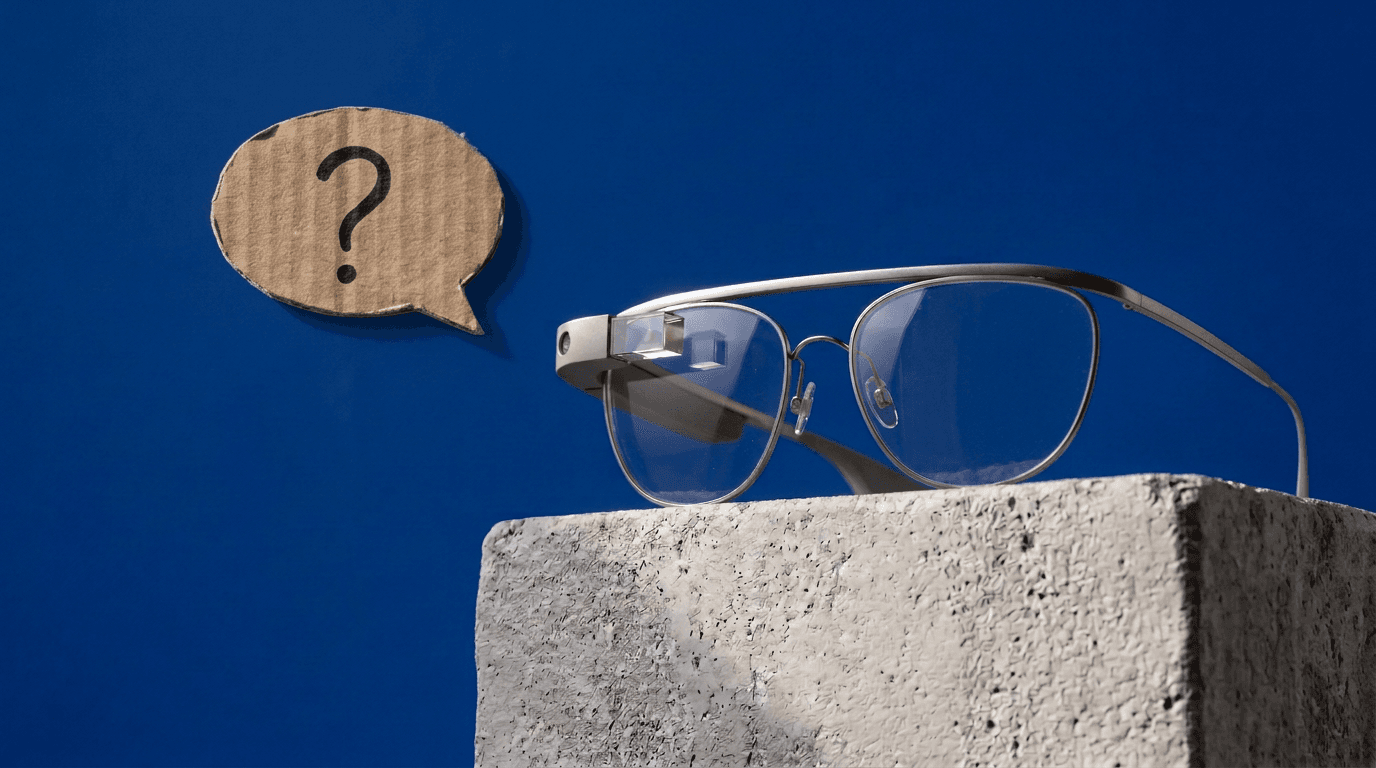


The extended reality (XR) market is growing again, but not in the place the industry spent the last five years building for. According to International Data Corporation (IDC), worldwide AR/VR headset shipments grew 5.1% year over year in the second quarter of 2026. The growth came almost entirely from XR glasses, which rose 79.8% and now account for 46.0% of the market. Mixed reality headsets still hold the largest share at 49.3%, but their shipments fell 22.3%.
The forecast points the same way. IDC expects mixed reality headsets to decline 27.2% across 2026, while XR glasses grow 109.8%. It projects the overall market will expand at a 38.4% compound annual growth rate from 2026 through 2030, with growth accelerating to 78.6% in 2027 as new glasses reach the market.
Cost is the main risk.
IDC says memory supply will stay tight beyond 2027 because of demand from artificial intelligence (AI), and notes that Meta raised Quest 3 and Quest 3S prices in April to pass through higher memory chip costs.
For business buyers, that shift changes the question. The first wave of workplace XR asked employees to put on a headset and step into a virtual environment. The next wave looks more like a lightweight, voice-led layer of information that sits on top of the work people are already doing.
That is the backdrop for Apple's fiscal fourth-quarter earnings on November 2. Apple sells Vision Pro, a premium mixed reality headset, and IDC puts the company at just 2.6% of mixed reality shipments in the second quarter, against Meta's 89.6%. The results were strong by almost any financial measure. For XR specifically, they were notable mostly for what they left out.
TL;DR
Apple reported record September-quarter revenue of $114.5 billion, but did not break out Vision Pro sales or give any spatial computing outlook.
Vision Pro featured in the prepared remarks only as an enterprise example: a surgical procedure at Duke Health using an app from Stryker.
IDC data shows demand moving from mixed reality headsets to XR glasses, and Apple has not said how it plans to respond.
Rising memory costs and heavy AI investment will shape the economics of any future Apple spatial device.
Why are headsets losing ground to glasses?
IDC's data shows a market that is rebalancing rather than collapsing. Virtual reality devices fell 37.6% in the second quarter, while augmented reality grew 14.1% from a small base. Meta remains the market leader with a 45.7% share, though its shipments fell 21.6%. IDC says the company reported lower Quest sales offset by strong growth in AI glasses, which it reads as a shift in investment from headsets toward glasses.
Regional patterns are uneven. The People's Republic of China (PRC) grew 85.8% and Japan grew 88.2%, while the U.S. and Western Europe declined 24.1% and 25.2%. IDC links the Western weakness partly to inflation, which it says has pressured discretionary purchases of higher-priced devices. It still forecasts U.S. growth of 17.3% for the full year.
The product pipeline reinforces the trend. Samsung's first Android XR smart glasses, which have no display, are reportedly on track for a November 2026 launch, according to Trusted Reviews, which says Samsung has confirmed the month but not an exact date or pricing. Those details remain unconfirmed, so buyers should treat the glasses as planned, not available.
What did Apple's earnings actually say?
The headline numbers were strong.
Apple reported revenue of $114.5 billion, up 12%, and diluted earnings per share of $2.10, up 14%. Full-year revenue reached a record $479 billion. Gross margin was 47.9%, which Apple says includes a favorable impact of about one percentage point from tariff refunds.
John Ternus, CEO at Apple, said: “Today, Apple is proud to report a September quarter revenue record of $114.5 billion, up 12 percent from a year ago, with iPhone reaching a September quarter record and Services reaching an all-time high, capping off our best fiscal year ever.”
The XR-relevant figure sits in a less flattering line. Wearables, Home and Accessories revenue was $8.3 billion, down 8% year over year. CNBC reported that analysts had expected $9.06 billion. That category also includes Apple Watch, AirPods, Apple TV and accessories, and Apple does not report Vision Pro separately. The decline cannot be read as a verdict on spatial computing, and neither can any other number in the category.
Apple's prepared remarks put AI at the center. Ternus described Siri AI as “a profoundly capable and deeply personal assistant seamlessly integrated across our platforms.” Kevan Parekh, CFO at Apple, guided to a December-quarter gross margin of 45% to 46%, citing higher memory costs and the ramp of Siri AI, and said operating expenses would grow 11% to 13%, driven by continued investment in research and development, particularly AI.
Where does Vision Pro fit in Apple's story?
In the prepared remarks, Vision Pro featured only in an enterprise example. Parekh said: “Turning now to enterprise, organizations are continuing to expand their fleets of Apple devices to transform operations and drive productivity.” He then cited Duke Health, which performed the first surgical procedure using Apple Vision Pro for hip arthroscopy with an app authorized by the U.S. Food and Drug Administration (FDA) from Stryker.
That example is meaningful, but limited. It shows Vision Pro being used in a regulated clinical setting with a specialist software partner. It does not show how many headsets are deployed, how often they are used or what the procedure costs or saves. The claim is also Apple's own, delivered on an earnings call, and has not been independently verified.
Apple's enterprise page sets out the broader pitch: design review, immersive training, guided work, customer experiences and a portable workspace through Mac Virtual Display. Named partners include Porsche, KLM Royal Dutch Airlines, CAE, Stryker, Microsoft, SAP, Salesforce, Zoom and Webex. The practical enterprise features are real, including zero-touch deployment into mobile device management (MDM) systems and a “Return to Service” reset for shared devices. The outcomes on the page, such as CAE's “better retention” in simulator sessions, are customer-reported or marketing claims, not independent results.