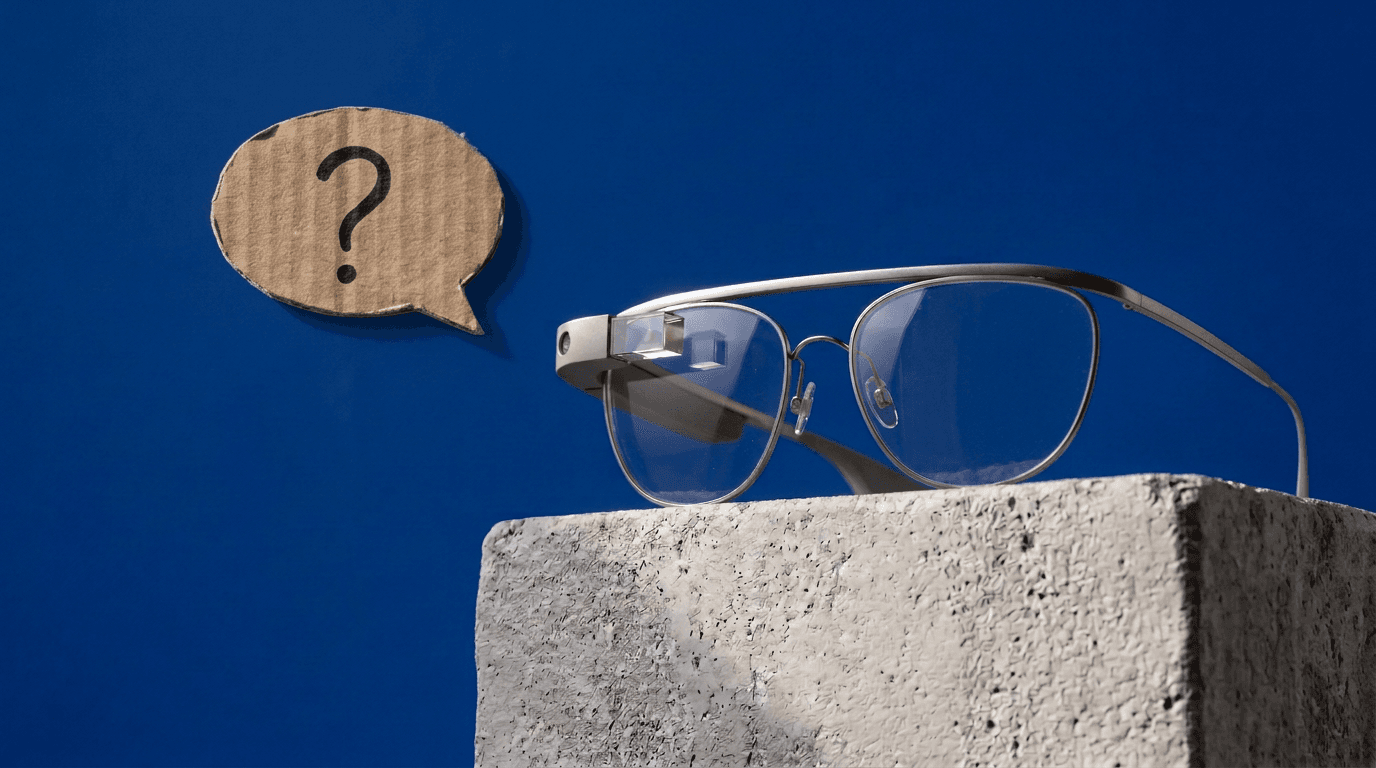


Enterprise extended reality (XR), has spent years promising to make frontline work safer, faster, and easier to learn. This week’s developments show a more practical reality emerging: buyers are beginning to confront the conditions required to deploy the technology at scale.
That means thinking beyond immersive hardware specifications. A facilities team may soon receive smart glasses through its established security integrator. A biopharma manufacturer is preparing to compare XR training against conventional onboarding. And in the United States, lawmakers are asking Meta to explain who can access images recorded by its AI glasses and whether those images may train artificial intelligence (AI) systems.
The common thread is not a single platform or use case. It is the growing expectation that enterprise XR must fit existing operational systems, from privacy policies and procurement channels to validated training procedures and support models.
TL;DR
Smart-glasses deployments increasingly need a workplace policy before they need a purchase order.
Varjo’s Finnish defence pilot illustrates XR’s strongest current enterprise proposition: repeatable practice where live training is expensive, constrained, or risky.
Vuzix’s new distribution route suggests facilities and security partners could become influential buyers and support providers for frontline XR.
BARDA-backed biopharma pilots could produce more useful evidence on XR training return on investment, or ROI, than broad vendor claims alone.
Why Are Meta’s AI Glasses Becoming a Workplace-Governance Issue?
On October 28th, U.S. Senators Ron Wyden and Ed Markey wrote to Meta Chief Executive Officer Mark Zuckerberg with questions about privacy and safety controls for the company’s AI glasses. They requested a response by November 25th.
The letter asks how Meta tests the reliability of the glasses’ recording indicator, what measures prevent covert recording, which staff and contractors can access footage, and whether images or video collected through the devices are used to train AI models. It also seeks details of the human-rights assessment that Meta has said preceded the product’s release.
Those are not merely consumer privacy questions once camera-equipped glasses enter an office, factory, healthcare setting, or customer site. They are practical buyer questions. An organization may need to decide whether recording is permitted, where the devices are prohibited, how visitors are informed, how footage is retained, and whether existing bring-your-own-device rules apply to a wearable that can capture video hands-free.
WORKPLACE POLICY CHECKLIST
Visibility: Define where camera glasses may be worn and where they must be removed, including meeting rooms, production areas, customer locations, and secure facilities.
Consent: Set clear notice and consent requirements for employees, visitors, customers, and third parties who may be recorded.
Data access: Establish who can view, export, retain, or delete captured media, including vendors and subcontractors.
AI use: Require suppliers to state whether captured content can be used for model training, product improvement, or any other secondary purpose.
Accountability: Give HR, security, legal, and IT defined roles before a pilot begins, rather than attempting to resolve ownership after deployment.
The letter does not establish that Meta has violated a law, nor does it determine how Meta will respond. But it raises the standard of diligence that enterprise buyers should expect from any smart-glasses supplier, particularly where the hardware is capable of recording people who are not device users.
For UC leaders, the issue also connects to a wider question about ambient workplace technology. As voice, video, AI assistance, and wearable computing converge, the distinction between a communications endpoint and a sensing device becomes less clear. UC Today previously examined how Meta’s Muse vision could bring AI assistance into the immersive workplace. The value proposition may be hands-free support and faster access to knowledge, but the deployment model must be designed around trust.
What Does Varjo’s Defence Pilot Say About XR Training?
Varjo and the Finnish Defence Forces Innovation Unit announced a pilot to test and develop virtual counter-unmanned aircraft system training. The project works with a brigade-level unit and uses Varjo XR-4 Series mixed-reality headsets to help soldiers identify and respond to small first-person-view drones at realistic distances.
The commercial details remain limited. Neither party has disclosed a contract value, headset volume, or training-readiness results. Varjo also announced separately that it plans to move XR-4 Series production to Finland during 2027, but it has not said the defence pilot is connected to that manufacturing decision.
Still, the pilot is instructive for enterprise buyers because it focuses on a specific training problem. Drone threats change quickly, live exercises consume resources, and repeating the same scenario safely is difficult. Major Ville Kuparinen, Head of the Finnish Defence Forces Innovation Unit, said virtual technology could enable realistic and repeated preparation “without consuming real resources.”
WHY THIS MATTERS FOR ENTERPRISE TRAINING
XR is most defensible where it supplements, rather than imitates, real-world learning: high-consequence work, scarce equipment, costly simulations, difficult-to-reproduce conditions, or procedures that require repeated practice before a worker is qualified.
That logic applies well beyond defence. Utilities, logistics organizations, manufacturers, field-service providers, and healthcare operations all face training situations in which the safest or most economical rehearsal is not a live one. The harder question is whether a virtual exercise improves performance once employees return to the real task. That is where the next development becomes important.