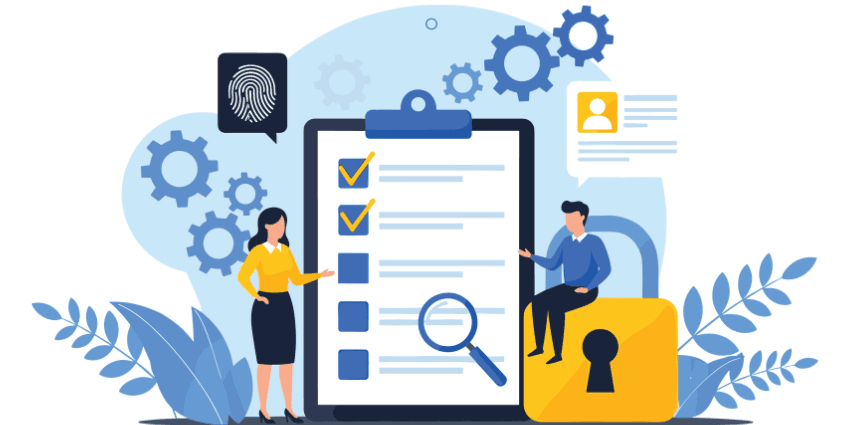
If you are in the decision stage, you are close to choosing a vendor. That is exactly when you should slow down. A tool will not fix broken governance. It will only automate it. That is why a compliance & UC security checklist matters right now. It forces alignment on ownership, policies, and evidence before you sign a contract you will be living with for years.
This readiness guide is written for readers who do not live in IT every day. It is also designed to support a formal compliance readiness assessment and a practical collaboration risk assessment across Teams, Zoom, Webex, and Slack. You will also leave with an archiving implementation plan, so rollout does not become chaos.
Read More:
- UC Security Compliance Checklist: 20 Questions to Ask Before You Buy
- UC Incident Response Playbook: The Smart Strategy for Managing UC Breaches
- Compliance Costs 101: The Real Price of Archiving, Search, and Admin Time
People: Who Must Be Involved Before You Sign Anything?
Most UC security purchases fail because the wrong people were left out. In the decision stage, “later” becomes “never.” Use this section to confirm the humans are lined up.
1) Do you have an executive sponsor with authority?
You need one person who can settle disagreements between security, legal, and IT. If nobody can make a call, the program stalls.
2) Is there a named owner for UC security and compliance?
Not a team. A person. Ownership prevents gaps in policy updates, incident response, and vendor management.
3) Does legal agree on what counts as a record?
Chats, meeting messages, transcripts, and AI summaries can all become evidence. Legal must sign off on what gets retained and how long.
4) Does compliance agree on supervision expectations?
If supervision is required, decide who reviews what, and how often. Also decide what “escalation” looks like.
5) Does HR agree on monitoring boundaries?
Many organizations need a clear policy on what is monitored, when, and why. HR alignment prevents internal blowback later.
6) Do business leaders agree on productivity trade-offs?
If controls are too strict, people will work around them. If controls are too loose, risk grows. Business leaders must agree on the balance.
Process: What Must Be True Before the Tool Goes Live?
Tools do not create processes. They enforce them. That is why your compliance readiness assessment needs process clarity before implementation.
7) Have you documented your compliance scope by region and industry?
Different regions and industries have different rules. Your compliance scope must be written down in plain language.
8) Have you defined your evidence requirements?
If an auditor asks for a record, what exactly must you be able to produce? Define “evidence” up front.
9) Have you agreed retention rules for chat, meetings, and files?
Retention should cover the content types that matter in your org. It should also cover exceptions, such as legal holds.
10) Do you have a clear process for legal holds?
Legal holds must be fast, defensible, and repeatable. If the process is unclear, you will not meet deadlines under pressure.
11) Do you have an investigation workflow that does not require heroics?
Start by enquiring and defining who can search, export, and submit approvals.
12) Do you have a policy for external users and guests?
Guest access is often the easiest path into sensitive collaboration spaces. Define who can invite guests and under what rules. T
13) Do you have a plan for multi-platform sprawl?
If employees switch platforms mid-conversation, do you still capture the record? Your collaboration risk assessment must include off-channel reality.