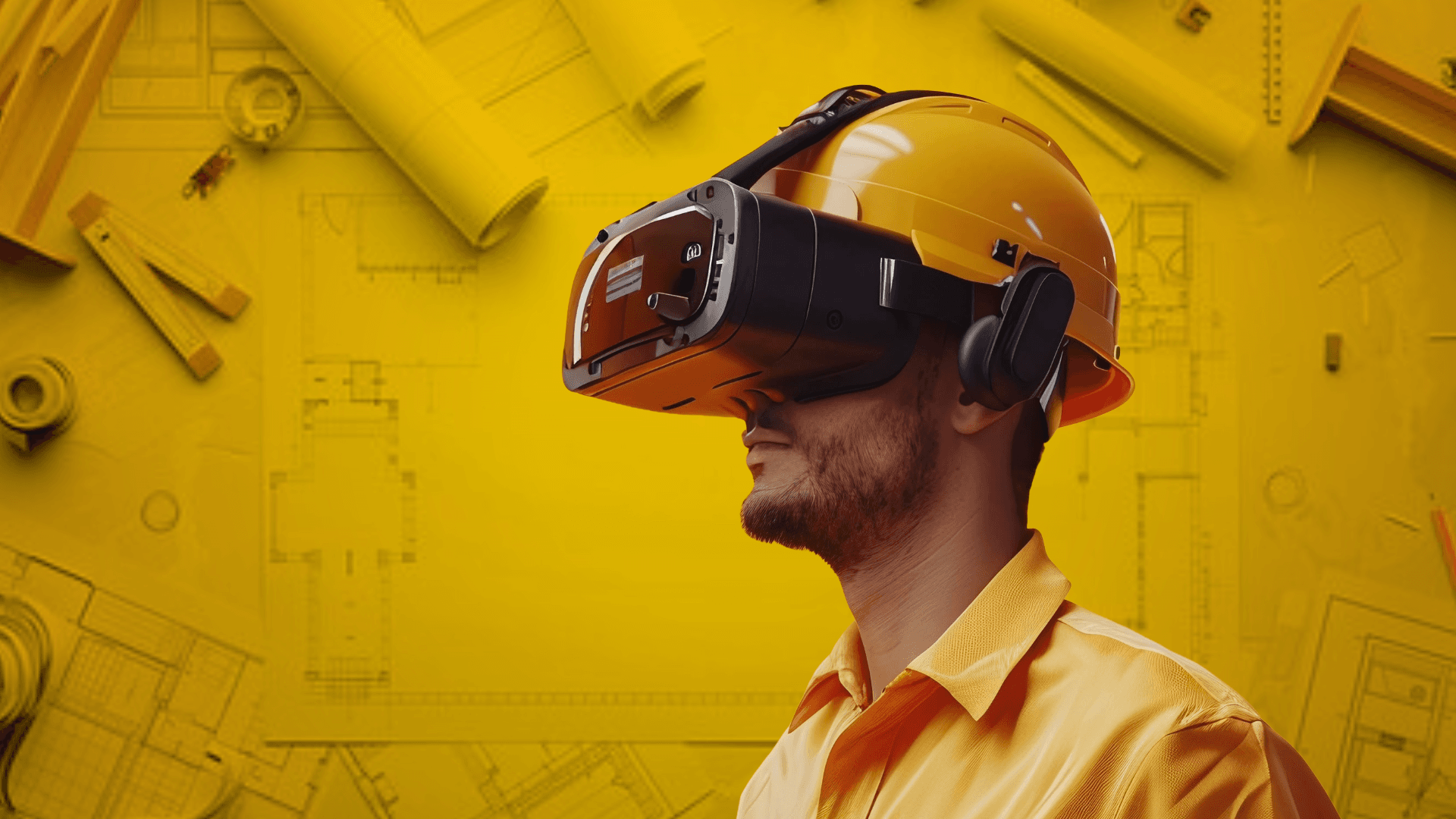
As the world of work continues to evolve, more businesses than ever before are turning towards virtual reality to stay ahead of the curve…
Over the last 12 months, COVID-19 has accelerated digital transformation in the enterprise space at unprecedented levels. Many business owners who were once skeptical about investing in tools like collaboration platforms and video conferencing now depend on them every day to survive.
Yet, as much as these technologies have helped businesses overcome immediate problems caused by the pandemic, many are questioning whether they’ll be enough to keep remote teams engaged in the long term.
Already people are growing bored with corporate Zoom calls, and the demand for new tech that better replicates real-life interactions is growing by the day. This is why many business owners have already started to consider XR, or extended reality, as a long-term solution.
According to research, experts predict the AR and VR collaboration solution market will hit US$400 million by 2025, up from less than US$12 million in 2019, proving this tech will play a vital role in the future of enterprise comms. Despite the fact the VR collaboration marketplace is still in its infant stages, we’re already seeing lots of exciting developers moving into this space.
Here are a few of the biggest contenders in 2020:
Glue
Aimed mainly at the enterprise-level market, Glue offers a wide variety of fully immersive virtual environments where users can come together and collaborate on projects in real-time. Each user is represented by a 3D avatar which reflects their movements and gestures as they move around the virtual space with other team members.
Glue also offers an abundance of features like interactive freehand whiteboards, 3D models and images, post-it notes, and screen sharing that allow users to explore new ideas together in a creative environment. It is also highly secure and reliable, making this a great option for large organizations that deal with sensitive data.
Pricing is split into three tiers (team, organization, enterprise) with fees ranging from EUR 150 to EUR 500 per month.
Available on: Facebook Oculus Quest, PC-VR
Vive Sync
HTC Vive’s Vive Sync is a powerful VR collaboration platform built to take enterprise comms up to the next level (or ten).
Providing they have an HTC Vive headset, Vive Sync lets users synchronize files with OneDrive so that PowerPoints, PDFs, marketing videos, or 3D models can be synced and published easily within the virtual meeting space. It also allows users to use voice recognition to record notes, annotate with a 3D pen, take screenshots, and host meetings of up to 30 participants.
Right now, Vive Sync is going through a beta period where businesses of all sizes are invited to use the platform free of charge.
Available on: Only on HTC Vive, though this is likely to change in 2021
Spatial
Spatial harnesses virtual reality to transport users into a shared 3D space that, according to CEO, Anand Agarawala, is like “Zoom with holographic teleportation”. Before entering, users first scan a copy of their faces via webcam or phone camera which is then used to build realistic 3D avatars for the virtual environment.
The result is a fully immersive experience that replicates real-life interactions with impressive accuracy. Meanwhile, users can engage in virtual meetings of up to 30 people, using features like interactive whiteboards, 3D model presentations, live screen shares, and more.