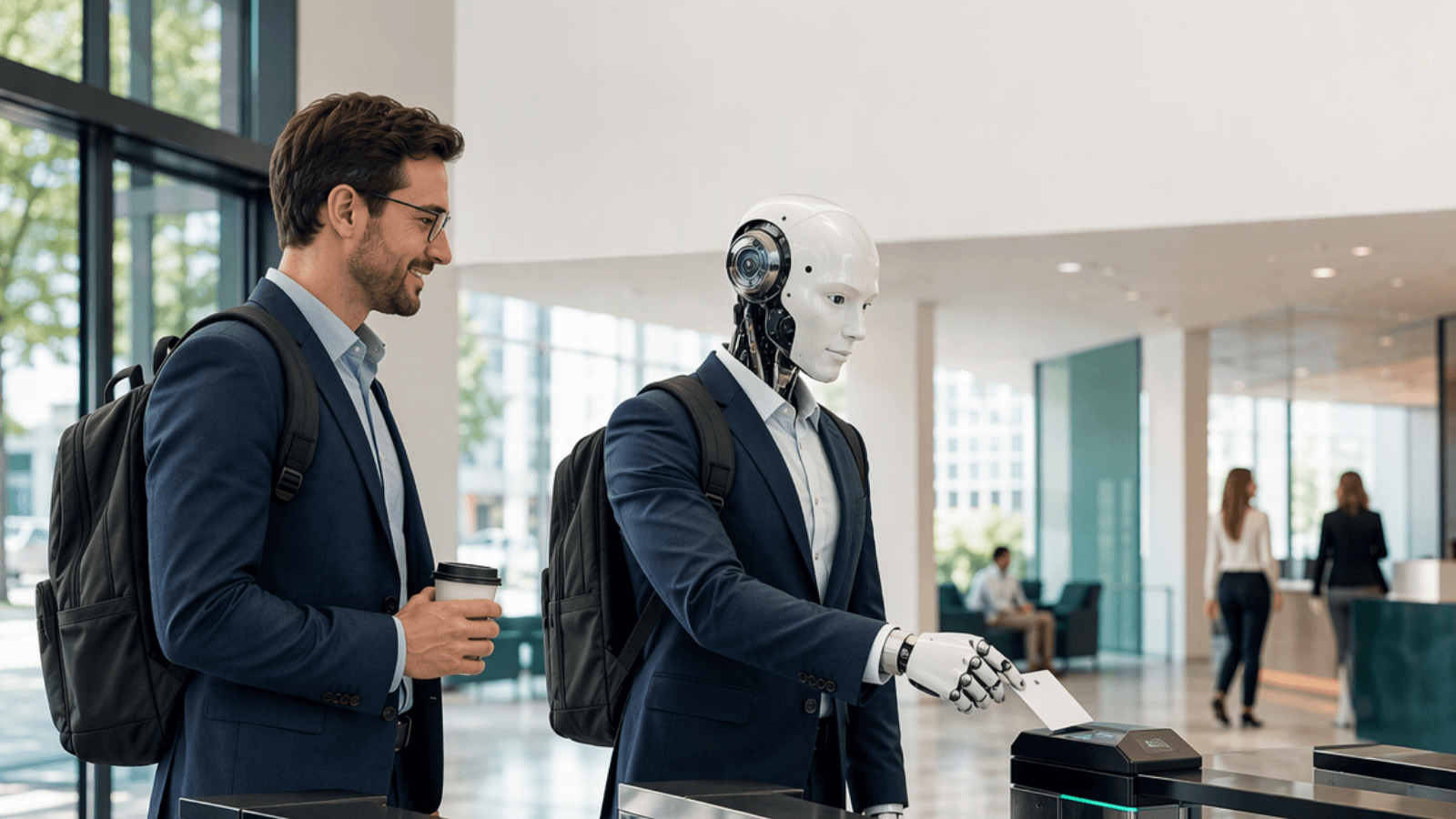
For years, workplace AI has been the colleague who is always available, never complains and is very keen to summarise a meeting - provided you ask nicely. This week, that colleague appears to have been given access to the shared drive, the inbox and a growing to-do list.
The big theme across the latest AI news is simple: AI is moving beyond the chat box. Meta’s Muse points towards assistants that can understand voice, visual context, email and connected business tools. Microsoft, meanwhile, is pushing Copilot towards work that can continue while employees are offline. The chatbot era is starting to look like the warm-up act.
TL;DR
-
AI is shifting from answering questions to handling portions of workflows.
-
Meta Muse and Microsoft Copilot show how automation could reduce app-switching and admin.
-
The real test is not whether agents can do more, but whether organisations can keep them useful, accountable and under human control.
The Story in a Quote: “This Is Going to Be the Most Powerful Technology in History.”
That is Microsoft AI chief Mustafa Suleyman, speaking this week to The Rest Is Politics: Leading. It is a big statement, but his wider point is particularly relevant to anyone thinking about the future of work.
Suleyman described a “watershed moment” for AI, driven by agents that can coordinate, specialise and take increasingly autonomous actions. He was also emphatic that systems must remain subordinate to human direction - a useful reminder as businesses race to give AI more responsibility.
For employers, the immediate takeaway is less dramatic than the “most powerful technology in history” framing, but no less significant. If AI can pick up tasks, act across tools and continue a process after someone has signed off for the day, organisations need to rethink the workflows around it.
The opportunity is to remove the repetitive connective tissue of work: chasing updates, moving information between systems, routing requests and preparing first drafts. The responsibility is to make sure somebody still owns the outcome.
Meta Muse’s Productivity Pitch: Less Searching, Typing and Tab-Hopping
Meta’s Muse signals a more ambient version of workplace AI. Instead of making people open a chatbot and formulate the perfect question, it can work through voice, visual context, email and business connectors - potentially taking actions quietly in the background.
That is important because productivity rarely disappears in one spectacularly inefficient moment. It leaks away through hundreds of tiny ones: searching for a document, copying details into another system, switching between apps, trying to work out who has the latest information.
For field, retail and service employees, this could be particularly useful. These are workers often left out of the desktop-AI conversation, despite being surrounded by processes that could benefit from faster access to information and hands-free support.
The warning label is obvious, though. Background automation must not become background decision-making. If an AI can access business systems and act on information, employees need clarity on what it sees, what it can do and how to intervene when it gets something wrong.
Lesson From Copilot Autopilot: Don’t Automate a Broken Process
Microsoft’s Copilot Autopilot represents another step away from AI as a helpful prompt-response tool. It can be assigned work, follow Teams conversations and processes, and complete tasks while employees are offline. Copilot Code also promises to let non-technical staff create internal apps and automations with natural-language instructions.
That sounds like a productivity jackpot. It could be - but only if organisations resist automating the mess.
The risk is not simply that an AI makes mistakes. It is that businesses give employees the tools to build a hundred slightly different workarounds for the same problem. Suddenly, everyone has an automation. Nobody knows which one owns the process.
The lesson: start with the work, not the technology. Identify high-volume tasks with clear rules, decide where human approval is essential, and measure whether an agent removes effort rather than simply creating a new layer of checking.
The Key Question: When AI Does the Work, Who Owns the Outcome?
That is the real workplace question behind Meta Muse, Copilot Autopilot and the wider rush towards agentic AI.
An assistant that drafts an email is easy enough to manage: the employee reads it, edits it and hits send. But when an agent follows a Teams thread, pulls information from connected systems and completes work while its human colleague is offline, the line of accountability gets much less tidy.
The temptation will be to judge these tools by how much work they can process. A better test is whether they can make work move without making responsibility disappear. If an AI routes a customer request incorrectly, updates the wrong record or makes an assumption nobody would have approved, there must be a clear answer to a very human question: who was meant to be watching?
That is why the organisations most likely to benefit will not simply deploy the most capable agents. They will decide what an agent can do independently, where human sign-off remains non-negotiable, and how employees can see - and reverse - actions taken on their behalf.
Agentic AI adoption depends on building enterprise trust. The productivity upside is substantial, but trust will come from clear permissions, visible audit trails and human ownership that does not quietly vanish once the automation starts.