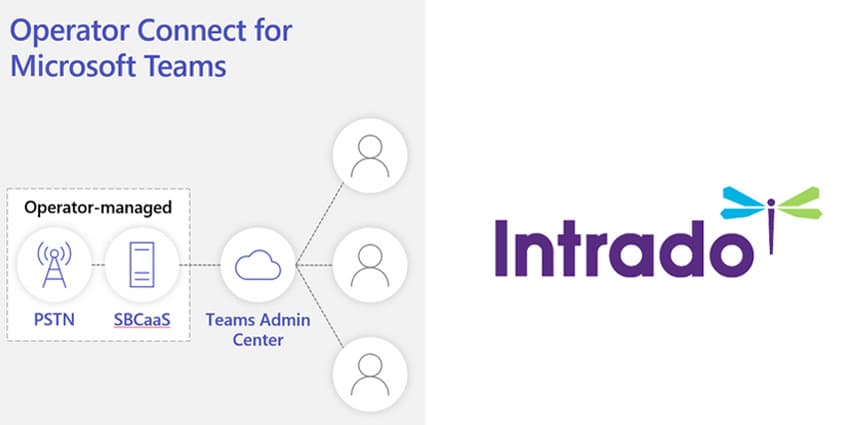
Microsoft’s new Operator Connect model will enable a more seamless experience for users by removing a huge amount of the complexity involved with provisioning phone systems and allowing customers to consume and manage partner voice services in a similar means to Microsoft’s own services.
That’s the view of Andy Gibson, who is Director of Product at Intrado – one of the launch carriers of the program.
Operator Connect lets businesses plug PSTN calling from their existing carriers directly into Teams, without some of the more traditionally complex elements of direct routing. The service is set to enter private preview with 12 providers in Q2.
Speaking to UC Today, Gibson said: “Direct Routing was developed to allow customers extra flexibility if Microsoft didn’t have a calling plan in a specific country or they wanted to consume it on different commercial terms,” he said.
“The downside was that Direct Routing came with more of a disjointed experience. You have the Microsoft world on one side and the operator side on the other, but you had to bring the two together.
“Some operators created bespoke UIs and managed services, but most were reliant on PowerShell. When you got down to customer level, they were left with a choice of paying for a vendor-managed service on top of a subscription or learning PowerShell. Operator Connect closes that gap.”
Gibson said that phone numbers can be provisioned via the Teams portal in much the same way that a user would be created in Office 365, making it a simple process.
“Everything is graphical user interface driven and it’s all really easy,” Gibson added.
“This is exciting news for Intrado as we look down the market into the SMB space. Incorporating Operator Connect into our Direct Routing solution, Hoot Connect for Microsoft Teams, is going to open a lot of doors. Microsoft has done this to create a better experience for their customers and partners like us, so it’s great news.”
Gibson stressed that Operator Connect is an evolution of Direct Routing, rather than a replacement, but also said that it could lead to a reduction in the need for professional services.
“It’s not the total removal of services,” he said.