“For anyone ambitious starting out in their career, I have a single piece of advice – go to the office every day and be in the room,” once wrote Luke Johnson, Pizza Express founder and serial entrepreneur.
Hybrid work over Zoom, Microsoft Teams or Google Meet has saved commuters £50bn. But non—verbal communication is lost. Nothing quite replaces the subtle expression and brief wry smile you get in face-to-face meetings.
But video is changing.
Anthony McCool, UK Country Manager at advanced video conferencing provider MAXHUB explains “Before the pandemic, video conferences were complex. Home-office attendees often used low resolution laptop cameras. Picture quality was poor. Remote workers couldn’t hear people in large boardrooms. Dogs’ barking nearby was picked up and brands were undermined. Confidence eroded. Not very good.”
Technological change is nearly always underestimated. Bitcoin was the currency of criminals 10 years ago. Now institutions use it as an inflation hedge. VoIP calls were always cutting off. Now the telecommunications network is based on IP. Last year, Google designed Sycamore, a quantum processor. It completed a task in 200 seconds that would take 10,000 years on the world's fastest supercomputer. Today, the Metaverse merges digital and the physical worlds, from gaming to unified communications. Microsoft has just launched Mesh for Teams. Through Holoportation™, you can now join colleagues as a hologram.
“With our latest advances over the last 2 years, video now blurs the gap between home-offices and boardrooms. Meeting spaces will never quite be the same again,” says McCool.
At Google, mahogany-wood conference tables are out. Huge video screens are in. Campfire is a giant video screen which Googlers sit around. It’s as if remote attendees are physically present. Everything is configurable and changeable. It’s where Ikea meets Lego. They even hold meetings outside in “teepees”.
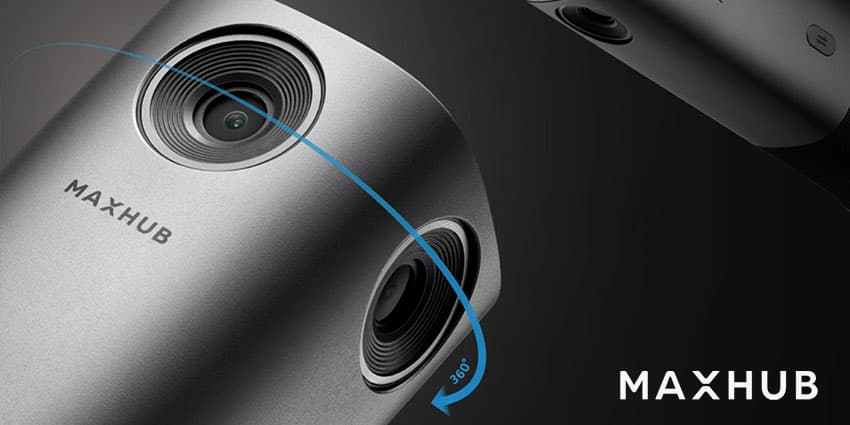
“MAXHUB’s recently launched 360°four lens fully integrated camera is designed for perpetually configured meeting spaces. You just sit around the table and pop the camera in the middle,” explains McCool .
And for remote workers?