
powering productive workplaces
Front page
NewsWork Management1h · 15:01 BST · 5 min read

Logitech Spot Now Integrates With 10 Workplace Platforms

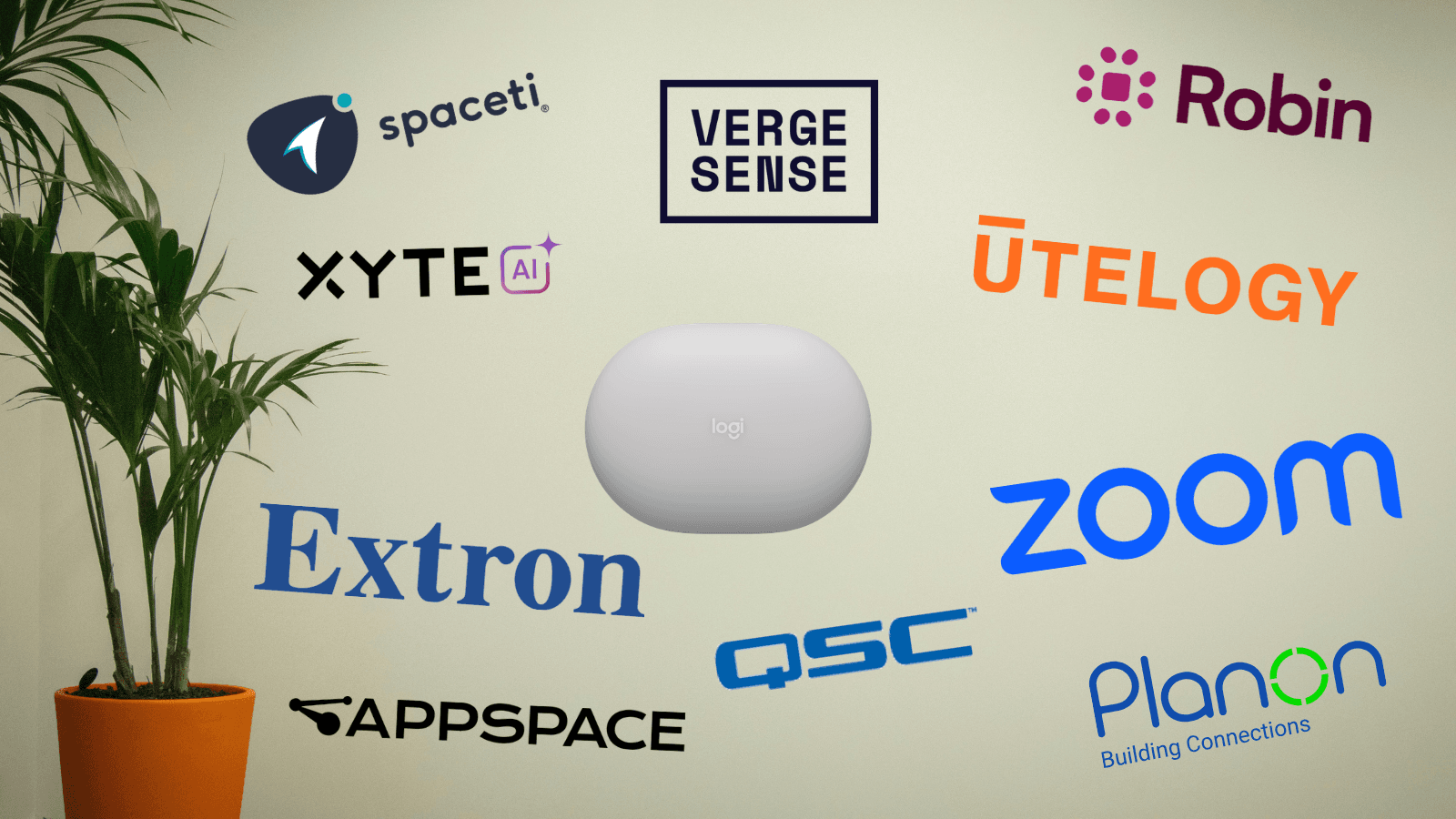
Logitech's presence and environmental sensor can now integrate with 10 workplace management platforms, including Zoom, VergeSense, and Robin. This will give enterprises more ways to automate rooms and analyze space - helping them to optimize their office.

Logitech Spot and its 10 New Partners

Logitech has added ten new partner integrations for Spot, its presence and environmental sensor, connecting the device to a wider set of workplace management, AV control, and analytics platforms. The new partners include Appspace, Extron, Planon, Q-SYS, Robin, Spaceti, Utelogy, VergeSense, Xyte, and Zoom.

In plain terms, this means the data Spot already collects (presence, temperature, humidity, CO2, harmful airborne materials, and air pressure) can now flow directly into software that organizations are likely already using to manage their offices.

Rather than treating Spot as a standalone gadget, Logitech is opening it up so ten different platforms can act on its readings, whether that means releasing an empty room automatically, feeding a dashboard, and making the office a more comfortable place to work.

What the Partners Are Building on Top of It

The workplace management sector is made up of vendors looking to provide insights into different areas of the office. Some excel in desk bookings and management, while others may be more suitable for a traditional facilities manager.

Here are some examples of how Spot's new partners can look to harness the data it collects.

Space automation

Appspace uses Spot's real-time presence data to trigger actions like automatically reserving a room when someone walks in, checking attendees into a meeting, or releasing a "ghost meeting" room back into inventory when nobody shows.

Zoom integrates Spot alongside its Rally Board 65 and Rally Bar family, feeding data into the Zoom Dashboard and Workplace Reservation, giving admins visibility into underused areas and the ability to auto-release unused desks or rooms.

Robin takes a similar approach, using Spot's telemetry to inform facilities decisions, adjust workweeks, reschedule conflicting events, and streamline back-to-back meeting flows based on live room health and occupancy.

For Robin, the update is landing as more than a technical checkbox. Brendan O'Neil, Strategic Partnerships and Business Development at Robin, called it a:

"...peanut butter and chocolate combo"

He explained that while "both products are nice on their own, but when they team up, look out."

Multi-vendor monitoring

Extron, Utelogy, and Xyte all use API connections to pull Spot's telemetry into centralized dashboards, giving IT and facilities teams a single view of Spot alongside the health of other AV and IT devices. Q-SYS follows a similar model, connecting directly to Logitech devices through a CollabOS API plugin to surface configuration details, meeting statuses, and environmental insights inside its own control platform.

Taking a step back, this signifies a win for unified data in the workplace. The more data silos exist within the office space, the harder it is for facility management analysts to diagnose issues employees are facing at scale.

Analytics and AI

Spaceti combines Spot's occupancy data with floor plans and booking information to generate AI-powered recommendations on space utilization and future demand.

VergeSense maps space usage timelines and generates peak demand forecasts comparing expected headcounts against room capacity.

Utelogy goes further, letting organizations connect their own enterprise AI agents to Spot data so teams can query room utilization or environmental anomalies using natural language.

That focus on turning data into decisions came up directly in a recent webinar between Logitech and VergeSense, where Sarah Hsieh, Director of Alliances and Go-To-Market at Logitech B2B, shared:


"More than 9 in 10 workplace leaders agree that the clearest picture of workplace health and ROI combines how people feel, how they move through a space, and how the technology works. But only 58% of leaders believe they have the right metrics to justify those investments."

Kanav Dhir, VP of Product at VergeSense, put the underlying problem simply.

"The world went from we don't have enough data, to we have too much data, to what do we actually do with the data."

Employee-facing features

Beyond giving leaders more insight into the workplace, data from a Spot device can also directly aid employees' understanding of the space around them.

For instance, Spot's environmental data can be fed into interactive wayfinding maps, desktop apps, and idle meeting screens, allowing employees to choose workspaces based on availability, comfort, and air quality.

The Bigger Picture for Collaboration

Craig Durr, analyst at Collab Collective, sees this update as more than a feature release. In his analysis of the announcement, Durr argues it changes what Spot actually is.

"Logitech's Spot update changes the role of room sensing from measurement toward operational input."

He frames it as part of a broader shift where Spot becomes less of a standalone sensor and more of a connected data source within existing workplace ecosystems.

That shift matters commercially as much as technically. Durr points out that the range of partners Logitech has lined up, spanning workplace management, AV monitoring, analytics, reservation, and employee-experience platforms, gives the update relevance across very different buying centers within the same organization.

That gives Logitech a way to embed itself deeper into workplace operations without asking any customer to rip out and replace the platforms they have already invested in.

Durr also connects the update to where he sees Logitech heading more broadly. Rather than competing purely on hardware specs, he argues the company is increasingly building sensors as inputs for software-led room experiences owned by other vendors.

What Buyers Should Consider Next

Ten integration partners means ten different ways Spot's data can be acted on, and that flexibility comes with a coordination cost. Organizations adopting this will need to decide which platform owns which decision, particularly once automated actions like auto-release or auto check-in start running without a person in the loop.

Without agreed metrics and clear ownership, teams risk making real estate and space-planning decisions based on assumptions rather than evidence, even with more data flowing in than ever before.

TL;DR

Logitech is no longer positioning Spot as a standalone product. It is positioning it as the sensing layer underneath a growing set of workplace platforms, from automation-first tools like Robin and Appspace to analytics platforms like VergeSense and Spaceti, letting customers keep the tools they already use while getting more out of the rooms those tools manage.

The technology is in place. The harder work will be building the governance and decision-making structure to actually make the most of it.

rate this story
helps rank stories across uc today
The discussion0 takes · attributed & checked

Does this reflect your experience?

opening the room…
Read nextordered by techtelligence · every pick explained
picked for this story

Why VergeSense and Pointr Partnered on Office Planning

8 Sept 2026
picked for this storyWhat Is Workplace Management? An Enterprise Buyer’s Guide to Workforce & Office Optimization29 Mar 2026picked for this storyAI Real Estate Boom: Why Tech Sector Real Estate Strategy Needs an Operational Upgrade18 May 2026