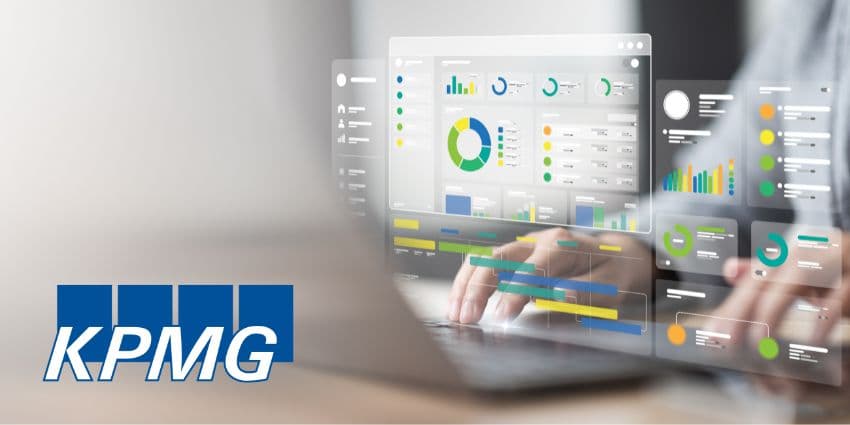
KPMG is accelerating its push to get employees using AI with the rollout of a new internal dashboard that tracks its use in day-to-day work. Rolled out across its US advisory division late last year, the dashboard tracks not only how often employees use AI tools but also the productivity gains from that usage.
The move signals a shift away from simply encouraging adoption toward understanding how effectively these tools are embedded in workflows. Rather than treating AI as a broad productivity enhancer, KPMG is attempting to quantify how it is used and whether it delivers tangible value.
This reflects a broader evolution in enterprise AI strategy. Many organizations have already cleared the first hurdle of getting employees to try AI tools. The next challenge is ensuring those tools are used in ways that meaningfully improve output, decision-making, and efficiency.
Inside KPMG’s AI Usage Dashboard
At its core, the dashboard tracks how frequently employees engage with AI tools during the workday and benchmarks that activity against internal targets. It also enables employees to compare their usage with peers, introducing a degree of transparency and potential competition in how AI is adopted across teams.
The rollout covers roughly 10,000 employees within KPMG’s US advisory arm, making it a significant test bed for understanding enterprise AI behavior at scale. The firm reports that a large majority of its US workforce already uses AI tools at least weekly, suggesting that baseline adoption is no longer the primary concern.
Instead, KPMG is focusing on depth of usage. The company argues that employees who engage more consistently with AI tend to produce higher-quality work, experience reduced stress levels, and free up time for more strategic tasks.
To support this shift, KPMG has integrated a mix of internal AI tools alongside platforms such as Microsoft 365 Copilot. The dashboard is complemented by training programs and incentives designed to encourage employees to move beyond basic interactions, such as simple prompts, toward more sophisticated workflow-level integration.
From Experimentation to Measurable Impact
KPMG’s initiative sits within a wider trend of large enterprises attempting to better understand how AI influences productivity and work patterns. However, this added benchmarking of productivity shows the next stage of AI adoption, moving from simply using tools to generating meaningful impact.
Organizations including JPMorgan Chase, Amazon, and The Walt Disney Company are also experimenting with systems that track AI usage, signaling a broader industry push toward accountability. The Walt Disney Company monitors metrics such as how often employees use AI and the volume of tokens generated, while Amazon tracks how deeply AI tools are integrated into daily workflows and whether they deliver meaningful outcomes.