At ISE 2026, the intersection of AV, digital infrastructure, and healthcare innovation was on full display.
Maria Ripoll Bartrolí, Head of Open Innovation at the Barcelona & Madrid Health Hub, spoke to UC Today about how technology is reshaping patient care, clinical workflows, and how the hub operates as a catalyst for collaboration across the healthcare ecosystem – bringing together startups, scale-ups, hospitals, big corporations, and investors to accelerate digital health innovation.
“We’re a nonprofit but private association dedicated to dynamizing the ecosystem in digital health,” she explained.
“Right now we have more than 600 members in more than 90 countries – startups, scale-ups, hospitals, big corporations like pharma and insurance, and investors.”
She noted that the hub’s work is especially vital given the pressures healthcare systems face: ageing populations, chronic diseases, workforce shortages, and rising patient expectations.
“We all want to live more, but I want to live better as well – so all these solutions end up reaching the patient or the professional to overall improve lives.”
AV and systems integration are underpinning many of the tools that make digital health viable – from secure video platforms and collaboration spaces to immersive simulation and data visualisation environments.
AV as a Critical Enabler in Modern Care
Ripoll Bartrolí highlighted practical ways AV is improving the healthcare experience, particularly by reducing friction between clinicians and patients. Startups are now using audio capture and AI to transcribe consultations in real time, allowing doctors to focus on patients instead of screens.
“We have startups that are listening to the patient when they come to a consult, so the doctor doesn’t have to be typing and not even looking in the eyes of the patient,” she said.
For AV professionals and integrators, this represents a shift: microphone placement, room acoustics, camera positioning, display design, and system reliability directly affect clinical workflow, patient trust, and outcomes. In this sense, AV has become part of the care experience itself.
Beyond Telemedicine: Digital Twins and Simulation
While telemedicine remains a prominent application, Ripoll Bartrolí pointed to emerging technologies like digital twins and simulation as the next frontier.
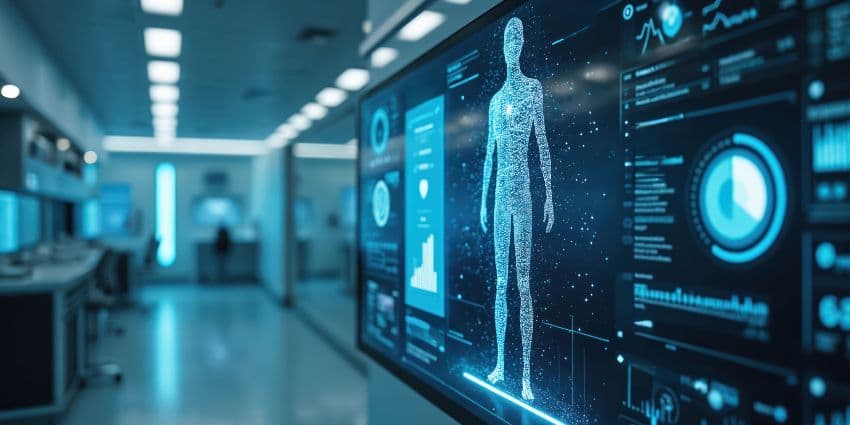
“We hear a lot about AI, and of course this is breakthrough,” she said. “But what is really innovative now is digital twins – to be able to test procedures, to test pills, to test digital things without having the patient suffering the consequences.”
These applications rely on advanced visualisation, high-performance displays, real-time data feeds, and immersive environments – all areas where AV and systems integration are critical.