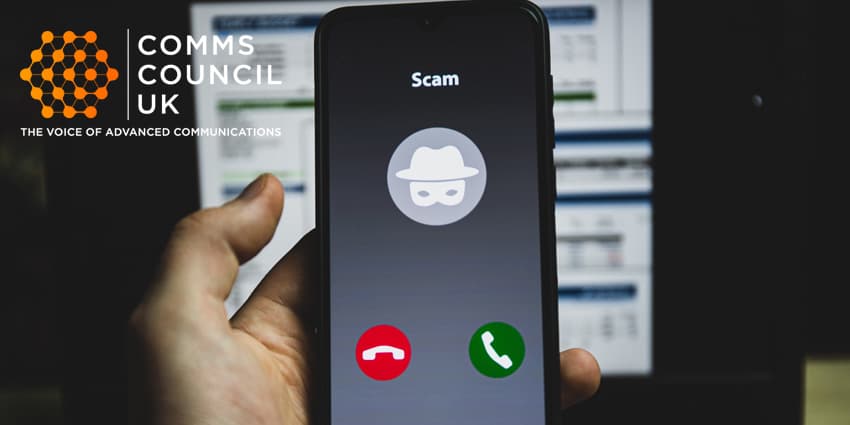
Telephony fraud is not something new, and new scams appear to crop up on a regular basis. It is therefore the responsibility of our industry to remain ahead of the curve by addressing some of the ongoing issues. This includes number spoofing, which is seen as a bugbear for many.
Ofcom documented that, in 2019, the Information Commissioner’s Office (ICO) received almost 130,000 complaints about nuisance calls (including number spoofing), which was a year-on-year increase of just shy of 5,000 since 2018. Number spoofing is something that everybody within the industry agrees needs to be tackled, and it has become particularly prominent in the news agenda throughout the Covid-19 pandemic. The solution is complex.
In June 2021, a suite of protocols and procedures known as ‘STIR/SHAKEN’ became a legal requirement in the United States, after many years of campaigning for tighter regulations to combat caller ID spoofing on public telephone networks. The main purpose of STIR/SHAKEN is to return trust to customers, so they have confidence in the phone numbers that appear when they receive calls. With STIR/SHAKEN now in place in the US, it’s worth taking a look at what the UK is trying to do to prevent number spoofing – will it be a simple ‘copy and paste' job, or something entirely different?
The UK's Options
Ofcom has clearly stated its intention to protect consumers from nuisance calls and scams in its 2021 action plan document, laying bare its commitment to telephone safety, especially considering that it will soon be publishing a consultation around CLI authentication. It is working with the international regulators – as well as the telecoms industry in general – to find potential solutions to the issue.
For example, Ofcom documented in its ICO-Ofcom joint action plan that the Internet Engineering Task Force (IETF) created a new technical standard to support CLI authentication, so that valid numbers can be identified and marked from the beginning of a call and passed along the ‘call chain’ to the recipient.