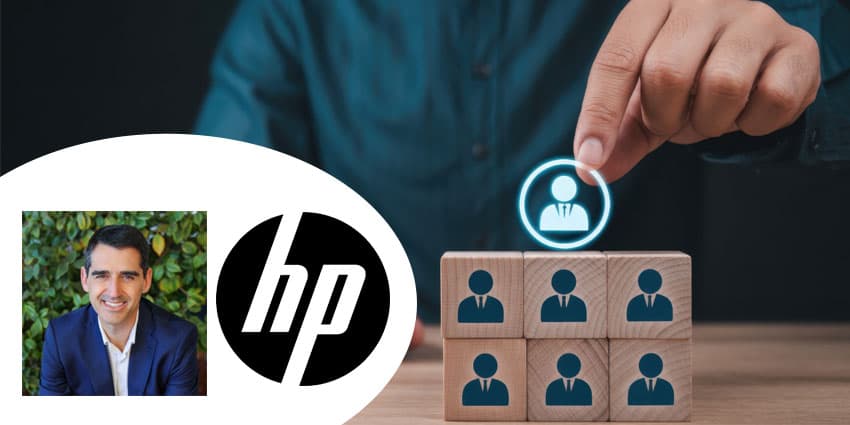
The modern enterprise has never been more automated, more instrumented, or more efficient. Yet, as HP’s Hybrid Systems Division President Carles Farre warned UC Today, it has also never been more at risk of losing the one ingredient that meaningfully binds high-performing teams together: employee connection.
As everyone recognizes, AI systems are now capable of handling a significant portion of collaborative tasks, such as scheduling, note-taking, follow-ups, and coordination, resulting in increased efficiency and productivity. However, the subtle chemistry of connection, trust, alignment, and shared understanding is in danger of evaporating.
In Farre's view, the most significant risk for enterprises barreling toward AI-driven workflows isn’t underperformance but cultural hollowing:
"AI can make work faster, but it is an organization’s job to make work feel more connected.”
It’s an argument that cuts against the prevailing narrative. While some vendors emphasize automation, velocity, and digital experience, Carles is more interested in the emerging cultural and human impact that AI ushers in. In his telling, connection will soon become a measurable competitive advantage, one that is formalized, benchmarked, and operationalized.
- The AI Colleague Who Never Forgets
- Logitech CEO Dismisses AI-Centric Gadgets as “Solutions in Search of a Problem”
Employee Engagement Becomes an IT Metric: The Rise of Connection KPIs
Farre has spent over 25 years at HP. Today, he leads its Hybrid Systems division, where Poly and HP peripherals converge into a single strategic portfolio. He brings with him the perspective of someone who has lived in five countries, managed global teams, and spent his career thinking about how distributed workforces stay aligned. It is from that vantage point, not simply a technologist’s but a cross-disciplinary operator’s, that he is sounding the alarm on the connection gap.
CIOs once lived and died by uptime, latency, and service levels. But as digital experience becomes the mediator of culture, new KPIs are emerging; messier and more qualitative, but no less measurable. “We are entering a time when IT leaders are judged not only on speed and performance but also on the cultural impact of the systems they choose,” Farre said.
Fundamentally, CIOs are now responsible for how employees feel.
“Traditional KPIs like latency and usage still matter, but they no longer tell the full story,” he explained. Instead, leaders will need to quantify whether teams “feel aligned and supported, how energizing or draining virtual collaboration feels, and whether tools enable meaningful dialogue.”
This might sound abstract, but Farre is explicit:
“Connection becomes measurable when leaders treat it like any other business outcome.”
A new generation of digital employee experience platforms is already emerging, blending telemetry with sentiment analysis and behavioral insight. “Digital employee experience measurement keeps evolving,” he outlined, “and can infer employee engagement by a combination of qualitative interactions as well as quantitative measurement of friction that employees have with technology.”
In other words, motivation and morale are becoming data points, and CIOs will be held accountable for them.
Gen Z’s Demands Will Reshape Enterprise Collaboration
Gen Z does not quietly assimilate into legacy systems. They expect authenticity, transparency, and psychologically safe environments from the very beginning. They treat digital experience not as a tool but as a baseline expression of organizational competence, and they want to contribute immediately.
“Gen Z is entering the workforce with clear expectations,” said Farre. “They want authenticity, smooth digital experiences, and the ability to contribute meaningfully from the start.”
The implications are architectural for IT leaders. Collaboration systems must support equal participation regardless of location. They must make hybrid meetings feel fair. They must allow for real-time feedback loops. Above all, Farre emphasized, AI must “remove friction without stripping away human interaction.”
Crucially, Gen Z’s desire for efficiency does not replace their desire for mentorship. “This generation values efficiency,” Farre explained, “but they also want mentorship and genuine connection.”
The future workplace must therefore serve two masters in automation and intimacy. If enterprises “adopt AI without considering employee experience,” Farre warned, “they risk losing the generation that cares most about connection.”
The office itself will evolve in parallel. “Spaces should be flexible, open, and designed to encourage collaboration,” he argued. Meanwhile, CIOs will need to strike a balance between standardization and openness. “While CIOs must define an approved technology stack for the enterprise, they also need to stay current with emerging tools that often blur the line between personal and professional use.”