Global workforce operations are getting harder to run, not easier. Multi-entity employment structures, cross-border compliance, contractor and contingent labour, and constantly shifting local regulations have turned payroll into a strategic risk surface. For many enterprises, the question is no longer whether to modernise workforce infrastructure. It is which platform can orchestrate it reliably, integrate with the rest of the stack, and reduce manual operational drag.
Alex Bouaziz, Co-Founder and CEO, Deel:
“Arsenal and Deel are already working closely together, and the club will be rolling out Deel's platform across its workforce and HR operations in the coming months.”
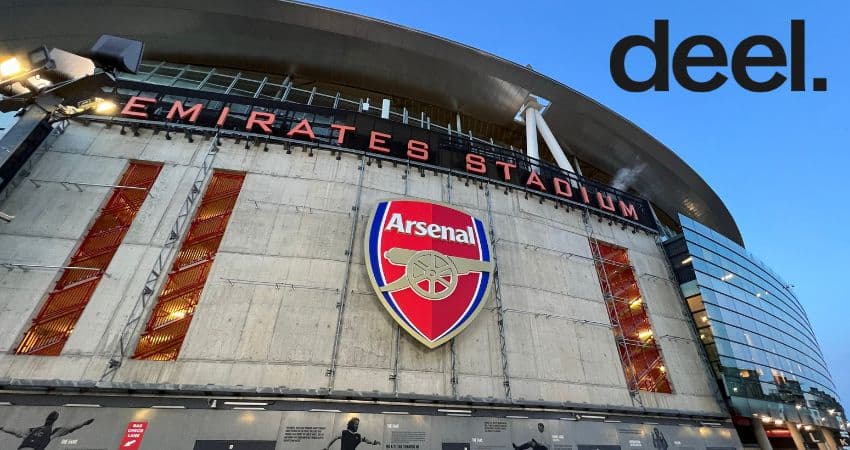
That single sentence is the B2B story. Arsenal has announced that Deel, a global payroll and HR platform, will become its Official Sleeve Partner from the 2026/27 season in a multi-year agreement. But this is not mainly sponsorship news. This is workforce infrastructure modernisation wrapped in football, soccer, and Premier League visibility. The visibility may boost traffic. The rollout is what makes it relevant to enterprise HR and IT leaders.
Related Articles
- How Do HCM Platforms Work?
- How to Successfully Implement a Workforce Management Platform
- Unified HCM vs Multi-Platform HR: Finding the Right Fit
Why This Partnership Matters to HCM Buyers
Enterprises do not buy payroll and HR platforms for novelty. They buy them to reduce risk, standardise operations, and improve time to productivity. A globally visible organisation is useful as a case study because it forces the “real world” questions to the surface:
- Multi-entity complexity: different worker groups, legal entities, and employment rules that must be handled consistently.
- Compliance and auditability: payroll errors are not just operational. They are legal and reputational.
- Contingent labour reality: modern organisations use a blend of employees, contractors, agencies, and partners.
- Joiner, mover, leaver orchestration: onboarding and offboarding are only “complete” when systems, access, and payroll all agree.
A club like Arsenal is not just a sports brand. It is a year-round business with corporate operations, matchday staffing, commercial and retail functions, media production, facilities, and a wide partner ecosystem. That environment makes global payroll and HR automation less of a “nice to have” and more of an operational necessity.
Operational Rollout Credibility Beats Sponsorship Optics
Most sponsorship stories collapse into marketing coverage because they focus on impressions. This one becomes enterprise-relevant because it repeatedly frames Deel as an operational platform, not just a logo on a kit.
Juliet Slot, Chief Commercial Officer at Arsenal, explicitly ties the partnership to how the club runs, not just how it markets. Juliet Slot, Chief Commercial Officer, Arsenal:
“Deel will support how we operate as a club as we enter this next chapter in our relationship.”
For HR transformation leaders, this is the credibility filter. Platforms are easy to demo. Operations are hard to run. A rollout suggests the vendor is being judged on outcomes like payroll accuracy, process consistency, compliance control, and the ability to support a complex workforce without building a new layer of manual admin work.
The Automation Angle: Payroll Is a Workflow Engine, Not a Payslip Printer
UC Today readers increasingly view HCM through the lens of productivity and automation. Payroll and HR operations are workflow-heavy by default: approvals, documentation, exceptions, identity checks, and continuous changes. When these workflows are fragmented, teams end up doing ‘human middleware’ work: chasing corrections, reconciling systems, and manually moving data between platforms.
When payroll and HR operations are modernised, the productivity gains are often indirect but significant: fewer exceptions, fewer manual handoffs, cleaner offboarding, and less rework caused by misaligned records. That is where workforce automation becomes real. Not in a flashy assistant, but in fewer broken processes.