When Meta discontinued Horizon Workrooms and ceased commercial Quest sales in February 2026, it drew a line under an era. The moves followed a 30% budget cut at Reality Labs, a division that reportedly lost $19.1 billion in 2025, and signalled a strategic shift toward AI glasses and mobile. The consumer metaverse, as Zuckerberg once pitched it, is done. What remains is an enterprise XR market with genuine demand and no dominant player.
Apple hasn't filled the gap either. IDC estimates fewer than 45,000 Vision Pro units shipped in the final quarter of 2025, and Apple has since narrowed its focus to specialist verticals like surgical training and aviation simulation. Samsung entered with Galaxy XR in October 2025 at $1,799, built on Google's Android XR, but the device is barely established. Meta still commands around 63% of the broader VR market, though its attention is firmly on consumers and gaming.
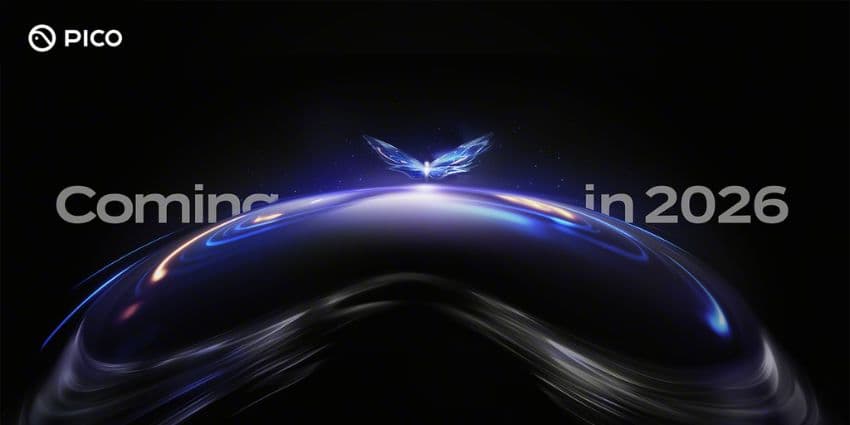
Pico's announcement on 2 March is a direct play for that opening. The company unveiled PICO OS 6, a ground-up rebuild of its spatial operating system, alongside Project Swan, a flagship enterprise XR headset targeting a launch in late 2026.
Why PICO OS 6 matters for enterprise
Every previous enterprise XR device has run into the same problem: mixed workloads create friction. Running a video call, a 3D model viewer, and a browser simultaneously causes performance drops that make headsets impractical for sustained professional use.
PICO OS 6's new Spatial Engine moves rendering from the application layer to the OS itself. The system composites 2D apps, 3D content, and passthrough video together. Individual apps no longer manage their own pipelines. The result is consistent performance across mixed workloads.
Input works the same way. Eye tracking and pinch gestures, XR controllers, and a physical keyboard and mouse all function within the same session, with no mode-switching required.
The hardware is built to match. Project Swan uses MicroOLED panels at approximately 4,000 PPI, averaging 40 PPD and peaking at 45 PPD at the centre, enough for "professional workflows" according to Pico's press release. A custom XR processor handles sensor fusion and mixed reality imaging at 12ms latency, alongside a flagship SoC Pico claims delivers more than double the CPU and GPU performance of the Snapdragon XR2 Gen 2: the chip Samsung's Galaxy XR runs.
The platform also tackles ecosystem lock-in. PICO OS 6 supports OpenXR, WebXR, Android apps, and PC VR streaming alongside its own spatial format. Pico is also releasing WebSpatial, an open-source framework for building spatial apps in HTML, CSS, and React. It runs across PICO OS 6, Apple’s VisionOS, and Google’s Android XR. Enterprise software vendors can build once and deploy across all three platforms.