Modern meeting spaces have evolved. We’ve gone beyond basic spaces equipped with tables, chairs, and standard screens. In the age of hybrid work, meeting rooms need to leverage the latest tech, from AI-powered assistants, to automation, analytics, and immersive devices, to boost productivity.
As companies continue to encourage team members back into the office, smart meeting solutions that bridge the gaps between distributed workers are more crucial than ever. In fact, by 2030, the market for smart meeting room solutions is expected to reach a value of over $4.9 billion.
So, where is the future of smart meeting spaces heading? Based on our assessment of the current market, here are some of the top trends worth watching.
1. Increasing Demand for Flexibility
Countless different types of employees, from different generations are working together in the same hybrid workspace. Everyone has their own preferences, and requirements when it comes to engaging in effective meeting sessions. As a result, one-size-fits-all meeting solutions are becoming less appealing. Companies are embracing smart meeting rooms that can adapt to different needs.
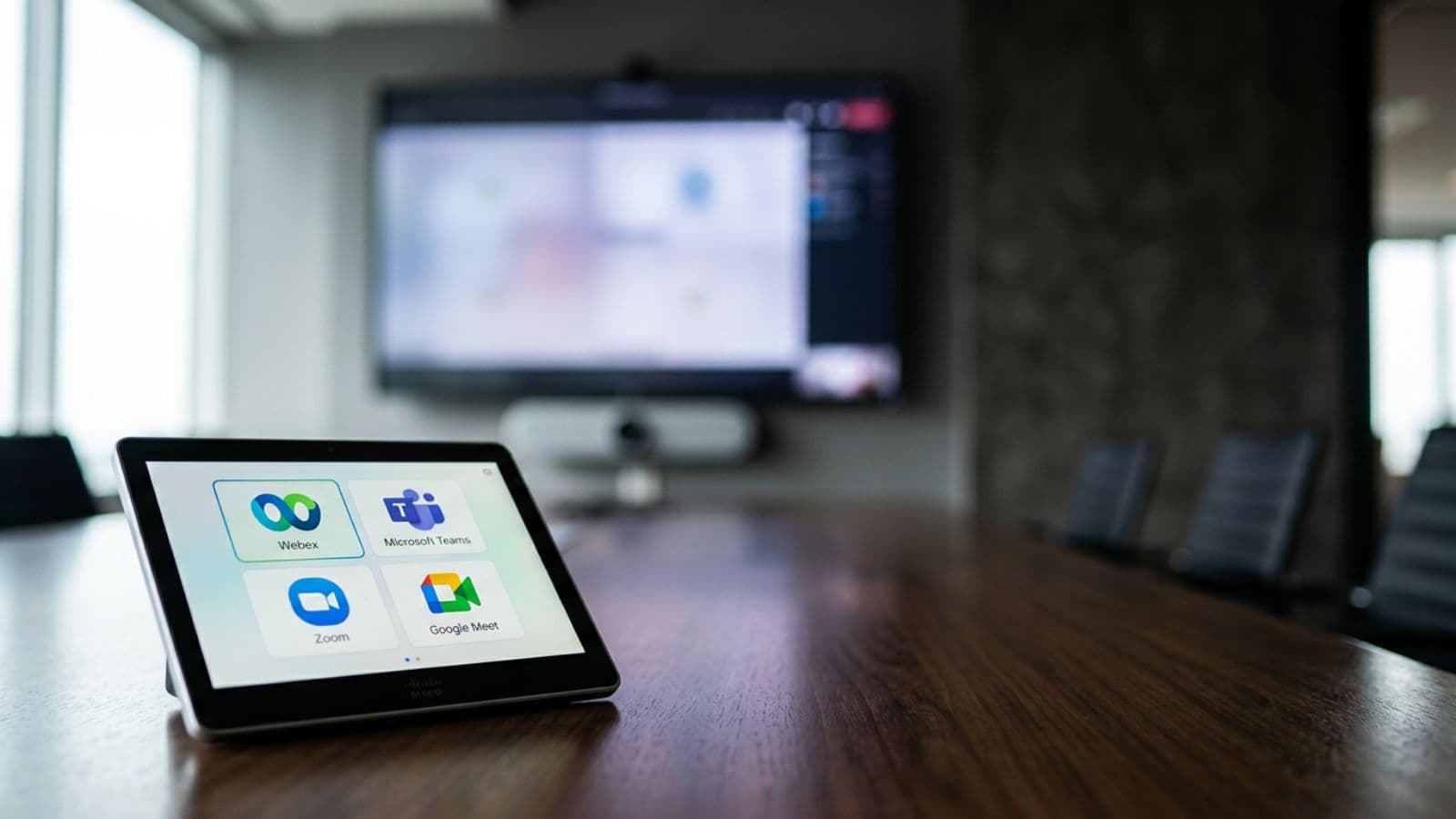
We’re seeing a rise in not just “bring your own device” solutions, that allow team members to instantly connect smartphones, cameras, and other devices to a room setup, but also “bring your own meeting” software options. This gives teams the freedom to switch between different productivity tools, from Microsoft Teams, to Cisco Webex, based on their specific requirements.
This flexibility is being further enhanced by “Bring your Own Carrier” solutions for external cloud calling, as well as modular, intuitive meeting room screens, speakerphones, and even all-in-one plug and play room kits for modern teams.
2. Advanced Workspace Management Systems
As the flexible workspace evolves, managing teams, devices, and meeting rooms is becoming increasingly complex. Businesses need more innovative ways to optimize resource allocation, and empower teams to make the most out of their office environments.
Desk and meeting room booking software is growing increasingly sophisticated as a result, providing real-time insights into resource usage, and collaboration trends. Some vendors, like Microsoft are even embedding AI into workplace management tools. For instance, Microsoft Places uses Copilot to suggest spaces to team members based on colleague availability and amenities.
Intelligent workspace management solutions can even empower business leaders to adjust elements of a meeting room environment remotely. With access to IoT sensors, business leaders can adjust lighting, temperature, and other factors within a meeting room from anywhere, enhancing employee wellbeing, and productivity.
3. Increased Immersion in Meeting Rooms
Immersive collaboration is becoming increasingly critical in the hybrid workplace. Smart meeting rooms equipped with immersive technologies do more than boost engagement and creativity. They can enhance feelings of inclusion in the workplace, bridging the gaps between distributed workers.
Cutting-edge immersive solutions, like Microsoft Teams Immersive Spaces, combined with virtual or mixed reality headsets can connect team members more effectively for brainstorming, product design, and even training sessions. It’s not just extended reality and metaverse solutions that can make meetings more immersive however.
Intuitive hardware, such as interactive whiteboards and screens, smart speakers equipped with their own AI assistants, and video walls can boost immersion too. In the smart meeting space, immersive solutions have the power to break down the borders between modern teams.
4. The Growing Presence of AI
Artificial Intelligence is often the first thing that comes to mind in discussions about smart meeting rooms. Increasingly, the presence of AI in the meeting space is growing. Today’s teams have the opportunity to access everything from AI-powered cameras that effectively frame team members and improve image quality, to AI-powered assistants that transcribe meetings automatically.