As the financial industry joined the internet revolution, security is a key challenge that has been overcome.
Largely, this challenge has been negated with the implementation of two-factor authentication, either via SMS or a banking application. By sending codes or links to customer’s personal numbers or devices, banks can confidently proceed to fulfill requested transactions.
While two-factor authentication has largely given banks the security to operate, two-factor authentication does not take into consideration devices that have been compromised by malevolent actors.
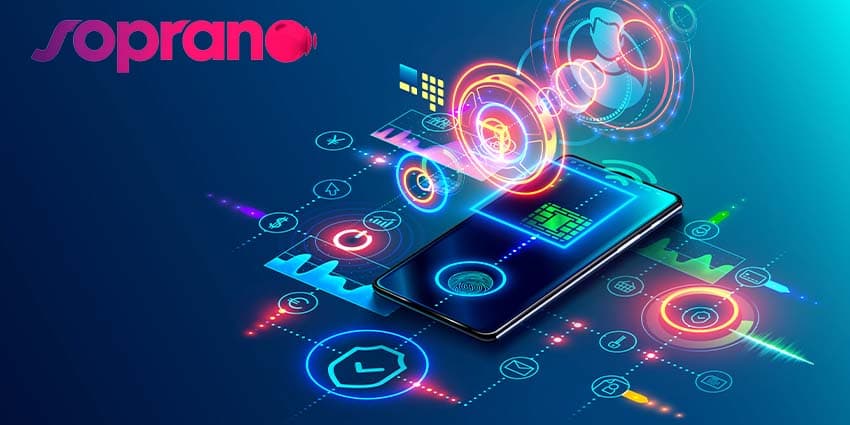
To combat this problem, Soprano Design has introduced new features that assess the devices that it sends two-factor authentication to on behalf of financial institutions, to make sure they are not compromised and fraudulent.
“Everybody's talking about how secure their platform is, but that is not far enough,” said Jane White, Product Marketing Manager at Soprano Design. “Nowadays, if you really want to be competitive when it comes to security, or if you want to offer people something novel in the security world, you can't just be GDPR compliant, you need to offer a value related to security that goes further.
“This launch is proving how Soprano Design can enable businesses to go farther based on, not just owning the security of your own systems, but checking in on the security of the systems that your systems interact with.
“Specifically, the system that we're talking about here would be the user's phone. Sim swapping or number corruption is common now, and that's an issue with somebody's phone. Our system is interacting with that phone and, although the message that comes from us is not corrupted, security wise, the fact that that phone now is in the hands of a bad actor is a potential breach”
Security Scores
The Soprano solution assesses information passed on from networks, such as how often the number is in use, the trust level of the network it is running on, and the amount of calls forwarded, in order to come up with a score for each contact number. This score will in turn be used to determine whether it is safe to send a message to a device in order to prevent exposing customer’s information.